



Ahmad Syamsudin/Dili, Timor-Leste

José do Santos was once a construction foreman in Dili who oversaw the rise of buildings symbolizing Timor-Leste’s progress after its triumphant vote for independence from Indonesia nearly 25 years ago.
Now, he barely makes ends meet navigating the city’s streets as a minibus driver.
“Since the COVID-19 pandemic, life has been hard,” he told BenarNews.
“There are no more jobs in Dili. Construction workers are all from China and Indonesia, making it difficult for us locals to find employment.”
Timor-Leste, also known as East Timor, has made significant strides since its tumultuous birth in 2002, but the economic impact of the plunder of resources of centuries of Portuguese colonial rule and the looting, pillage, and large-scale destruction of property during a 24-year Indonesian occupation can still be felt today.
Unemployment and poverty remain challenges for many citizens, a stark contrast to the early aspirations for prosperity. Economic progress in the country has been uneven and a sense of unfulfilled potential lingers.
A third of Timor-Leste’s 1.3 million population lives in poverty, with hunger, malnutrition, and preventable child deaths remaining widespread problems, said a report published in February by a local NGO.
“Our children are the most poorly nourished in the region,” the Timor-Leste Institute for Development Monitoring and Analysis, also known as La’o Hamutuk, said in its report.
“Many undernourished and undereducated children will not become productive workers or optimal parents.”
Timor-Leste, which depends heavily on its offshore oil and gas reserves, exhibits the classic signs of the “resource curse,” the report noted.
The phrase refers to a phenomenon where countries rich in natural resources often struggle with unsustainable economies and distorted development. This includes the neglect of other sectors, unrealistic expectations of future income, and excessive borrowing, the NGO said.

Timorese leaders and citizens recognize the importance of diversifying the economy.
Sectors like tourism, agriculture, and fisheries hold vast potential, leveraging the country’s natural beauty, cultural richness, and fertile lands, they said.
However, infrastructural limitations, a shortage of skilled labor, and bureaucratic obstacles continue to hinder the growth of these industries, observers said.
“We are independent already, but still dependent economically,” said Leodia Monteiro, a student at Dili’s National University of Timor Lorosa’e, referring to the country’s reliance on imports.
“We have no factories. Our infrastructure is not good enough and it doesn’t work. We don’t really develop our economy,” she told BenarNews in English.
Additionally, oil and gas income can only go that far, as analysts have warned.
Timor-Leste’s Petroleum Fund – the nation’s primary revenue source, currently valued at about U.S. $16 billion – could be depleted by the early 2030, experts say. The fund finances more than 80% of the nation’s budget, but excessive withdrawals since 2007 have diminished its capital base.
A natural gas production project planned in the waters between Timor-Leste and Australia, Greater Sunrise, which was seen as key to replenishing the fund, has stalled because of high development costs, infrastructure hurdles, and technical challenges.
Timor-Leste President José Ramos-Horta has said the project will bring the country “$50 billion in revenue and $50 billion as development benefits.”
In the meantime, Timor-Leste’s labor force participation has remained stagnant between 2013 and 2021, hovering near 30.5%, according to a World Bank report released in February. Among small states surveyed, Timor-Leste had the lowest participation rate. By comparison, Southeast Asia’s labor participation rate was 66.1% in 2021.
The country’s active labor force is low and stagnating, due to a number of factors, not least of which is that an economy heavily reliant on oil revenue does not create many employment opportunities for the general population, economists say.

The World Bank stressed the need for Timor-Leste to diversify its economy beyond oil and gas to create jobs and sustain growth.
The nation’s economy is projected to grow at an average rate of 4.1% in 2024 and 2025, fueled by easing inflation and government investment in infrastructure, the World Bank said in a report.
While the government’s infrastructure focus is positive, it may not directly translate to widespread employment for locals, the bank said.
Among the reasons could be a mismatch between the skills required for infrastructure projects and those possessed by the local workforce, according to the United Nations. Besides, infrastructure projects often provide short-term employment, which may not significantly impact long-term unemployment rates.
Additionally, the use of foreign contractors who bring their own labor force can limit opportunities for local employment.
The minibus driver, do Santos, who BenarNews spoke to, had mentioned that Chinese and Indonesian workers were doing the jobs like his previous one in construction.
Another problem, according to Naldo Rei, a former guerilla fighter and activist against Indonesian rule, was that Timor-Leste’s development focused too heavily on the capital, Dili, neglecting rural areas and contributing to soaring unemployment.
Rei said this imbalance had driven rural residents to seek jobs in Dili.
“Every year, between 8,000 and 10,000 people enter the job market, but there are no jobs,” he told BenarNews.
“This raises concerns about Timor-Leste’s future growth if the country doesn’t invest in building a more robust and equitable infrastructure.”
Rei urged the government to prioritize agriculture, saying neglecting these sectors hurt the largely rural nation.
“How can we build a country if we don’t invest properly?” Rei said.
Timor-Leste is actively seeking foreign investments to bolster its basic economy.
Neighbor Australia is providing A$118 million (U.S. $76.56 million) in Official Development Assistance (ODA) for the 2023-24 period. It has invested in infrastructure projects, and the education and health sectors.
Prime Minister Xanana Gusmão signed a “comprehensive strategic partnership” agreement with China during a September visit.
The agreement paves the way for increased Chinese influence in Timor-Leste through investments tied to the Belt and Road Initiative (BRI), according to Damien Kingsbury, emeritus professor at Deakin University in Australia.
China’s BRI is a global infrastructure development strategy launched in 2013, aimed at boosting trade and economic cooperation by investing in infrastructure projects across Asia, Europe, and Africa.
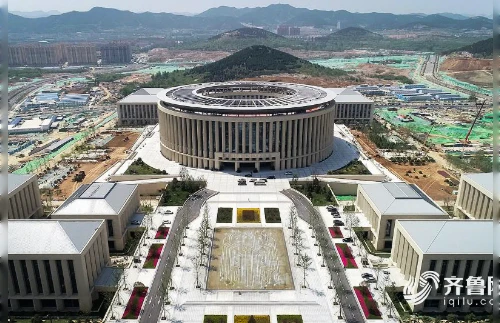
China’s involvement in Timor-Leste includes the provision of patrol boats, military training, and construction of key infrastructure like the Defense Force headquarters and barracks, the foreign ministry, and the presidential palace.
China is also financing major projects like the Suai Highway, Tibar deep seaport, and it manages Timor-Leste’s power grid.
“While China is keen to have a greater presence in the strategically located country, there may be limits to how much it can invest in a country with almost no economy independent of the government,” Kingsbury wrote in an article published on the East Asia Forum website in December.
He questioned the sustainability of Timor-Leste’s economy, saying the country’s oil fund could endure until 2044, or even 2049, with the implementation of property taxes and the like.
“The real issue is what happens when oil receipts run out,” he told BenarNews.
Copyright ©2015-2024, BenarNews. Used with the permission of BenarNews.