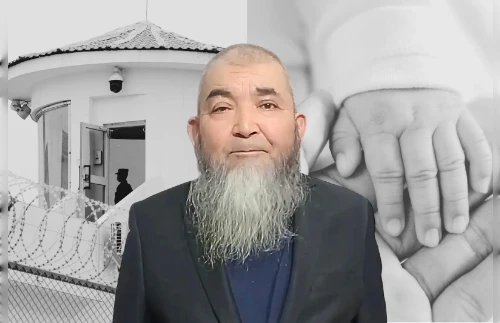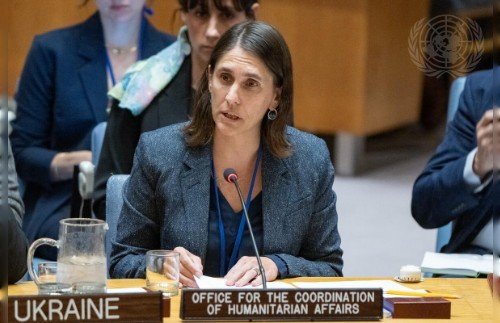




Rebiya Kadeer tells RFA she wants scrutiny of the legal process, key evidence of 2015 Erawan Shrine bombing.
By Pimuk Rakkanam and Shohret Hoshur for RFA
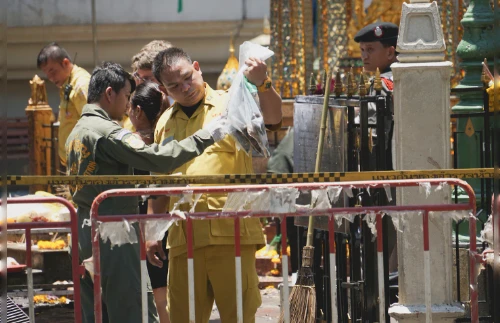
A Bangkok court on Thursday sentenced two Uyghur men to death for triggering a bomb explosion which killed twenty and injured over a hundred others over a decade ago.
“The deaths and injuries caused by the attack were a terrible tragedy, and the victims and their families deserve justice,” Rebiya Kadeer of the International Uyghur Human Rights and Democracy Foundation (IUHRDF) told RFA.
“However, justice cannot be achieved through proceedings that leave significant questions unanswered regarding due process, the treatment of defendants, and the reliability of key evidence,” Kadeer added.
No group claimed responsibility for the Erawan Shrine bombing in central Bangkok on Aug. 17, 2015, but speculation called it an act of retaliation against the forced deportation of more than 109 Uyghurs from Thailand a month earlier.
Shortly after the bombing, Thai police named 17 suspects. Arrested were two Uyghurs, Adem Karadag (alias Bilal Mohammed) and Yusufu Mieraili, who went on trial in 2016 for planting explosives. Both have denied all charges brought against them
Upon hearing the verdict delivered by a four-judge panel on Thursday, Mieraili shouted “Injustice!” in the courtroom in both English and Thai.
“RIP Thailand’s justice system. I don’t accept any of this,” Mieraili added. “I didn’t do anything wrong.”
During the trial, prosecutors presented evidence that Mieraili and Karadag had been near the shrine around the time of the explosion, that they had communicated with each other by telephone, and that a taxi driver had transported them away from the area after the incident.
The judges stated that although the defendants had denied committing the crime, they had failed to refute the evidence presented against them. The court granted both men 30 days to file an appeal.
Defense lawyer Choochat Kanpai told reporters they “will appeal the ruling because there are many aspects of the case that the court has not fully considered, including the treatment of the defendants during the proceedings.”
The decade-long trial was beset by delays due to the coronavirus pandemic and problems securing translators.
Seven Chinese tourists were among the fatalities when explosives—apparently left in a backpack—detonated.
Beijing welcomed the death sentences.
“The attackers were totally inhumane and extremely heinous,” foreign ministry spokesman Lin Jian told reporters.
“China supports Thailand in conducting the trial in accordance with the law and severely punishing the murderers.”
Thailand deported 40 Uyghurs to China in February 2025 despite warnings from human rights groups that they would face persecution on their return, drawing swift condemnation from the United Nations.
“These actions have reinforced concerns that decisions involving Uyghurs in Thailand may be influenced by political and economic considerations linked to Beijing rather than by international human rights obligations,” Rebiya Kadeer told RFA.
“Against this background, it is difficult for many in the Uyghur community to have confidence that this verdict was reached entirely free from political influence,” Kadeer said.
Pimuk Rakkanam reported from Bangkok. With reporting from AFP and Reuters. Edited by Charlie Dharapak.
“Copyright © 1998-2023, RFA.
Used with the permission of Radio Free Asia,
2025 M St. NW, Suite 300, Washington, D.C. 20036.
https://www.rfa.org.”