North Korea has pushed back its timeline for reopening border trade with China over concerns about new coronavirus cases in nearby northeastern Chinese provinces, trade sources in the country told RFA as they braced for more lean times.
The halt in trade since January between the northeast Asian neighbors has had a crippling effect on North Korea’s economy, already struggling under years of U.S. and UN sanctions imposed to deprive Pyongyang of resources that could be funneled into its nuclear and missile programs.
Sources involved in cross-border trade say the prolonged shutdown of trade has hurt the many North Koreans who supplement low salaries by trading consumer goods from China. They said goods will flow through so-called “unofficial trade” that advantages Chinese exporters facing a sellers’ market.
Provincial officials explained the decision not to restart trade in mid-June as had been planned, after assessing the situation in adjacent Liaoning and Jilin provinces in northeastern China, at an emergency meeting on June 27, a trade official from North Pyongan province told RFA’s Korean Service.
“The meeting did not give the exact reason why official trade is being postponed again. However, the coronavirus is spreading again in [China’s] northeastern region, including in Liaoning Province, which borders North Korea,” said the source, who requested anonymity to speak freely.
In mid-June Beijing reported an outbreak of coronavirus, and authorities confirmed it had also spread to Liaoning. More than 10 Chinese cities, including Harbin and Dalian in northeastern China, urged residents not to travel to the capital, state media reported.
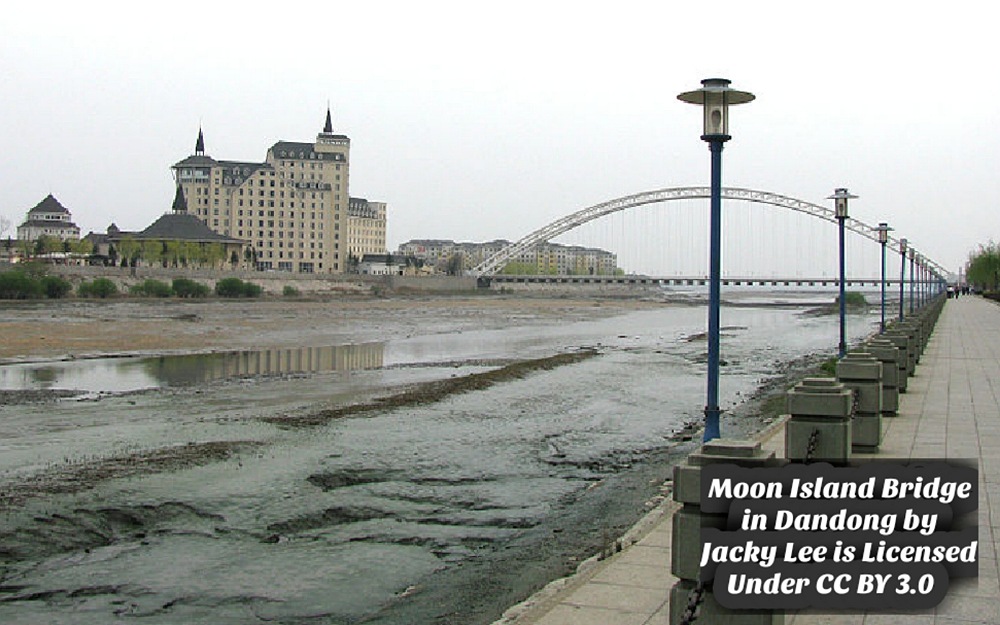
“Given the authorities’ emphasis on the quarantine of emergency supplies entering the Dandong-Sinuiju customs office, it seems that they are concerned about the spread of the coronavirus through border trade,” the source said, referring to measures imposed at the main border crossing.
The North Korean government has been tightly monitoring the Sino-Korean border since trade was shut down at the end of January. RFA reported in February that authorities had threatened to execute smugglers to prevent cross-border movement to slow the spread of the virus to North Korea.
Pyongyang maintains that it has not confirmed a single case of coronavirus within its borders. But RFA reported that authorities acknowledged in public health lectures in late March that the disease had spread in three parts of the country, including the capital.
North Korean residents and authorities have been clamoring for trade to restart, to restore livelihoods hit by the border lockdown and address skyrocketing food prices resulting from supply shortages.
North Koreans earning a government salary of as little as U.S. $5 a month support themselves by petty trading in food and consumer goods imported from China, or by exporting North Korean goods back to China.
The trade official said that at the emergency meeting, officials were held responsible for their agency’s decreased trading volume, even though the closed border was to blame.
“Each trade agency was required to report on how much business with Chinese partner companies they could expect if border trade was resumed,” the source said.
“Participants in the meeting questioned whether the authorities were deliberately using coronavirus as an excuse to extend the trade stoppage so that they could replace trade officials,” the source added.
A North Korean trade worker stationed in the Chinese port city Dalian, who requested anonymity for security reasons, told RFA that this time it was North Korea, not China that rejected opening the borders. In April, China turned down a North Korean request to resume trade flows.
“Authorities, too, are facing economic difficulties, so they have attempted to resume trade across the border several times,” the trade worker said
“Now that coronavirus is showing signs of spreading again in many different parts of China, it seems like we are the ones who decided to postpone the resumption of official trade this time,” the Dalian source added.
The Dalian trade worker said that with no end to the trade ban in sight, North Korean “authorities are ordering each trading company to increase imports of emergency supplies, which are being brought in unofficially.”
“Unofficial trade” between China and North Korea covers exchanges ranging from small-scale smuggling, to cross-border transfers of emergency food supplies for Pyongyang, to secret dealings to avoid sanctions while supplying luxury goods and other banned products for North Korea’s elite.
Last month, RFA learned from dockworkers that ships carrying corn and rice labelled as “construction materials” were frequently sailing from a northeastern Chinese port of Dandong to nearby North Korea in a secret operation run at night kept to avoid international scrutiny.
Under the coronavirus lockdown, North Korea’s dire need for imports makes it a seller’s market for Chinese exporters. The cost of moving goods through the closed border falls on North Korea, which “must pay much more to bring in emergency supplies through unofficial trade,” said the second source.
“The biggest concern for trade workers is that if we must rely solely on unofficial trade, the Chinese companies will get used to it and we will in the future have a thinner margin with them,” the Dalian trader said.
According to the (South) Korea Trade Investment Promotion Agency, after peaking at $6.86 billion in 2014, total official trade volume between North Korea and China dropped to $2.72 billion in 2018 with the onset of sanctions. In 2019 it showed a slight increase to $3.1 billion.
Reported by Hyemin Son for RFA’s Korean Service. Translated by Leejin Jun. Written in English by Eugene Whong.
Copyright © 1998-2020, RFA. Used with the permission of Radio Free Asia, 2025 M St. NW, Suite 300, Washington DC 20036. https://www.rfa.org.

Bouvier Des Flandres Dog Breed

Foundation Models
China Covered Up the Cause of a Detained Uyghur Father’s Death
UN Security Council Meets on Situation in Middle East, Including Palestinian Question

Six-Year-Old Becomes World’s Youngest DJ
Giant Schnauzer Dog Breed

NDR and ITDR
UN Security Council Meets on Situation in Libya
Subscribe Our You Tube Channel

Fighting Fake News
Fighting Lies