




Researcher Adrian Zenz discusses the independent tribunal’s judgment that China committed genocide in Xinjiang.
By Nuriman Abdurashid

German researcher Adrian Zenz provided crucial evidence to the Uyghur Tribunal about
the Chinese government’s atrocities against the Uyghurs and efforts to decrease the mostly Muslim population in its western Xinjiang. The independent tribunal, which has no state backing, delivered a judgment in London on Dec. 9 that China committed genocide against Uyghurs and other ethnic minorities in Xinjiang region and that President Xi Jinping shared primary responsibility for the atrocities. China has vilified Zenz, an independent researcher with the Washington, D.C.-based nonprofit organization Victims of Communism Memorial Foundation, with state media earlier this year reporting that companies in Xinjiang were suing him.
Zenz has written extensively on the network of internment camps in Xinjiang, the forced sterilization of detained Uyghur women, efforts to reduce population growth in Xinjiang thorough birth control and population transfer policies, a “population optimization strategy” to dilute the Uyghur majority in southern Xinjiang by raising the proportion of Han Chinese, and coercive and forced Uyghur labor displacement, as well as the involvement of China’s top policy, legislative, and advisory bodies in the creation of the camps. He presented his findings at Uyghur tribunal hearings in June and September, and during a brief November hearing was asked to authenticate Chinese government documents leaked to the Uyghur Tribunal. The classified documents included speeches by Xi in 2014, calling for Uyghur re-education and population control in Xinjiang. Zenz spoke with reporter Nuriman Abdurashid of RFA’s Uyghur Service about the tribunal’s verdict, what governments should do to stop the genocide in Xinjiang, and his messages to the Chinese and the Uyghur people. The following interview has been edited for length and clarity.
RFA: How do you feel about the Uyghur Tribunal’s verdict?
Zenz: I feel it’s historic. It’s a historic day for the Uyghurs. It feels very special even though the tribunal does not have a formal enforcement power or political power, but still the tribunal did such a professional and careful job. This is the first time that there has been a genocide determination that really explains in detail the reasoning, the exact evidence, and the legal reasoning behind it. Of course, we did have the Newlines Institute’s report, but this is the first formal determination by a council or tribunal. Because of the example that they [the tribunal members] have set, inviting so many witnesses, including new witnesses, and gathering so much evidence and expert testimony, it was an incredible effort. And so, it feels like really a kind of a historic moment.
RFA: What is your opinion of the verdict?
Zenz: The verdict on crimes against humanity rested on a lot of evidence for different types of atrocities. The genocide verdict that the tribunal issued rested almost entirely on the item of birth prevention, and in order to establish the intent, what is the intent behind birth prevention. The tribunal relied to a significant extent on my research on population optimization that I published in June this year, and the tribunal’s genocide determination followed the reasoning that was outlined in that report. It followed the logic that you can estimate the genocide, the destruction in part, by measuring the number of Uyghurs that would have been born if there had not been the draconian crackdown on births, and compare that to the current birth rate situation — the declined birth rate — and then estimate the difference as the destruction in part according to the Genocide Convention.
RFA: What do you think about the Chinese government’s
Zenz: I feel it’s historic. It’s a historic day for the Uyghurs. It feels very special even though the tribunal does not have a formal enforcement power or political power, but still the tribunal did such a professional and careful job. This is the first time that there has been a genocide determination that really explains in detail the reasoning, the exact evidence, and the legal reasoning behind it. Of course, we did have the Newlines Institute’s report, but this is the first formal determination by a council or tribunal. Because of the example that they [the tribunal members] have set, inviting so many witnesses, including new witnesses, and gathering so much evidence and expert testimony, it was an incredible effort. And so, it feels like really a kind of a historic moment.
RFA: What is your opinion of the verdict?
Zenz: The verdict on crimes against humanity rested on a lot of evidence for different types of atrocities. The genocide verdict that the tribunal issued rested almost entirely on the item of birth prevention, and in order to establish the intent, what is the intent behind birth prevention. The tribunal relied to a significant extent on my research on population optimization that I published in June this year, and the tribunal’s genocide determination followed the reasoning that was outlined in that report. It followed the logic that you can estimate the genocide, the destruction in part, by measuring the number of Uyghurs that would have been born if there had not been the draconian crackdown on births, and compare that to the current birth rate situation — the declined birth rate — and then estimate the difference as the destruction in part according to the Genocide Convention.
RFA: What do you think about the Chinese government’s reaction to the verdict?
Zenz: With the Chinese government, the problem is that their propaganda strategy has really not worked out because all they do is attack the witnesses or attack the tribunal or attack other governments or attack researchers like myself. And people see that that is a really weak approach because the approach that researchers like myself have taken and that the Uyghur Tribunal took is to look at the evidence, data, and witness statements, and to examine them. The tribunal also, for example, did not accept all the evidence. It didn’t accept everything. It made a decision what to accept and what not to accept. There was a standard applied. The Chinese government, of course, is unfortunately not interested in discerning the truth or bringing a greater understanding of its facts and policies, as we also noticed from the Xinjiang Papers, which were secret speeches — speeches that were kept secret because the Chinese government did not want the West to know what it was doing and saying. In the West, these kind of speeches would have been public. They would not have been secret. Unfortunately, it is an ongoing cover-up of the situation.
RFA: What’s your suggestion to governments to stop the genocide?
Zenz: I would advise them that they need to apply consistent pressure. They need to enact exact measures. In order to take steps to prevent a genocide, you need to take some steps that impose a cost on the Chinese government for doing what they’re doing. This cost can come in terms of political cost through diplomatic measures or economic costs through economic measures and sanctions and through pressure at multilateral institutions. The United Nations would need to condemn China. It needs to make its own genocide determination and condemn China. Countries would need to then act together. If countries act together, they’re more likely to make a difference. We should not underestimate the importance of consistent actions over time, meaning if several countries enact consistent measures that impose a cost on the Chinese government for this atrocity and apply them over time, at some point, together with the internal weaknesses that China has — the Chinese government is strong on the outside but weak on the inside; it has significant weaknesses because of its lack of transparency — and over time there’s a possibility that this cost is going to build up together with the other costs, for example, with the tennis star Peng Shuai and the Wolf Warrior diplomacy — other measures that they take that have been isolating China and have been counterproductive. Over time, if governments do the right thing, the effects of those actions add up and can effect change. That’s what we’re looking at here.
RFA: Do you think this genocide is going to end soon?
Zenz: These are all things that need to be done, and over time, taken together, they will all have an effect in the right direction. People need to not just put their hope into one single act people. The Uyghurs cannot just put their hope into one genocide determination or one forced labor act. This has to be done over time by as many parties as possible, and it adds up together with the other things because the Chinese Communist Party is not only committing an atrocity against the Uyghurs, but it’s also committing atrocities against Tibetans, and in Hong Kong, and against its own people, against house church Christians, the Catholic Church, and other Muslims in China, and other groups — dissidents, feminists. All of this together will accumulate and will have consequences over the long run. Sometimes all it takes is just sort of one situation that puts enough strain on the system. Sometimes this can come sooner. Maybe it sounds like it is very long term, but it doesn’t have to be because there’s a possibility that we don’t know the system in detail. The Chinese government doesn’t know everything in detail, so sometimes these costs can add it up together and have a cumulative effect that kicks in at the right time. We cannot have an expectation of things ending soon. The Chinese government has a long-term strategy, but it also has some systemic problems. It is impossible to predict how exactly this will work out, but people need to take this day by day and week by week and continue in hope and in consistency. We just have to continue.
RFA: What is your message to the Chinese?
Zenz: Well, I would tell them directly that their attacks on me don’t matter because what I do is more important than what could happen to me, and I will continue my work for sure no matter what the attack is.
RFA: What’s your message to the Uyghurs?
Zenz: It’s a historic moment, and I would say that the Uyghur people should keep up their hope because I believe that God has not forgotten them and that they should maintain their hope. I wish them strength. I wish the Uyghur people strength.
Edited by Roseanne Gerin.
Copyright © 1998-2020, RFA. Used with the permission of Radio Free Asia, 2025 M St. NW, Suite 300, Washington DC 20036. https://www.rfa.org
UN Security Council Meets on Situation in Sudan and South Sudan

Black Bear Breaks into California Library and Eats Peanut Butter,Honey

Bouvier Des Flandres Dog Breed
Foundation Models
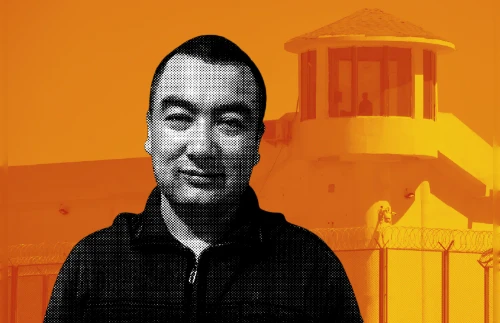
China Covered Up the Cause of a Detained Uyghur Father’s Death
UN Security Council Meets on Situation in Middle East, Including Palestinian Question

Six-Year-Old Becomes World’s Youngest DJ
Related Article
Tibetan Rights Group: South Africa Arson…
China Covered Up the Cause of…
Exclusive: North Korean Army Video Says…
Could ‘Apron Dad’ on North Korean…
From a Cardboard Box to an…
Myanmar Junta Airstrikes Target Civilians to…
Other Article
Tibetan Rights Group: South Africa Arson…
UN Security Council Meets on Situation…
Black Bear Breaks into California Library…
Bouvier Des Flandres Dog Breed
Foundation Models