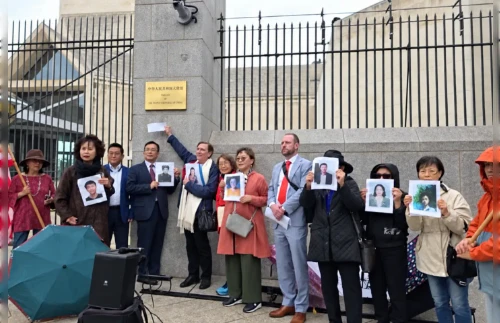




A Q+A with the Internet Society Kyrgyzstan chapter’s co-founder about bringing internet to the most rural schools.

The internet has never had a year like 2020. With the pandemic forcing people everywhere to retreat into their homes, our lives are virtual like never before.
But what if you don’t have internet access?
For schoolchildren in remote parts of Kyrgyzstan, that’s not a hypothetical question.
For the Internet Society, it’s a challenge.
Since 2018, the Kyrgyzstan chapter of the global non-profit has been bringing digital resources to remote schools that might otherwise have no internet connection – and thus no way to access curricula during the pandemic.
The Ilimbox, as they call it (based on the Kyrgyz word for “science”), includes a digital library of Kyrgyz-language electronic books and Wikipedia pages. This year they’ve added video lectures and other school materials from the Education Ministry. The Ilimbox costs about $150 to build and is supported by a number of foreign donors.
Though internet penetration rates have increased rapidly in recent years, connections outside of cities often utilize slow 3G infrastructure, and providers have few incentives to boost service, exacerbating the digital divide. In 2018, the World Bank said fixed broadband connections reached only 4.1 percent of the population.
Eurasianet spoke with Talant Sultanov, one of the volunteer founders of the Internet Society’s Kyrgyzstan chapter, who has also helped the government develop its digitization strategy over the last few years.
This interview has been edited for brevity.
Eurasianet: With COVID, kids everywhere are learning remotely, including many in Kyrgyzstan. How does your project help?
Talant Sultanov: The educational content available on the internet is not accessible to kids in remote, rural and mountainous communities. This was a problem before COVID and has become an even bigger issue during COVID,
when all kids have to stay home. But if you have no connectivity to the internet, you don’t get access to educational content.
Another related challenge is that even if you have internet connectivity, most of the content available on the internet is in either English or Russian. There is very little educational content in the Kyrgyz language.
So a couple of years ago we collected all the educational content in Kyrgyz that was available on the internet. There were already many initiatives sponsored by different organizations generating educational content for the Education Ministry. We collected all that content into a single place, a device we called “Ilimbox.”
Eurasianet: Ilimbox?
Sultanov: Yes,there is a standard name for these kinds of devices: internet in a box. But we wanted the name to be understandable here in the Kyrgyz Republic, especially in rural communities, so we combined a Kyrgyz word, ilim, which means “science,” and we kept the second part of the “internet in a box” because we are actually delivering these digital offline libraries in a beautiful little box: Science in a box.
Eurasianet: How does it work?
The device is not very complex. It consists of an external hard disk and a microcomputer called Raspberry Pi, which also serves as a Wi-Fi router. It’s all packaged into a small box and you can bring it to a rural library or school and all you need is a power supply. You don’t need internet access. After connecting this device to a power supply, kids and teachers who have laptops, tablets or the simplest smartphones can connect. They don’t have to connect to the internet. And by connecting to this device, they have access to all the educational content that’s inside the device. [View the portal here.]
Eurasianet: How did you come up with this idea?
We started this project a couple years ago after seeing a similar project in Mexico. That year we participated in a UN/Internet Society-sponsored conference called the Internet Governance Forum. Our counterparts there in Mexico demonstrated this device and when we came back we wanted to do something similar.
When COVID struck, this device became even more relevant. And after discussions with the Ministry of Education and donors, we started installing these Ilimboxes across the country. Initially, in 2018-19, before COVID, we started with 100 schools, and recently we brought the Ilimbox to 20 of the most remote schools in the country.
Of the 2,200 schools in the Kyrgyz Republic, most have some sort of internet connectivity. But these 20, in the most remote areas, did not. So we set a challenge to ourselves: Let’s bring Ilimbox to these 20 remotest schools. We wanted to demonstrate that it is actually possible to bring educational content to these schools.
Eurasianet: Why don’t these schools have internet?
Sultanov: These schools and communities are located on the other side of the so-called digital divide. Sometimes these are very small villages with one-room schools. To connect them is very costly. On the one hand, building internet infrastructure in rural and hard-to-reach areas requires extra costs; on the other, these communities do not generate sufficient demand to recover the investments. Thus investments go to more profitable areas and the digital divide widens further.
One of the most interesting and illustrative cases is a village called Zardali in Batken Region. In Zardali the conditions are harsh. It’s so remote that you can’t reach it by car. The last stretch is about four hours by foot or on horseback on a very narrow mountain path. There is no electricity, no TV, no radio. And there is no internet. Since you have no electricity and internet, kids in the school don’t have devices because there is no use for them. So we chose Zardali as a place we had to go. But to make the Ilimbox work, we had to think of electricity. So our team carried a large solar panel to the village by hand.
Eurasianet: Do you find many places where people don’t have smartphones or other devices?
Yes, that’s a challenge. The biggest challenge is that kids and teachers have very limited access to computers. It’s still considered a luxury item in rural schools. Sometimes school computers are locked up and covered by plastic and this hardware just sits and collects dust. People don’t realize that within three or four years this hardware becomes obsolete.
On the other hand, we discovered that smartphones are becoming very affordable and in most remote areas people have access to them. One consideration here is that smartphones are not allowed in schools, so we had to suggest to school administrators that maybe they could allow smartphones during breaks or on the weekend and that kids could download content from the Ilimbox to their smartphones.
In Zardali, though, we found that very few kids have smartphones. Why? Because electricity is an issue. It’s difficult to charge, and there is no [mobile] connectivity, so there is really no need to have a smartphone. In this case, we put out a call on social media for individuals and companies to donate a smartphone. One person responded, a friend of ours, and she donated her smartphone, and in Zardali village there was one little girl; she got the smartphone.

Eurasianet: What’s been the hardest part of the project?
Sultanov: I think having relevant content. Of course, COVID struck unexpectedly and the educational system struggled a lot to transform to an online format. The Ministry of Education prepared online video classes, online textbooks, and other materials. But these textbooks were just photos of regular books and the [digital] files were extremely large. Memory on your smartphone is a very precious resource in rural areas; it gets filled quickly. So for teachers and students in the villages to download these textbooks, they had to delete photos and videos on their phones. That of course is unpleasant. Another issue was that these textbooks – they were photos, so you could not search by word, make the font larger or smaller, you could only view it as an image.
So our team transformed these photos of textbooks into PDF files, so now you could search by text, increase the font, and the file size of the books became much smaller. And you wouldn’t have to free up a lot of space on your smartphone.
Another issue is online video classes. Since teachers have limited experience doing online lessons, they didn’t turn out to be very exciting. And when you’re a child on the internet, there are many distractions. So we tried to find videos that are relevant and interesting. And again we had the issue of the file size. Our team found a way to compress the videos into smaller files without losing quality.
We wanted to make interesting, engaging content available for smartphones, because kids in rural areas do not have computers, neither at home nor at school. A smartphone has become the way to access information. At the moment we are working on creating a platform for educational content and resources. So not only do we want to bring devices to remote areas, we want to create, collect and systematize useful content for the users in the country and potentially this initiative could be expanded to neighboring countries.
Eurasianet: Can you remotely update the content of an Ilimbox?
Sultanov: At the moment, the Ilimbox is designed to help schools and libraries that have no internet connectivity. So these are devices that do not require a connection to the internet. However, we want these devices to become smart, or connected. The computer inside has a slot for a SIM card and we would like to negotiate with local mobile internet providers. With their SIM cards installed, these devices could be synchronized so that when we have new content it can be distributed to all the Ilimboxes [in places with mobile internet connectivity]. This would allow us to keep statistics on which kind of content is popular, which kinds of videos are viewed most by the kids.
This would allow us to develop even better content.
Eurasianet: What comes next for Ilimbox and the Internet Society in Kyrgyzstan?
Sultanov: After making the Ilimbox a smart device with SIM cards, we want to make it a regional activity. At the moment the content is in Kyrgyz, but it could be adapted into Uzbek and used in Uzbekistan; we could adapt it into the Tajik language. We would like this initiative to become available across Central Asia.
As for the Internet Society Kyrgyz chapter in general, our goal is to bring Internet connectivity to everyone – to help with digital skills and to create opportunities, especially for youth, especially for girls, through the internet and new technologies.
This story was originally published by Eurasianet Eurasianet © 2020

Could ‘Apron Dad’ on North Korean TV Pave the Way for Kim Jong Un’s Daughter to Rule?
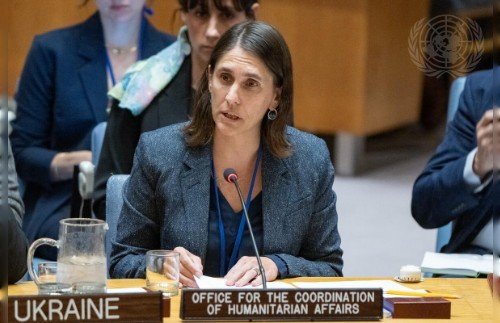
UN Security Council Meets on Maintenance of Peace and Security of Ukraine

Pet Iguana in Kansas Neighborhood Rescued from Tree

Curly Coated Retriever

Backpropagation
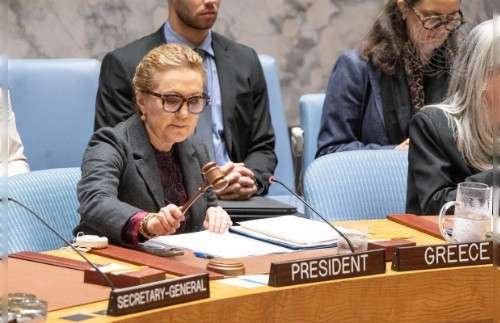
UN Security Council Meets on Sudan and South Sudan
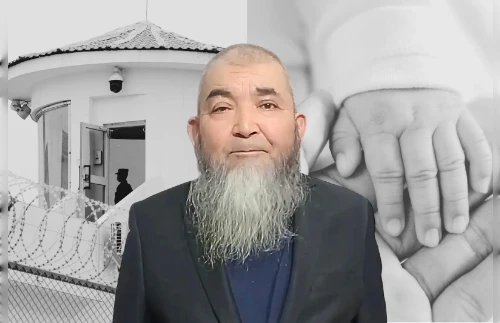
From a Cardboard Box to an Iron Cage: a Father’s Fight for His Daughter’s Freedom

British Grower Set New World Record for the Title of Heaviest Pumpkin
Subscribe Our You Tube Channel

Fighting Fake News
Fighting Lies