



BenarNews staff/Dhaka and Washington
Recent developments in Bangladesh such as “arbitrary arrests and reprisal violence” may undo some vital steps that the interim government has taken to reform the law and order system, Human Rights Watch said in a new report.
The temporary government under Nobel laureate Muhammad Yunus was set up days after the fall of Awami League-led administration of Prime Minister Sheikh Hasina, who fled Bangladesh Aug. 5 during a mass uprising against her 15-year authoritarian rule.
In its report released Tuesday (Dhaka time), the international human rights watchdog group acknowledged that it was a daunting task to deal with entrenched, politicized and powerful forces that had long enjoyed impunity under Hasina, but it urged the interim administration to take swift corrective steps.
“Troublingly, security forces are replicating familiar patterns of abuses from the Hasina administration,” said HRW’s report titled, “After the Monsoon Revolution: A Roadmap to Lasting Security Sector Reform in Bangladesh.”
“These include arbitrarily arresting Awami League officials and supporters as well as journalists seen to have been favorable to the previous government. Another tactic that security forces continue to practice is filing criminal complaints against large numbers of ‘unknown’ people, a common abusive practice in Bangladesh,” the report added.
HRW said that many were worried that the pace of reforms had slowed down.
“Without urgent structural reform, the abuses of the past could quickly become a blueprint for Bangladesh’s future,” HRW warned.
“Foreign donors as well as Bangladeshi activists, lawyers, and experts need to examine the failures of the past to protect human rights and address loopholes. Key to this is the separation of powers and building an independent criminal justice system.”
The New York-based rights watchdog said it compiled its report based on interviews with eight members of the security forces as well as 30 victims or their relatives, and eyewitnesses to the momentous but deadly July-August protests that brought down the Hasina government.
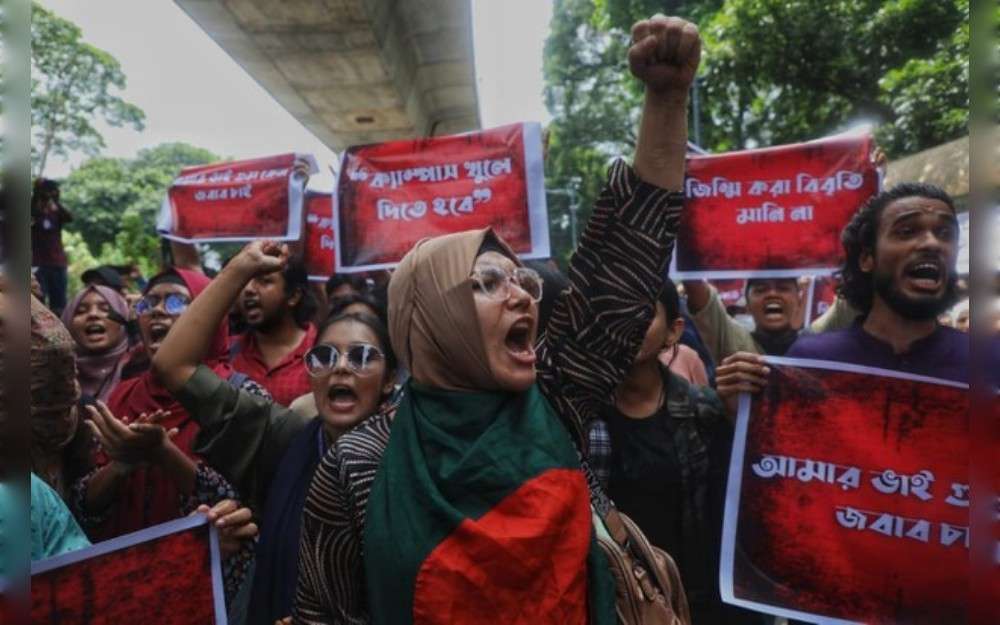
Last July, what began as university students protesting some government job quotas morphed into a nationwide mass movement after the demonstrations turned deadly when police were ordered to train their guns on those exercising their democratic right to dissent.
The situation worsened when Awami League members and supporters along with the police then used the same methods to quell the mass uprising against Hasina, which many saw as an indictment of her leadership.
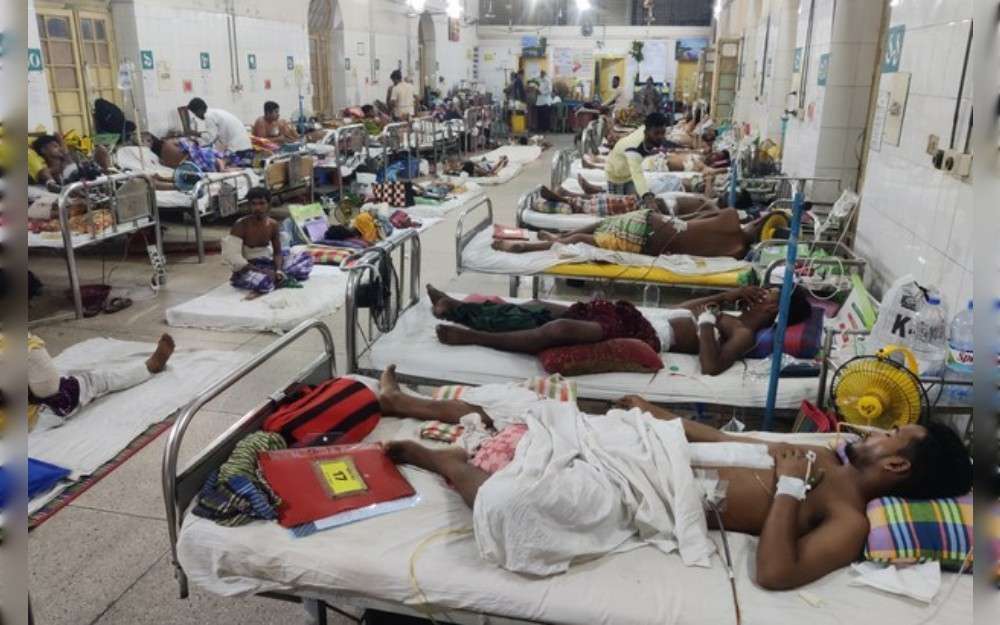
More than 1,400 people lost their lives during the upheaval.
After Hasina fled to neighboring India, the university students who spearheaded the protests recommended that 2006 Nobel Peace Prize winner Yunus – highly respected at home and abroad – take charge of an interim administration to prepare the country for a general election.
After that suggestion was accepted by the Bangladesh Army and other political parties, Yunus was named chief adviser.
He said, to broad agreement from the citizenry, that a fair and participative general election would not be feasible unless there was a complete overhaul to reform state institutions that Hasina had systematically destroyed by politicizing and transforming them into agents perpetuating her rule.
HRW acknowledged that Yunus and his advisers had taken crucial steps to embark upon reforms to pursue accountability, such as the commissions it formed to propose changes to Bangladesh’s judiciary, electoral system, public administration, police, anti-corruption office, and constitution.
The human rights watchdog urged the interim government to also seek a U.N. Human Rights Council resolution to approve the creation of a mechanism to safeguard those reforms from future Bangladesh governments.
‘End the practice of mass arrest warrants’
Additionally, HRW pointed to crucial areas that needed the Bangladesh interim government’s immediate attention to ensure old practices did not return.
Noting that law enforcement in Bangladesh used mass arbitrary arrests to target critics of the Hasina government, the interim administration needed to set up a mechanism that would prohibit cases being filed against unnamed accused and end the practice of mass arrest warrants.
Additionally, it was essential to revise laws that “allow for vague and overly broad charges that are misused to target critics,” HRW recommended.
To prevent a situation where security forces end up doing the state’s bidding, reforms needed to target political interference in the police, prosecutor’s office, and judiciary, and ensure civilian oversight and accountability.
Similar reforms were paramount to create a fair, effective and rights-based justice system, HRW noted.
Ultimately, the promotion of an active civil society ought to underpin these structural reforms, HRW said.
That became impossible under Hasina, in no small measure due to what was called the Digital Security Act (later known as the Cyber Security Act).
The interim government had pledged to repeal that law but HRW noted that what it approved in its place “appears to replicate many of the same overly vague and broad provisions of its predecessors.”
The Yunus administration must revise this draft ordinance in consultation with civil society experts and activists and replace it “with a rights respecting law,” HRW said.
Only then, said the human rights watchdog, would Bangladesh’s reforms endure.
Copyright ©2015-2024, BenarNews. Used with the permission of BenarNews.