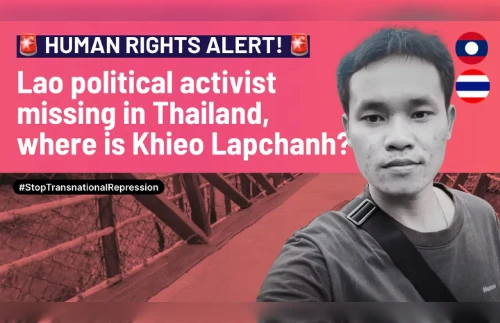




Khieo Lapchanh is the latest Lao asylum seeker to disappear mysteriously in Bangkok.
By Ounkeo Souksavanh for RFA Lao
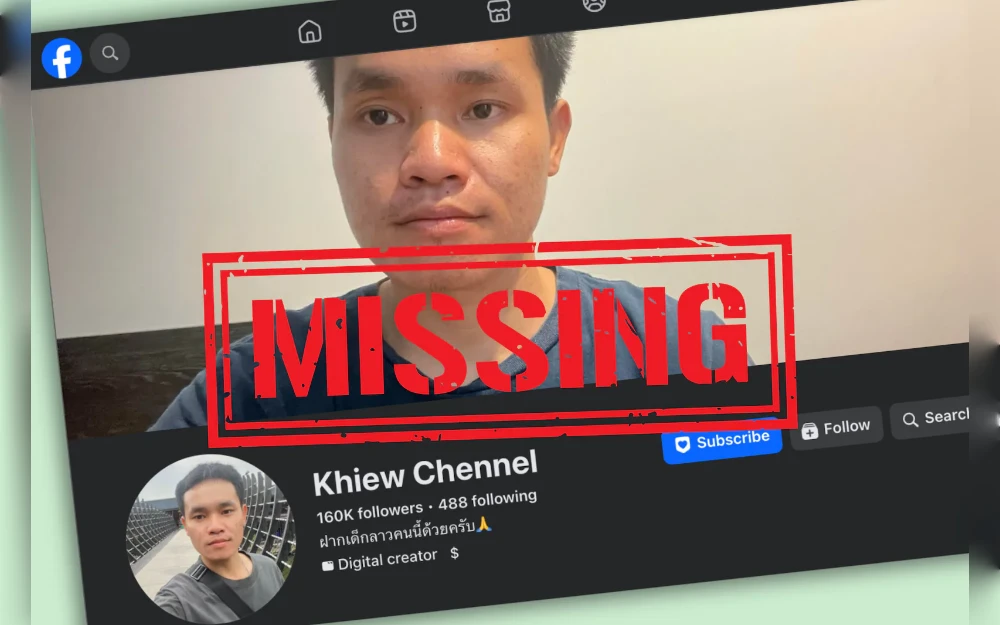
The disappearance of a Lao content creator from Thailand this month could be the latest example of Laos’ transnational repression, the leader of a Thai-based human rights organization told Radio Free Asia.
Khieo Lapchanh, 26, went missing on Sept. 15, in Thailand’s Samut Sakhon province, one day before a scheduled asylum interview at the U.N. Refugee Agency office, or UNHCR, in the nearby capital of Bangkok.
RFA was not able to confirm the reason for his disappearance.
According to a handwritten letter that the Thailand-based Manushya Foundation rights organization said it had helped him prepare, Khieo first entered Thailand in 2019 and had been working at a restaurant.
In late 2025, he started regularly posting videos of himself criticizing the Lao government on Facebook, and decided to request asylum after receiving threats over the videos, the letter said.
At the time of his disappearance, his “Khiew Chennel” account on the social network had amassed 159,000 followers.
There is a high possibility that Khieo’s disappearance is related to transnational repression, Emilie Palamy Pradichit, founder and executive director of the Manushya Foundation said in a statement by the organization.
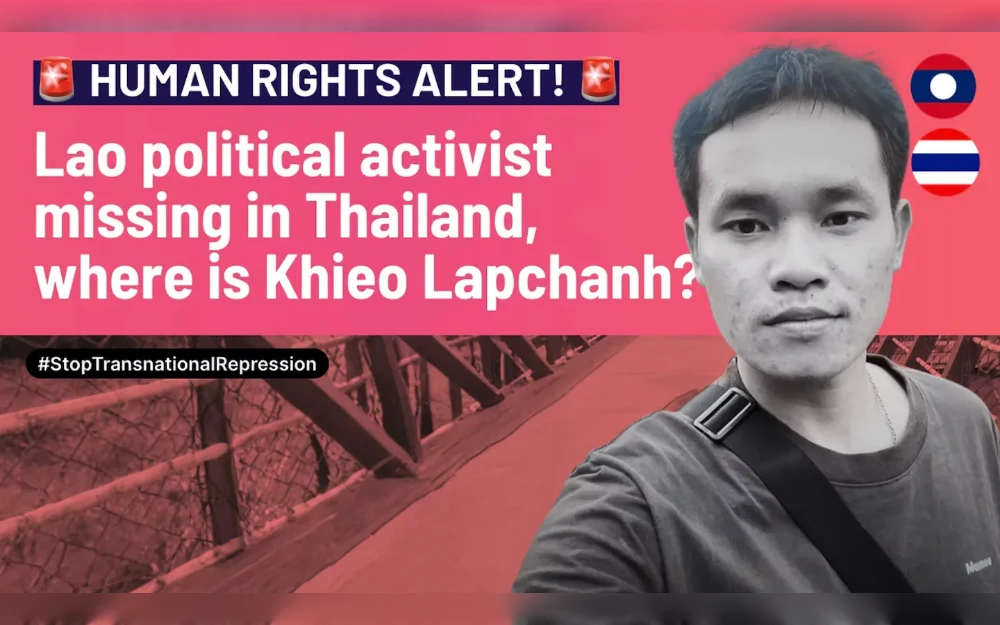
“Digital transnational repression does not stay confined to digital space. It can expose activists to physical danger,” said Emilie. “Khieo had already stopped speaking out online because he feared for his life. Now he is missing.”
The last public update on Khieo’s Facebook account is dated Aug. 18, a repost of another content creator’s criticism of a Lao police raid. Prior to that, the most recent update is from April 4, and his posts from around that time contained specific criticism of the Lao government figures or policies.
Speaking out
On April 2, Khieo had been critical of the Lao government for not building roads in Meung Phieng district, Xayaboury province, to the point that the people living there took matters into their own hands.
“People build concrete roads to their village by themselves, which is not their job, it is the government’s obligation,” he said. “But they need to do it instead of the government because they have so much trouble with those horrible roads.”
In another video post dated April 1, he discussed nepotism in the Lao government.
“You never allow others to get any important position,” he said, referring to former president Khamtay Siphandone, who after stepping down in 2006, continued to set up his family members in prominent government positions.
As was the case with many of his other videos, Khieo was threatened in the comments over his criticism of the Siphandone political dynasty.
“I would like to remind you, Khieo, you should not try to change the Lao regime. If you want to live, you have to change your behaviors and actions,” a commenter wrote.
“If your application for asylum has been submitted, keep a low profile. You want to go to the third country, but now you are in the second country,” said the same commenter, implying that Khieo was vulnerable in Thailand.
According to Manushya, there had even been a US$8,000 bounty to have him killed circulating online in March 2026.
“At this point, the risk could no longer be understood as merely hostile online speech,” the Manushya statement said. “The combination of death threats, financial incentives for violence, attempts to identify Khieo’s whereabouts, and his highly recognizable public profile created serious concerns that digital transnational repression could escalate into physical harm in Thailand.”
Whereabouts unknown
Emilie first noticed Khieo’s disappearance on Sept. 16, she told RFA.
“I called him because I was supposed to take him to his UNHCR interview, but he did not respond,” said Emilie. “On September 18, I informed the local police of his disappearance.”
The owner of the restaurant where Khieo worked, who identified herself only by her given name Kiatsuda, told RFA she had called him on Sept. 15 when he did not show up for work.
“His phone was off so I thought Khieo had quit his job without informing me,” she said.
When he didn’t show up on the 16th or 17th, she went to Khieo’s apartment on the 18th, but was unable to find him, she said.
“On Sept. 18, the police informed me of his disappearance,” she said. “It was somewhat shocking.”
Though the circumstances of Khieo’s disappearance remain unknown, several other Lao dissidents in Thailand have mysteriously disappeared or been found dead.
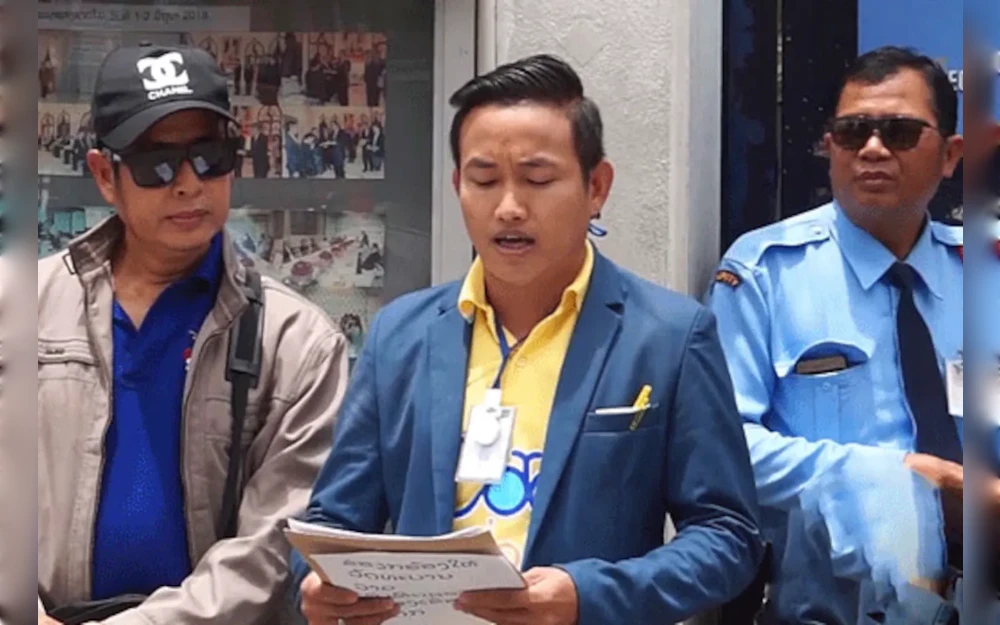
Od Sayavong, a democracy activist who had protested the Lao government while living in Thailand, disappeared in August 2019. Thai police say that no progress has been made in the investigation.
In November of the same year, Phetphouthon Philachane, a Lao migrant who had taken part in protests in front of Laos’ embassy in Bangkok, disappeared in the Lao capital Vientiane while visiting relatives.
In May 2023, the body of democracy activist Bounsuan Kitiyano was found in Thailand’s Ubon Ratchathani province. He had been shot three times.
Edited by Eugene Whong.
“Copyright © 1998-2023, RFA.
Used with the permission of Radio Free Asia,
2025 M St. NW, Suite 300, Washington, D.C. 20036.
https://www.rfa.org.”