




Parents and experts say the impact of detentions will last for generations to come.

Mass incarceration of Uyghurs in northwestern China’s Xinjiang Uyghur Autonomous Region (XUAR) has scattered some 500,000 Uyghur children in boarding schools, orphanages, and other institutions run by the Chinese state—a state that experts say is committed to the long-term eradication of the ethnic group.
The forcible transfer of children from one group to another that has been documented for five years in the XUAR is one of five acts that meet the threshold for genocide, argued international experts in a report issued this month by the Washington-based Newlines Institute.
The Newlines report cited Article II of the United Nations’ 1948 Convention on the Prevention and Punishment of the Crime of Genocide, which spells out five acts that constitute genocide, any one of which the group found to be sufficient for if intent to harm or destroy a group in whole or part is clear.
Those findings came amid reports of Uyghur children in China being completely separated from their parents, orphaned, and deprived of the opportunity to reunite with their families. Family separation appears to be creating conditions of trauma, the long-term effects of which are difficult to predict.
Investigative reporting over the past few years has shown that hundreds of thousands of Uyghur children live in some form of state care. These numbers, which were initially reported in 2018 and have likely grown since, are drawn from Chinese government reports and other documents.
In some of the more shocking cases, Uyghur parents abroad have spotted their own children—some of whom they left behind when they emigrated, expecting to reunite with them not long after—in videos showing them receiving state education in XUAR boarding schools circulating on social media.
Recently a video of a Uyghur child in Aksu (in Chinese, Akesu) prefecture circulated widely on social media both within and outside of China, raising alarm within the Uyghur diaspora. The video appears to show a six-year-old girl named Sabira speaking in Mandarin to her ethnic Han teacher. The girl hesitates to tell her teacher her brother’s name, noting that she only knows how to say her brother’s name in Uyghur, and she is worried she will be hit if she does not say it in Chinese.
Former internment camp instructor Qelbinur Sidik, who fled to the Netherlands after working for a total of nine months in two different camps, was an elementary school instructor for 28 years. She recently spoke with RFA’s Uyghur Service about the video and about the broader environment of fear in the XUAR, noting that in recent years she taught many students who were afraid and hesitant, as well as who had become orphaned as a result of state policy.
“If you watch that video, you can see there’s a fear that has settled throughout the girl’s entire body,” she said, noting that physical abuse grew more widespread in schools in the region as the number of Han teachers increased.
“She can’t speak her own language, but she also can’t say [what she wants to say] in Chinese, and she knows she’ll be hit. This is how these children are living now … Because they’re always hitting and verbally abusing the kids, [the kids] fear they will be punished, and they can’t think about anything else.”
Teachers assigned to children
According to Sidik, the number of orphaned students began to grow in 2016, ahead of the implementation of a campaign of mass incarceration in the XUAR that has seen up to 1.8 million Uyghurs and other Turkic Muslim minorities detained in a vast network of internment camps since early 2017. By 2018, she said, many classrooms were half empty.
“The students started coming to us, saying [the authorities] had taken away their older siblings, mothers, their fathers,” Sidik said.
“In that period, the Bureau of Education put out a notice saying that schools had to assign children who had been left alone after their parents were detained to different teachers who would be responsible for them,” she said.
“I was assigned to two children from one family. I had to check on them. One of the children was a 12-year-old girl. I went to her house, arranged food for them, did work for them. I told them, ‘Your parents will come back, surely they’ll be back tomorrow or the next day.’ By November [2017], there were many such children, so they started assigning them to Han teachers.”
Sidik said children in classrooms became meek and afraid, and if teachers had to speak to them more forcefully, they would react by raising their hands over their heads, as if to protect themselves from a potential blow.
“Eventually, a lot of children disappeared. About half of them were gone. There was no trace of them after they disappeared,” she said.
“They said they had placed them in boarding schools, that the government was sending them there and would be taking care of them.”
Sidik said she often thinks of her students, who have been placed in what she called essentially “camps for children.”
“They must think I’m a liar—I told them their parents would come back soon, but it’s been years and their parents still aren’t back. I think about this and cry,” she said.
was assigned to two children from one family. I had to check on them. One of the children was a 12-year-old girl. I went to her house, arranged food for them, did work for them. I told them, ‘Your parents will come back, surely they’ll be back tomorrow or the next day.’ By November [2017], there were many such children, so they started assigning them to Han teachers.”
Sidik said children in classrooms became meek and afraid, and if teachers had to speak to them more forcefully, they would react by raising their hands over their heads, as if to protect themselves from a potential blow.
“Eventually, a lot of children disappeared. About half of them were gone. There was no trace of them after they disappeared,” she said.
“They said they had placed them in boarding schools, that the government was sending them there and would be taking care of them.”
Sidik said she often thinks of her students, who have been placed in what she called essentially “camps for children.”
“They must think I’m a liar—I told them their parents would come back soon, but it’s been years and their parents still aren’t back. I think about this and cry,” she said.
Children in the diaspora
Uyghur children outside the XUAR are facing similar psychological anguish and other difficulties, as well.
Sadirdin, a Uyghur living in Almaty, Kazakhstan, recently spoke with RFA about the effect that his wife’s internment has had on his children. Sadirdin’s wife, Muyassar, disappeared in 2016 after returning to renew her passport in Atush (Atushi), a county-level city of around 270,000 people that is the capital of Kizilsu Kirghiz (Kezileisu Keerkezi) Autonomous Prefecture in the cotton- and grape-growing region of southwestern XUAR.
Muyassar had assumed her trip would take no longer than a month. She was released from a camp around one year ago but has still been unable to reunite with her husband and children across the border in Kazakhstan, which has led to much anguish for the family.
“My daughter drew a picture about two months ago. Her teacher didn’t know that our family has been separated for the past five years. The teacher said to me, ‘Your daughter is sad.’ I asked if something had happened at school, and she told me about the drawing,” Sadirdin said.
“I asked [my daughter] about the meaning and she said it was because we hadn’t seen her mother [for a long time]. She drew her mom sitting behind the house and it was raining. She was just in preschool when her mom left … How can children deal with this?”
Omer Bekri, an ethnic Uyghur who was the first former camp detainee to testify to the international media about the torture he faced while in state custody, was separated from his wife and children for eight months after he was detained on a trip back to the XUAR, where he was born, from Kazakhstan, where he had obtained citizenship.
After nearly four years, Bekri was finally reunited with his family on Feb. 24. He spoke with RFA at length about the impacts of separation and fear on his three children, who were previously healthy and well-adjusted
“These kids can’t even express what it is they’re thinking now … One of their teachers in Turkey said the children would freeze up and couldn’t speak, that they couldn’t even say out loud what they wanted to say,” he said.
“I can sense that what they need is love. This is a type of spiritual hunger … I’m the one who left them because I went into the camp. I wasn’t able to give them my love. They were abandoned, they lived life without their father, wondering if they’d ever see me again.”
Bekri said his family life “has started over again from zero” and that his children are still dealing with the trauma of his detention.
“These things stay with adults, so they certainly stay with children as well,” he said.
“I’m giving all my time to my children right now, talking to them, playing with them, taking them out, letting them know their father is always available to play with them. This is a way to raise them, to show them what life is like, to show them how to live, what hope is.”
“There’s going to be a lot of pain’
Cathy Malchiodi, the director of Trauma-Informed Practices and Expressive Arts Therapy Institute and a U.S.-based expert with more than 35 years of experience in the field of child psychology, who spoke about the video of the young girl from Aksu, as well as on the drawing of a family split in two made by Sadirdin’s daughter, noting that they both contain expressions of fear.
“Even in the situations before when there has been genocide, there’s never been this systematic reeducation to change people’s identities and to try to make them forget the past,” Malchiodi said.
“These children may never be able to find out what really happened. There’s going to be a lot of pain, depression, and anxiety. It will not go away, or you feel like there’s something missing. And you’re grieving something, but you don’t know what it is you’re grieving throughout your life,” she said.
“Even though that happened several generations ago, we know that down to other generations, those generations are also carrying the trauma.”
When asked how it will be possible for parents to help lessen the residual trauma and fear these children are facing, Malchiodi stressed the importance of breaking silence and allowing children to relate their experiences as a way of healing.
“That’s the whole thing in trauma, that people have these stories, and children, and we have to find ways for them to be able to tell the stories,” she said.
Reported by Gulchehra Hoja for RFA’s Uyghur Service. Translated by the Uyghur Service. Written in English by Joshua Lipes.
Copyright © 1998-2020, RFA. Used with the permission of Radio Free Asia, 2025 M St. NW, Suite 300, Washington DC 20036. https://www.rfa.org

Could ‘Apron Dad’ on North Korean TV Pave the Way for Kim Jong Un’s Daughter to Rule?
UN Security Council Meets on Maintenance of Peace and Security of Ukraine
Pet Iguana in Kansas Neighborhood Rescued from Tree
Curly Coated Retriever

Backpropagation
UN Security Council Meets on Sudan and South Sudan
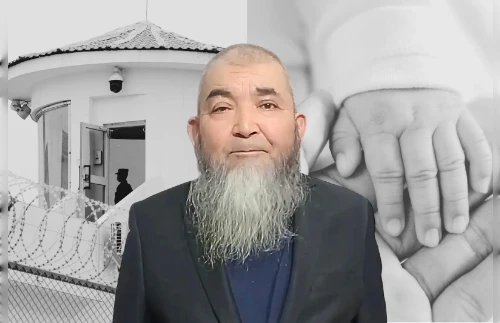
From a Cardboard Box to an Iron Cage: a Father’s Fight for His Daughter’s Freedom
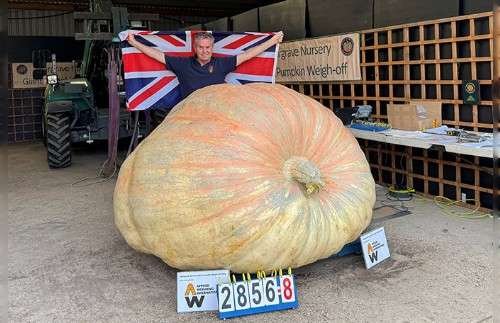
British Grower Set New World Record for the Title of Heaviest Pumpkin
Subscribe Our You Tube Channel

Fighting Fake News
Fighting Lies


Announcement
We as Professional Journslists with experience over 15 to 20 years offers Copy Editing Services for small or mid sized publication/digital publication around the World with effordable prices.We hav-
Related Article
Could ‘Apron Dad’ on North Korean…
From a Cardboard Box to an…
Myanmar Junta Airstrikes Target Civilians to…
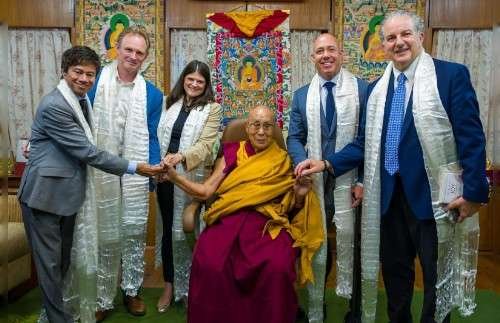
US Bipartisan Congressional Delegation Meets Dalai…
North Korea Issue Dwarfed by More…
Lao Migrant’s Disappearance in Thailand Seems…
Other Article
Could ‘Apron Dad’ on North Korean…
UN Security Council Meets on Maintenance…
Pet Iguana in Kansas Neighborhood Rescued…
Curly Coated Retriever
Backpropagation