As cases surge in Xinjiang, top Chinese official urges hospitals to incorporate traditional medicines.
By Gulchehra Hoja and Mehriban for RFA Uyghur
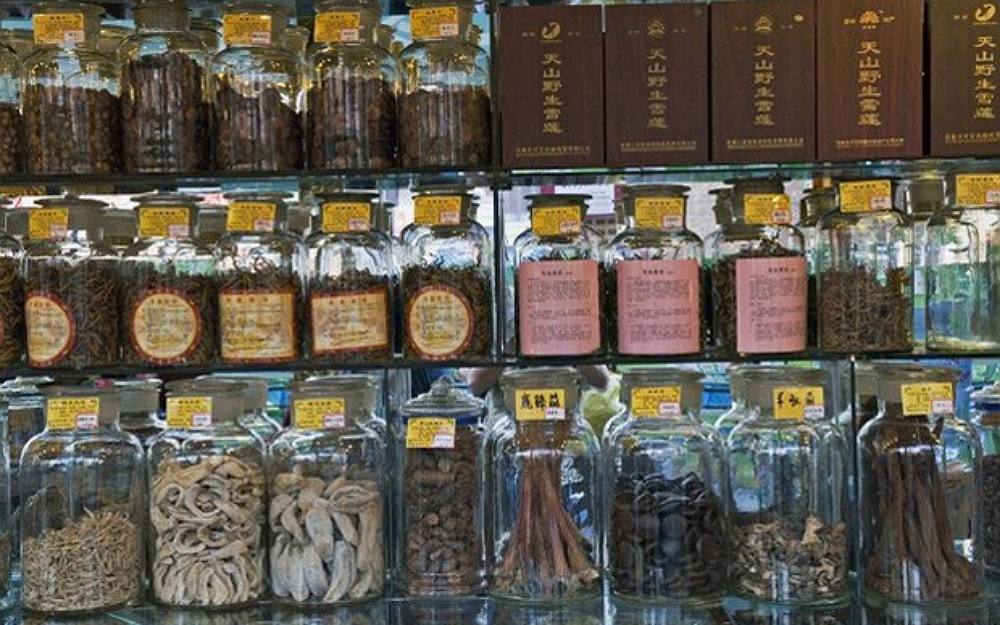
As COVID cases surge in China’s western Xinjiang region, the area’s top government official has urged hospitals to incorporate traditional Uyghur medicine to treat patients – a rare acknowledgement of treatment that blends ancient Greco-Roman, Egyptian, Arabian and Indian medicine dating back more than 2,500 years.
Ma Xingrui, Communist Party Secretary of the Xinjiang Uyghur Autonomous Region, said during a Jan. 4 video conference that health officials and hospitals must take advantage of traditional Chinese and Uyghur treatments as well as Western drugs to fight the coronavirus, which has spread after authorities relaxed stringent anti-viral restrictions after nationwide protests in late November.
Using plant-based ingredients, traditional Uyghur medicine has been used to treat a wide variety of ailments, including skin disease, urogenital disease, rheumatism, digestive problems and respiratory infections in the form of pills, tablets, tinctures, granules, syrups and liniments.
Traditional Uyghur medicines specifically used to combat coronavirus symptoms include Zukam Jewhiri, a cold remedy, and Sherbiti Zufa, a syrup whose main ingredient is hyssop, an aromatic, semi-evergreen,shrubby perennial belonging to the mint family.
Health workers are reporting positive results.
“Ethnic medicine in Xinjiang has been showing its advantage [by] contributing to controlling COVID and to the treatment of COVID patients,” said a physician at Aksu City Hospital who did not give her name because she was not authorized to speak to the media.
“We treated severely ill COVID patients by continuously giving them Uyghur medicine for three days, which lowered their fevers,” the doctor said. “There are cases in which patients recovered from COVID because of Uyghur medicine.”
Ma’s comments were made the same day that China’s National Health Commission issued a paper on developing and promoting the advantages of traditional Chinese medicine against the COVID-19 virus and its variants, although it made no specific mention of traditional Uyghur medicine.
“This measure aims to reduce the deterioration of the patient situation,” China’s official Xinhua news agency reported. “Local organizations employ Chinese medicine and prepare recipes and treat the new COVID patients, reduce the patient’s hospital visit and wait times, and increase consultation efficiency.”
Pharmaceutical industry
Xinjiang is home to more than 60 pharmaceutical companies, which generated revenue of 8.8 billion yuan, or about U.S.$1.3 million, in 2021, a 10.5% increase from the same period the previous year, according to a report by Tengritagh News Network in January 2022.
Many of the companies’ products are based on traditional Uyghur medicine, which has been incorporated into traditional Chinese medicine, though China doesn’t acknowledge it, Uyghur sources say.
After the coronavirus broke out in the central Chinese city of Wuhan in late 2019, many drug companies in Xinjiang operated at full capacity to produce traditional Uyghur pills and syrups to treat COVID patients, China Daily reported in February 2020.
The government’s strategy to deploy traditional medicine, which incorporates Uyghur medicine, shows that Uyghur treatments are an invaluable medical asset, said Uyghur medical professional Mutellip Emchi.
“The recent attention the Chinese government has given to investing in and developing traditional medicine is due to being unable to find a cure,” he said, referring to the coronavirus.
“China and the international community realized and acknowledged the effectiveness of Uyghur traditional medicine against the COVID virus,” he said.
Rising numbers
Hospitals in Xinjiang have seen a surge in the number of COVID patients operated by the government or by the Xinjiang Production and Construction Corps, a state-owned economic and paramilitary organization, said a Chinese nurse at one of the hospitals in Aksu prefecture.
The nurse, who did not provide her name because she was not authorized to speak to the press, said she could not disclose the number of hospital’s coronavirus patient numbers.
But she did say that using locally produced Uyghur medicine for COVID patients helped prevent their deterioration and reduced fever and coughing.
However, the government’s instructions to incorporate the use of traditional Uyghur medicine has raised concern among traditional Uyghur medicine experts.
Mutellip Emchi, chair of the Uyghur Medicine Professionals Association, who has been living in Turkey since 2016, said the Chinese have plundered Uyghur medical resources and industrialized them for their own interests.
Flu pills and powders
For example, the Chinese manufacture flu-curing pills and powders based on traditional Uyghur recipes, though they have not made any progress in the field, Emchi said.
“With the spread of the coronavirus, pharmaceutical companies that manufacture flu pills in Urumqi, Kashgar and Hotan could not make enough of them,” he said. “We knew it by reading news on social media.”
These medicines have been used to treat lung infections, respiratory diseases, asthma, and lung and heart diseases, he added.
“Because the coronavirus attacks patients’ lungs, the hospitals use these Uyghur medicines to treat COVID patients,” Emchi said. “When there was a shortage of medicine in the hospitals, our Uyghur medicine effectively treated COVID patients of all ethnic origins.”
Uyghur medical professionals in Turkey, who have formed formed a volunteer group and developed a unique recipe for treating COVID patients using ingredients sourced locally, say they have seen positive results in patients treated with traditional Uyghur recipes, he said.
“We produced medicine and distributed it among Uyghurs in Turkey, Central Asia and other parts of the world, and local Turkish people and Arab people who have heard about our medicine started using it,” he said.
“With news of our medicine’s effectiveness spread by word of mouth, many more people are coming to us for these medicines,” Emchi added.
Meanwhile, medical staff at hospitals in Urumqi said the COVID situation is getting worse in Xinjiang, with more infected patients and not enough beds.
A Uyghur based in the United States, who declined to be named so as to not jeopardize relatives still living in Xinjiang, told RFA that the number of deaths from COVID has increased. His younger sister and her daughter have been infected, he said.
“The number of deaths among the infected people in our homeland is severe,” he said, “and everyone has been infected, including children in the kindergarten.”
Translated by RFA Uyghur. Written in English by Roseanne Gerin. Edited by Malcolm Foster.
Copyright © 1998-2020, RFA. Used with the permission of Radio Free Asia, 2025 M St. NW, Suite 300, Washington DC 20036. https://www.rfa.org.