



China brands Uyghur activists East Turkestan Islamic Movement ‘terrorists,’ but the US says the group hasn’t existed in a long time.
By Roseanne Gerin

A shadowy Uyghur Islamic group that China has used as justification for increasingly harsh rule over the Muslim ethnic minority in its far-western Xinjiang region is not present in Afghanistan and won’t be allowed to return, a Taliban spokesman told Chinese state media.
China often brands Uyghur activists in exile as members of the East Turkestan Islamic Movement (ETIM) and cites the threat of terrorism to discredit the minority group’s campaign to raise awareness of widespread rights abuses in the Xinjiang Uyghur Autonomous Region (XUAR).
The fall of the Afghan government last month to the Taliban militants following the pullout of U.S. forces has raised both concerns in Beijing about instability and fears among Uyghurs that China will add to harsh measures in the XUAR, where authorities are believed to have held up to 1.8 million Uyghurs and other Muslim minorities in a vast network of internment camps since early 2017.
Taliban spokesperson Suhail Shaheen, however, said that ETIM members are no longer in Afghanistan because “the Taliban has categorically told them that there is no place for anyone to use Afghanistan against other counties, including its neighboring countries,” China’s state-run Global Times newspaper said in an account of an interview published Thursday.
The warning to the ETIM meant that those “who are intending to carry out sabotage activities in other countries or have their foreign agenda” would not be able to remain in the country, Shaheen was quoted as saying.
The Taliban’s statement on the ETIM follows the late 2020 reversal of a U.S. decision to place ETIM on the Treasury Department’s list of terrorist organizations. The listing on Sept. 3, 2002, about a year after the Sept. 11 attacks, was seen as a U.S. gesture to enlist Beijing in the Global War on Terror.
Early last November, then U.S. Secretary of State Mike Pompeo announced that the ETIM had been removed from Terrorist Exclusion List, ending a policy that has been criticized for providing cover for repressive Chinese policies in the XUAR and leading to the capture of innocent Uyghurs in Afghanistan. Washington now says there’s no evidence ETIM exists.
There was no immediate Chinese reaction to the Taliban spokesman’s comments, which came as lawyers, academics, and rights experts began a second round of hearings at the Uyghur Tribunal in London. The four-day session is weighing the proposition that China’s repressive policies in the XUAR constitute crimes against humanity or genocide.
‘A feeling of fear’
While the Uyghur Tribunal has no state backing and no power to enforce its determinations, it aims to compel international action to hold China accountable for alleged maltreatment of Uyghurs, Kazakhs, and other Turkic Muslim populations in the XUAR.
Eight people, including two Uyghurs, provided testimony on Friday.
Mehray Mezensof, 27, told the panel how authorities detained her husband, now 30 years old, two days before the couple was due to move to Australia in April 2017.
During a police interrogation about his he previous travel to Turkey, Mirzat Taher was confined at times to a tiger chair to restrict his movement and subjected to psychological torture.
“During these three days he was forced to sit in a tiger chair throughout the interrogation and he was deprived of sleep,” Mehray said. “He said the questioning took place at night and the police officers took turns interrogating him and they repeatedly asked the same questions over and over again.”
Mirzat was taken to a detention facility and later transferred to a re-education camp, she said. He eventually was released, but police continued to harass him and rearrested him two more times, she said.
Mehray lost contact with her husband on September 2020, she told the panel.
Khalmat Rozakhon, a Uyghur who lives and works in Japan, told the tribunal how authorities intimidated and threated his relatives in Xinjiang because he decided to remain abroad when the situation at home deteriorated.
During a video call with his brother in May 2020, Khalmat said his sibling appeared physically diminished.
“They uttered my name in Chinese, Halimaite, and it was a feeling of fear and to be frank, I could have killed them if I could,” he said. “But as my brother was in their hands, I tried calm myself and kept recording the conversation.”
“The last 30 minutes of that call made me feel like being burned in hell fire.” Khalmat said. “They held my brother and demanded that I follow their instructions.”
‘Why governments must act’
The Communist Party sees the Uyghurs and other Turkic peoples as a threat to its political stability so they use the excuses of fighting terrorism, extremism, and separatism as justification for the crackdown, said Teng Biao, a Chinese human right lawyer in the U.S. who appeared as an expert witness.
“They use collective punishment, and the government can silence their family members and use them as hostages,” he said.
Omer Kanat, executive director of the Uyghur Human Rights Project, said that the experts’ testimony at the hearing was compelling, while the Uyghur survivors’ eyewitness testimony was devastating.
“Anyone who hears it understands why governments must act,” he said in a statement issued Friday.
On Thursday, China’s Foreign Ministry spokesman Zhao Lijian dismissed the panel as a “kangaroo court” that “has nothing to do with law, justice or truth, and is just another farce staged to smear and attack Xinjiang.”
During the first round of the Uyghur Tribunal on June 4-7, witnesses gave grim accounts of torture, sexual assault, coercive birth control, forced labor, and the destruction of Uyghur cultural heritage.
The tribunal is expected to issue a final verdict on whether China is committing genocide or crimes against humanity in December.
Copyright © 1998-2020, RFA. Used with the permission of Radio Free Asia, 2025 M St. NW, Suite 300, Washington DC 20036. https://www.rfa.org
Could ‘Apron Dad’ on North Korean TV Pave the Way for Kim Jong Un’s Daughter to Rule?
UN Security Council Meets on Maintenance of Peace and Security of Ukraine
Pet Iguana in Kansas Neighborhood Rescued from Tree
Curly Coated Retriever

Backpropagation
UN Security Council Meets on Sudan and South Sudan
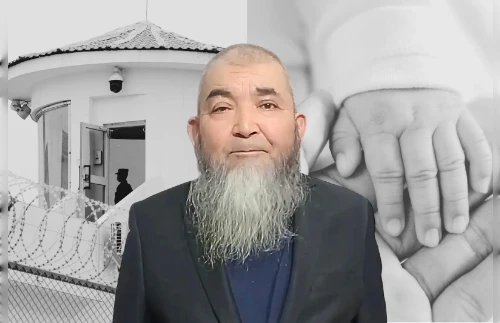
From a Cardboard Box to an Iron Cage: a Father’s Fight for His Daughter’s Freedom