Think about Hannibal Lecter, the psychopathic cannibal in the “Silence of The Lambs.” Or Jason Voorhees, the hockey mask-wearing murderer in the “Friday the 13th” slasher film series.
Before the coronavirus outbreak abruptly disrupted the livelihoods of millions of people, the sight of masks worn in public spaces in the Western world conjured up images of malevolent clowns and terrifying fictional villains.
Even worse, in the streets of Paris, London or Brussels, mask-wearing — a long-accepted measure in some Asian cities — would often trigger unease and angst related to real-life traumatic bloodshed orchestrated by balaclava-led commandos from extremist groups.
France banned the wearing of full veils in public places back in 2011 in part because the government said the face covering violated the nation’s secular values, well before the COVID-19 pandemic took shape.
But in the space of just a few weeks this spring, this narrative has been turned upside down. Masks are everywhere and carry a new, positive meaning.
“The mask, at first, is anxiety-inducing,” Franck Cochoy, a professor of sociology at the University of Toulouse Jean Jaures, said in a phone interview. “When people saw them in the street, it felt like they were faced with the threat of the disease. Today, what people find scary is not having masks. Masks have become soothing objects.”
After discouraging citizens from wearing face covers during the early stages of the pandemic, most governments now recommend, or even make their use mandatory, as they try to slow the spread of the virus.
Cochoy is stunned by how quickly people have adopted masks. With a team of researchers, he has surveyed their use during the health crisis, scrutinizing more than a thousand testimonies.
He said masks have created a new kind of social inequality, “a social division between those who have masks, and those who don’t.”
“People who don’t have masks feel naked,” he said.
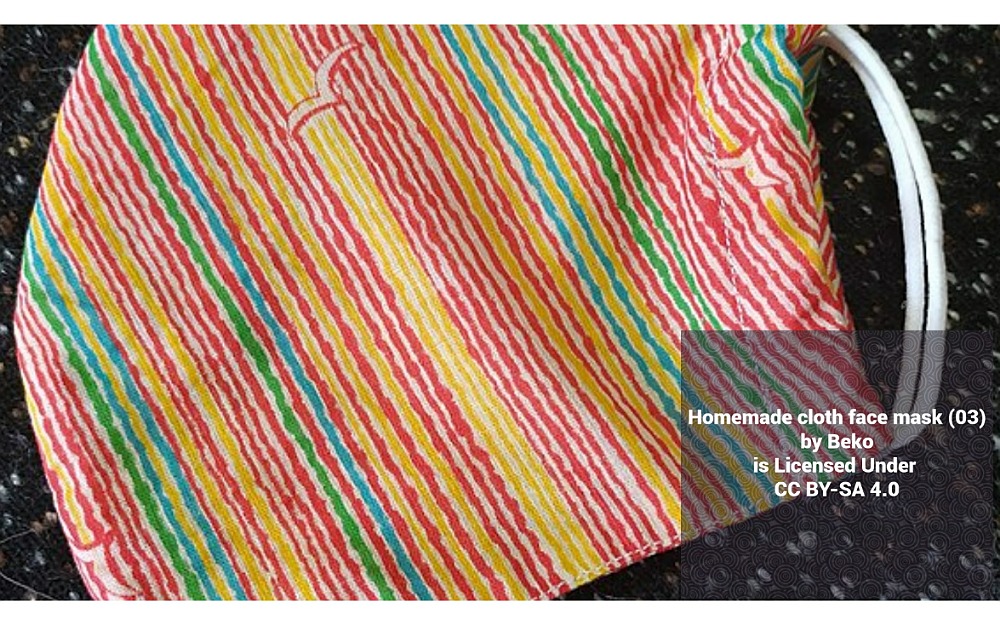
At the start of the pandemic, the lack of masks led many people to resort to homemade solutions. Although medical professionals say the protection they offer is not ideal, hand-crafted masks have become a hit and the small pieces of fabric covering the nose and mouth are now a social marker like any other piece of clothing.
On the glitzy Champs-Elysees avenue in Paris, when shoppers were allowed back in the streets after two months of a stringent lockdown, a woman sported a black mask with a white Chanel inscription.
In Brussels, inside a small shop selling organic fruit and vegetables popular with the so-called “bohemian-bourgeois” urbanites, hand-crafted masks come in a myriad of designs and a rainbow of colors. A few hundreds meters down the road, people running errands at a big-chain supermarket mostly wear the surgical, disposable version of the mask — the one available for less than one euro in pharmacies — with no aesthetic airs at all.
Vanessa Colignon, a textile and fashion designer based in Brussels, has been engaged for years in zero-waste projects, using natural or recycled materials from sustainable local producers. It’s the daily sight of cheap disposable gloves and masks thrown away in the streets of her neighborhood that convinced her to start producing her own during the health crisis.
“I expected the government to develop reusable masks and gloves,” she said, disappointed by a perceived lack of commitment for sustainable mask production from Belgian authorities.
“The priority should have been to say: ‘We don’t make disposable masks anymore,'” she added.
Cochoy thinks the dichotomy between the hand-crafted and surgical masks offers a preview of the trend that will shape life after COVID-19, supporters of sustainable development facing off against “growth at all costs” strategies.
“It’s fascinating. These two types of masks are carrying voices for the post-coronavirus world,” he said. “On one hand, the surgical masks embody the modern, globalized world, where everything is standardized, with all its advantages and inconveniences. Their filtration power is high, measurable, and certified, but they come from abroad in containers, are carbon-charged, disposable. With the homemade version, we return to a form of less efficient, but also non-market, sustainable economy.”~VOA

Giant Schnauzer Dog Breed

NDR and ITDR

UN Security Council Meets on Situation in Libya

On Utah Highway, Semi-Truck Carrying French Fries Catches Fire
Tibetan Mastiffs

LLM Phishing

UN Secretary-General Meets with Assistant Secretary-General for Africa in Departments of Political and Peacebuilding

North Carolina Police Encountered Two Men Travelling Down Couch Mounted on E-Scooter
Subscribe Our You Tube Channel

Fighting Fake News
Fighting Lies