



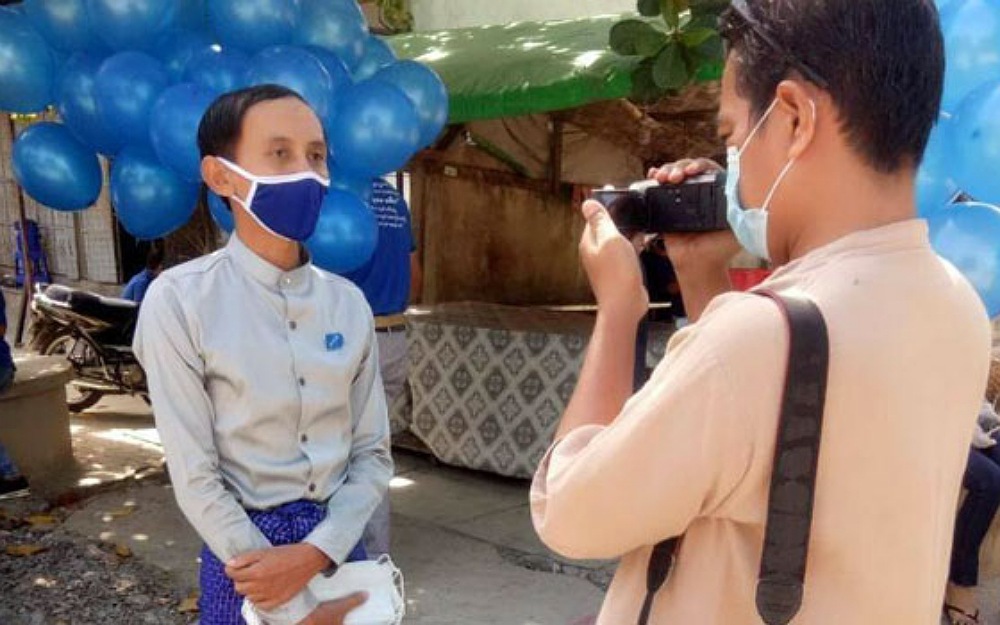
Myanmar’s first openly gay candidate to run for a parliamentary seat in the conservative Buddhist country’s November elections wants to put an end to the abuse that members of the LBGT community say they suffer at the hands of the police.
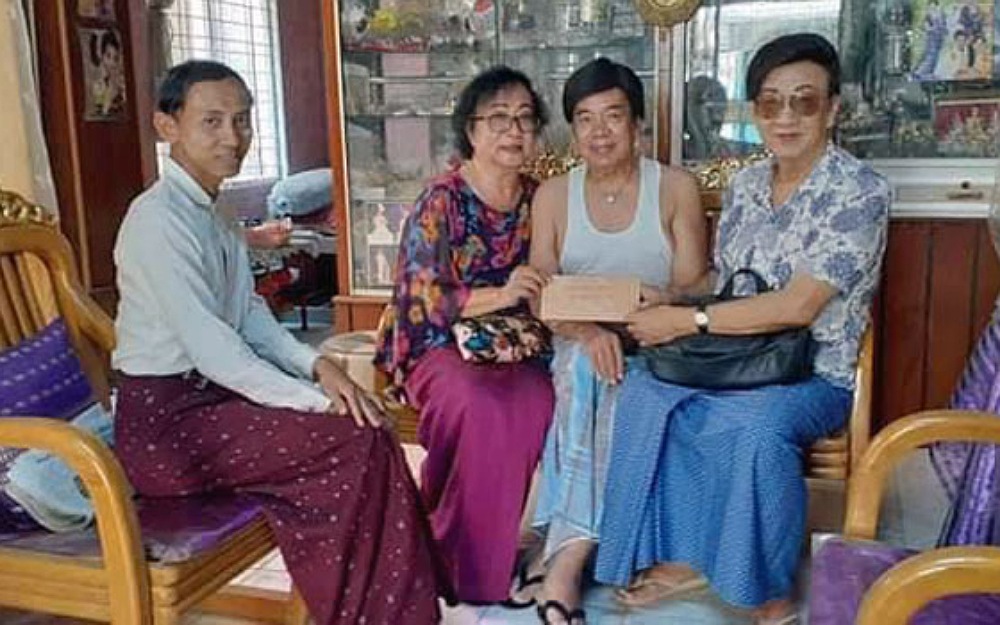
Myo Min Tun, 39, has stepped up as a People’s Pioneer Party (PPP) candidate for a seat in the regional parliament in Mandalay representing a constituency in the local capital of the same name. Mandalay is Myanmar’s second-largest city with a population of 1.2 million people.
The florist and wedding planner says he wants to protect the rights of the LGBT community in the city, where gay men, transgender people, and same-sex couples have complained of wrongful arrests on trumped-up charges and physical assaults by police officers.
In 2013, a group of gay men and transgender women accused police of arbitrarily arresting them, and then beating them, verbally abusing them, and forcing them into humiliating positions. Police officials denied the allegations.
“This is not lawful,” Myo Min Tun said about the incidents.
“As a LGBT member of parliament, I think I could help protect them,” he added.
The PPP, a relatively new party started by a lawmaker formerly affiliated with but later dismissed by the ruling National League for Democracy (NLD) party, was registered with election authorities in October 2019. More than 200 PPP candidates are running for dozens of parliamentary seats in state and regional elections.
Myo Min Tun is among the nearly 7,000 candidates from more than 90 parties running for legislative seats in the Nov. 8 elections. The parties have until Nov. 6 to present their platforms and programs and drum up support among voters.
In past election campaigns, political parties have not taken a stance on the LBGT community or issues that affect it. But this election cycle is different.
‘We are more attentive to these issues’
The NLD and other political parties have included mentions of the LGBT community in their election campaign statements, though they have not paid much attention to the community in the past.
“[Because] their lifestyles are different from those of the majority, some of them have been mocked or looked down upon,” said NLD spokesman Myo Nyunt. “Now, we are more attentive to these issues, so we’ve added them as one of the party’s goal to address in future.”
A campaign speech by Than Htay, chairman of the opposition Union Solidarity and Development Party (USDP), outlining the party’s policies and programs via state-owned radio and television on Sept. 15 did not address LBGT issues.
Nevertheless, USDP spokesman Nandar Hla Myint told RFA that the party does not discriminate against Myanmar citizens on the basis of sexual preference or gender identity.
The Shan Nationalities League for Democracy (SNLD), one of the country’s largest ethnic minority parties, has indicated that it will listen to the voices of people with different sexual preferences and prevent discrimination as part of its youth policy.
However, SNLD Central Executive Committee member Sai Tun Aye did not mention the LGBT community in his televised speech on the party’s platform.
The Myanmar National Congress Party (MNCP) also said it will support LBGT issues.
“Every person must have the freedom to express their gender orientation, feelings, desires and beliefs,” said MNCP chairman Kaung Myint Htut in a televised election campaign speech outlining the party’s platform.
“Same-sex orientation is not a deficiency of moral character,” he said. “We need to respect the integrity and job opportunities of all gender orientations in society. We need to respect the integrity and job opportunities of all gender orientations in society.”
“[The] Myanmar National Congress Party stands for all gender orientations [and] … will respect and protect the rights of all gender orientations,” Kaung Myint Htut said.
Same-sex sexual activity criminalized
The MNCP, which supports State Counselor Aung San Suu Kyi, wants to amend the 2008 constitution to strip Myanmar’s powerful military of its political power.
The military controls three defense and security ministries, and its officers are appointed to a quarter of the seats in national, regional, and states legislatures. Its legislative block in the national parliament can wield a crucial veto over proposed constitutional amendments.
It remains to be seen whether the political parties will live up to their stances on support for the LGBT community once their candidates are elected lawmakers, given deeply engrained homophobic social attitudes and discrimination against LGBT people in the conservative, Buddhist-majority country of 54 million people, activists say.
LGBT rights groups have long demanded changes to Section 377 of the Myanmar’s Penal Code and to Sections 30 and 35 of the Police Act, said Aung Myo Min, a well-known LGBT activist and executive director of the human rights group Equality Myanmar.
Under the laws, gays, lesbians, bisexuals, and transgendered people can be harassed, arrested, and subject to violence and other abuse by authorities with impunity.
Section 377 of Myanmar’s colonial-era Penal Code criminalizes same-sex sexual activity regardless of whether it is consensual or done in private, and carries a penalty of imprisonment from 10 years to life, though such sentences are rare.
The section also contributes to a culture of impunity for police who infringe upon the human rights of LGBT people through physical brutality or extortion, activists say.
The two sections of the 1945 Police Act, which pertain to the powers of special police and reserve officers and the apprehension and punishment of reputed thieves, are widely used by authorities to target LBGT people under concocted charges as a form of harassment and persecution.
Ma Htet, a transgender makeup artist and Facebook celebrity who lives in Yangon, said members of the LGBT community have no means of recourse when their rights are infringed upon.
“The laws should be aiding them,” she said. “The punishments should fit the crime. Only then will their lives be safe, and they will feel encouraged.”
Visibility and acceptance grows
Though Myanmar does not recognize the gender identity of transgender people or same-sex unions, the LGBT community gained visibility and the beginnings of acceptance amid political reforms under the previous quasi-civilian government that was in power from 2011 to 2015.
Seven years ago, Aung San Suu Kyi, then Myanmar’s opposition leader, called for the decriminalization of homosexuality in a speech at the International Congress on AIDS in Asia and the Pacific. She said that the criminalization of homosexuality was hindering efforts to treat HIV-infected gay men in the country.
Aung San Suu Kyi’s NLD party pledged to improve Myanmar’s human rights record in the run-up to the 2015 elections. Her government published a National Youth Policy in 2018 mandating the end of discrimination against youth on the basis of sexual orientation or gender identity, but it has done nothing to change anti-LGBTQ laws during its five years in power.
Since then, there has been a growing climate of acceptance and tolerance of the LGBT community consistent with global trends. In the countdown to the 2020 vote, the NLD has called for the elimination of discrimination against LGBT people in its 34-page election manifesto released on Sept. 1.
Aung Myo Min of Equality Myanmar suggested that the political parties are paying lip service to the LGBT community in the countdown to the elections to try to win more votes.
“The political parties never made remarks about LGBT issues before, but now they are including them in their [election] manifestos,” he said.
“I appeal to them to keep fighting for LGBT issues when they are actually elected to parliament,” Aung Myo Min said.
Reported by Soe San Aung for RFA’s Myanmar Service. Translated by Ye Kaung Myint Maung. Written in English by Roseanne Gerin
Copyright © 1998-2020, RFA. Used with the permission of Radio Free Asia, 2025 M St. NW, Suite 300, Washington DC 20036. https://www.rfa.org
Could ‘Apron Dad’ on North Korean TV Pave the Way for Kim Jong Un’s Daughter to Rule?
UN Security Council Meets on Maintenance of Peace and Security of Ukraine
Pet Iguana in Kansas Neighborhood Rescued from Tree
Curly Coated Retriever

Backpropagation
UN Security Council Meets on Sudan and South Sudan
From a Cardboard Box to an Iron Cage: a Father’s Fight for His Daughter’s Freedom

British Grower Set New World Record for the Title of Heaviest Pumpkin
Subscribe Our You Tube Channel

Fighting Fake News
Fighting Lies