




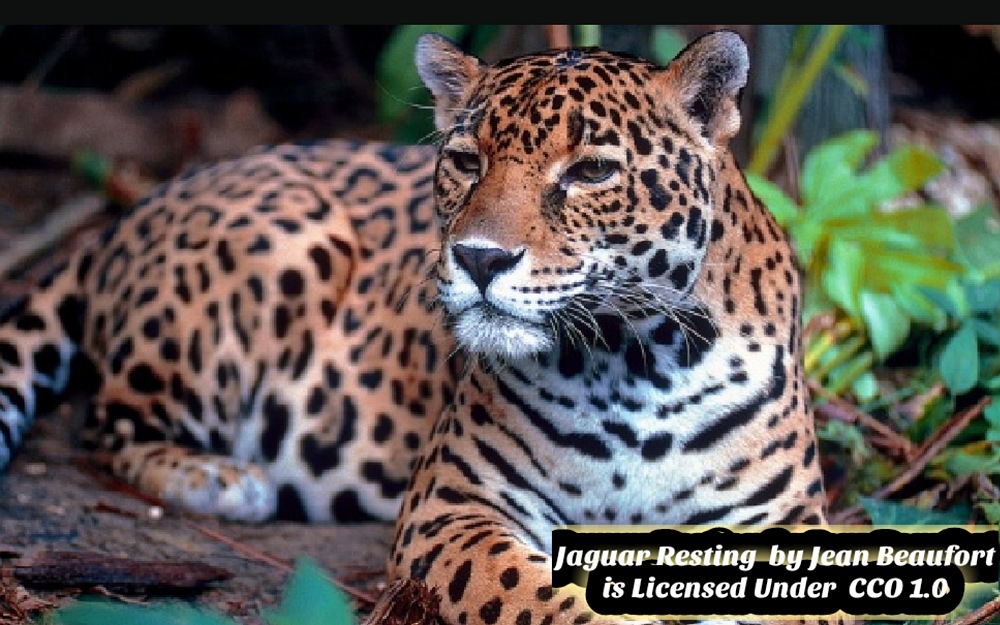
The poaching of big cats in South America is being driven by a growing demand for jaguar parts in China, according to both expert and official sources.
A new study published in early June by the journal Conservation Biology has analyzed data from Central and South America showing that seizures of jaguar parts has increased throughout the region.
The jaguars’ range stretches from the southwestern United States and Mexico across most of Central America and south from there to Paraguay and northern Argentina.
The World Wildlife Fund (WWF), based in Washington D.C., says that the largest cat living in the Americas today is threatened by illegal hunting, deforestation, and the loss of wild prey.
“Jaguars require large areas of tropical rain forest and stretches of riverbank to survive,” says the WWF.
But poaching of the big cats is rising and the new study links their losses to local corruption in Central and South America as well as to a growing demand for jaguar parts from China and to a lesser degree demand from other Asian countries.
In 2017, the discovery of beheaded jaguars and ocelots and almost 200 jaguar canines in Belize before their shipment to China and the seizure of nearly 120 jaguar canines in China by customs officials raised awareness of the issue.
Belize is a former British colony located in Central America between Mexico and Guatemala.
Tigers and jaguars both in demand
Tiger parts have become popular among China’s growing urban middle class in recent years. They’re valued for their bones and for their use in traditional Chinese medicine, although no scientific evidence exists to show that they provide health benefits.
Tigers have also been valued for their meat and for the use of their teeth in jewelry while also providing a kind of social status to a growing Chinese middle class.
Some Chinese men are reported to believe, without scientific evidence, that tiger bones when pulverized into a powder and taken in a drink or in soup, sometimes called a “bone tonic,” can enhance their sexual performance.
But this “tiger consumption” has helped to reduce the size of Asia’s tiger population, which is currently estimated by some to number fewer than 3,000, with almost all of them now concentrated in India. In some Asian countries where they traditionally roamed, such as Vietnam, tigers are close to extinction.
This may help to explain the current fascination with jaguars.
The new study suggests that the growing scarcity of tiger parts has raised their price to a level where Chinese and other Asian consumers will accept a potentially cheaper substitute which can be provided by other big cats, such as jaguars.
As Rachel Bale of the National Geographic magazine explains, “As tigers grow increasingly rare, traffickers often substitute jaguar or other big cat teeth for tiger teeth.”
Bolivia in the spotlight
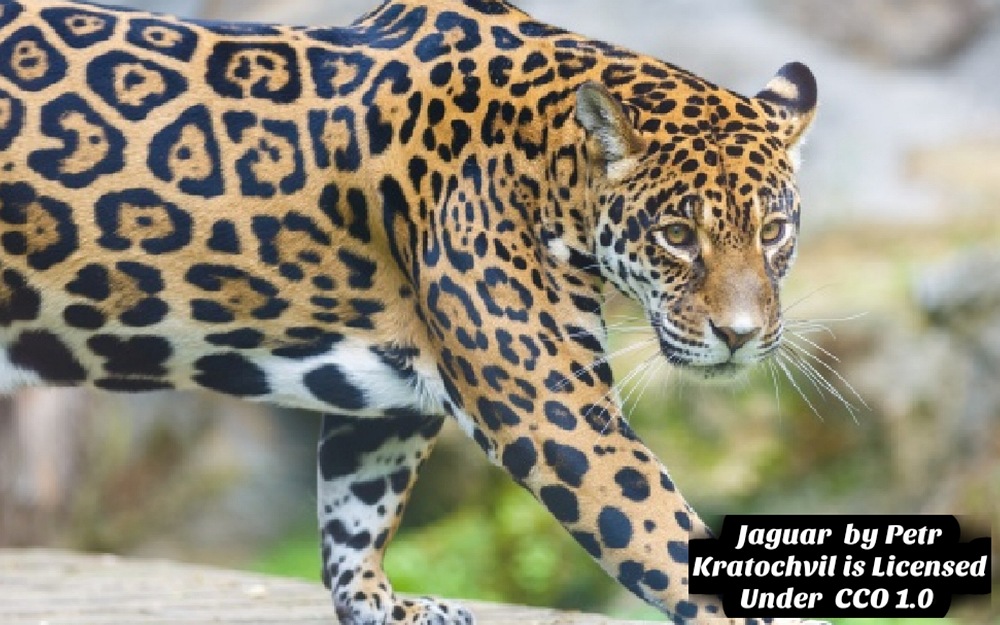
Bolivia is currently a favorite hunting ground for jaguar hunters and traffickers. Although hunting jaguars in Bolivia has long been illegal, authorities seized roughly 800 jaguar teeth from traffickers there between 2014 and 2016.
In a few cases these seizures included Jaguar claws as well as bones and a skull.
The study conducted by Conservation Biologyconcluded that source countries for the export of jaguar parts were countries with relatively high levels of corruption and Chinese private investment as well as low income per capita.
“Poverty and high levels of corruption in the source countries may motivate local people to engage in illegal activities and contribute to the growth of the jaguar trade,” the study concludes.
The study says that Brazil had the most reports of jaguar trading, followed by Bolivia, Columbia, Peru, and Suriname, which is a former Dutch colony located on the northern coast of South America.
But the number of Chinese residents in Central and South America was not significantly related to the number of jaguars seized, the study said.
The study’s authors say that they don’t mean to imply that the Chinese government is involved in jaguar trafficking. But it’s clear that the Chinese government is aware of the problem. As mentioned earlier, in a number of cases, its customs agents have seized jaguar shipments destined for China.
Meanwhile, the environmental website Mongabay published a report in early 2018 that summed up well the challenges that Bolivia faces when it comes to controlling the jaguar trade.
The article was the result of on-site reporting supported by Mongabay Latam and the Bolivian newspaper El Deber, or Duty.
In the report titled “Fang traffic to China is putting Bolivia’s jaguars in jeopardy,” the writer Roberto Navia makes several important points:
Residents in Bolivia’s Sena community say that they can sell jaguar canines for as much as $215 each. Sena is a town located in northern Bolivia.
Bolivian officials say that fangs are valued in the Asian market at prices as high as the prices charged for cocaine, for which Bolivia has been a major source.
Residents say that an influx of Chinese companies which are building roads and bridges in Bolivia is contributing to the increased trafficking in jaguar parts. But Bolivian authorities deny that this is true.
In some Chinese markets in Bolivia, jaguar testicles have been sold at a price equal to the price for gold. The testicles are said, without evidence, to cure various diseases and increase men’s sexual performance.
One official says that a combination of four jaguar fangs, 10 claws, jaguar fur, and genitals can fetch between $2,000 to $3,000 in China.
Some smugglers send their jaguar “products” through the Bolivian postal service. Jaguar fangs can be disguised as key chains or packed in boxes of chocolates.
For all of Bolivia’s more than 424,000 square miles, only 50 police officers have been charged with protecting wildlife.
But Teresa Perez Chavez, Bolivia’s director of biodiversity and protected areas, is leading a battle against traffickers. She ordered a raid on a Chinese citizen in a tourist town to gather evidence of trafficking. The bad news is that judges and prosecutors made much of the evidence disappear, according to Mongabay.
The good news is that a number of volunteers and organizations around the world are working to restrict such wildlife trading.
One example: A new Canadian-based website titled erangerlabs.com will soon launch a program whereby participants can adopt a threatened animal online.
Erangerlabs will also contribute to the debate over Chinese involvement in the jaguar trade next week by providing as yet unpublished research showing that a major Chinese e-commerce platform has been advertising jaguar teeth jewelry online.
Dan Southerland is RFA’s founding executive editor.
Copyright © 1998-2020, RFA. Used with the permission of Radio Free Asia, 2025 M St. NW, Suite 300, Washington DC 20036. https://www.rfa.org

Six-Year-Old Becomes World’s Youngest DJ

Giant Schnauzer Dog Breed

NDR and ITDR

UN Security Council Meets on Situation in Libya

On Utah Highway, Semi-Truck Carrying French Fries Catches Fire

Tibetan Mastiffs

LLM Phishing

UN Secretary-General Meets with Assistant Secretary-General for Africa in Departments of Political and Peacebuilding
Subscribe Our You Tube Channel

Fighting Fake News
Fighting Lies