



The halting process of implementation of the US-Taliban Peace Agreement, that was signed at Doha on February 29 this year, brings out three distinct realities of the Afghan situation as seen from an Indian perspective. First, the long drawn exercise of Zilmay Khalizad, US interlocutor, who managed finally to engage a frontline leader of the illusive Taliban, Mullah Baradar, in a direct talk at Doha, made it obvious that Taliban had seen through the American expediency in Afghanistan.
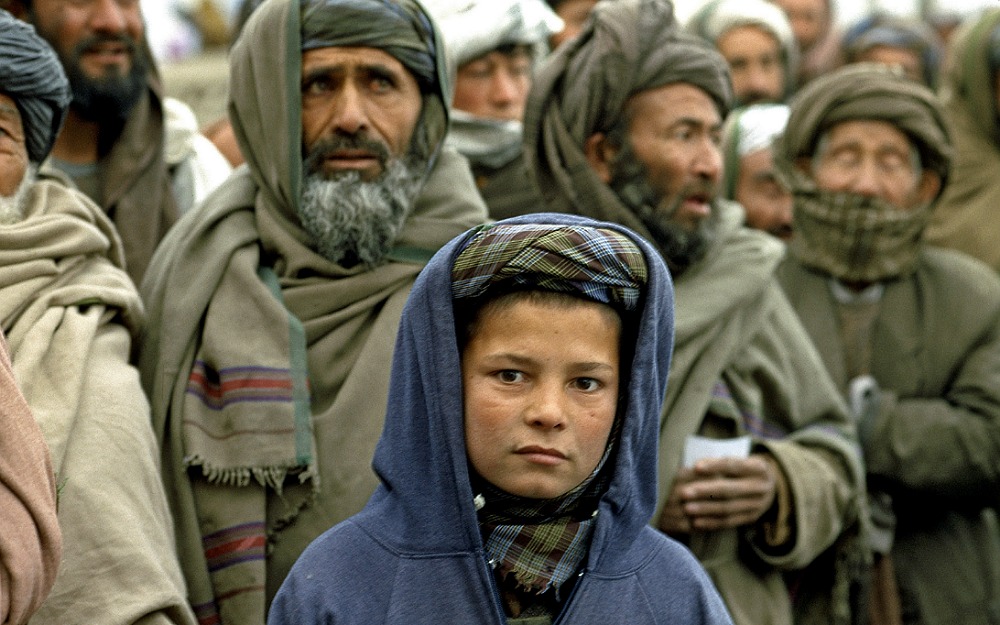
Zilmay bent to the Taliban’s sensitivities and held negotiations at the back of the democratically elected government of Ashraf Ghani. This happened in the backdrop of an evident US compulsion to reach out to the Taliban that was attributable to President Trump’s keenness to pull back his troops from the messy battleground of Kabul. The Taliban, all through the talks, flaunted its radical Islamic profile as a political player in Afghanistan that was ever ready to use the weapon of violence and came off as the party which — it believed — had an upper hand in the run-up to the peace deal.
Secondly, the Taliban was always looking at the prospect of restoring the Islamic Emirate of Afghanistan that had first come to power in 1996 with the support from Pakistan and this is why its sole interest in the ‘intra-Afghan’ dialogue on power-sharing was in getting its commanders — held as prisoners by the Afghan government — released as the first step of implementation of the Peace Agreement. There is little doubt that the Taliban would try to rapidly regroup itself on the ground for an ultimate takeover of power in Afghanistan on the strength of its militant cadres. The Taliban has some potential allies in the present Afghan government and enjoys an unflinching backing of Pakistan — Ashraf Ghani has no aces up his sleeves beyond the firm support of India and a highly tentative friendship of the US policy makers.
And finally, on the question of the future of Afghanistan, the situation — uncertain and fluid as it is — remains a cause of grave concern for our national security. The American endorsement of the recently held UN-sponsored ‘regional’ round table on Afghanistan to which all the ‘neighbours’ of that country including Pakistan, China and Iran were invited to the exclusion of India, is disquieting from our point of view. The act of not listing India, the world’s largest democracy, amongst the immediate neighbours of Afghanistan, reportedly on the technical ground of India having no ‘border’ with that country — the shared border being in POK — shows a disregard of India’s declared stand on Kashmir and political insensitivity of the Trump administration towards one country that had gone all out to build a strategic partnership with the US.
It is significant that Pakistan has already stepped up cross-border terrorism in Kashmir — at a time when both the countries were facing the corona pandemic — to pursue its line of ‘retaliation’ against the abrogation of Art 370 by India. It is not difficult to imagine that the faith-based motivation of the Mujahideen can override any virus-related distraction and that Pakistan will intensify its subversive activity in J&K in the likely event of its acquiring a sway in Afghanistan — on the return of a Taliban-dominated rule in that country.
India has high stakes in any future dispensation in Afghanistan that the peace talks might pave the way for. India has rightly called for an ‘Afghan-led’, ‘Afghan owned’ and ‘Afghan controlled’ process to make that determination — even though this was not what the US really cared for. Analysts are looking into India’s Afghan policy for clarity. They are offering a range of suggestions depending on their own affiliations — from a direct engagement with the Taliban, appointment of a special envoy for Afghanistan to doubling up on investment on the civilian infrastructure in that country to win over ‘friendly’ Afghans for the future. Afghanistan is to be handled as a security issue and for that reason also the thrust of our diplomacy has to be on getting the US to acknowledge the long range importance of India as a major stakeholder in a democratic Afghanistan and bringing India to the round table where the future of that country would be deliberated on.
Americans have to be told by Delhi that the Taliban had one foot in Khyber Pakhtunkhwa (KP) of Pakistan where its historical origins lie. Swat valley was the epicentre of Jehad that the followers of Abdul Wahab had launched in the Indian sub-continent in the 19th century against the Western occupation of the ‘Muslim land’. This Jehad failed but it left the NWFP-Afghan belt totally radicalised. Today’s Taliban in both Afghanistan and Pakistan carries that unfading historical legacy. This is the reason why the Taliban regime led by Mullah Omar that took over Kabul in 1996 had lost no time in showing its fangs against the US and also its hostility to the culture of idol-worshippers. In that Emirate Osama bin Laden had enjoyed the position of a patron. The run-up to 9/11 was laid in Afghanistan after the US had successfully ousted the Taliban from power there.
The advisors of Donald Trump should realise that the return of a Taliban-dominated dispensation in Afghanistan will be fine with Pakistan but will pose a danger to both the US and India because of the revival of radical Islam that it would work for. Afghanistan needs a democratic cushion in its polity and this can be provided both by internal forces who did not subscribe to radicalism of Taliban and the neighbours, including India, who supported a democratic Afghanistan –not an Afghan Emirate. President Obama had in the closing months of his administration talked of ‘geo-political pluralism’ as a guide to the American policy on Afghanistan which would have surely given a place of importance to India as its neighbour in any deliberations on the future dispensation in Afghanistan. India should work on Russia and other friendly members of the Afghan round table to claim a place there. India needs to tell the US that while the latter was entitled to draw a false comfort of distance from the Peace Agreement with Taliban, India had to take into account the vulnerability of South Asia to Islamic militancy that would only increase once the unwritten alliance between Pakistan and a Taliban rule in Afghanistan came into play.
Those who want India to talk to the Taliban forget that the latter is not a political entity but a force of Islamic revivalists to whom India could offer little in comparison to what Pakistan with its history of allegiance to the Taliban would, particularly when the US was itself happy giving all the leeway to Pakistan in Afghanistan. No doubt India houses the ideological fountainhead of Taliban in Darul Uloom Deoband whose leadership did have contact with a faction of Jamiat ul Ulema Pakistan that was ideologically close to the Taliban.
Darul Uloom Deoband as an institution, however, remains engaged in the non-political mission of promoting puritanical values of Islam while being firmly against the US and it would be a tall order for its Ulema to try to mediate with the Taliban on what are essentially political questions involving the role of India in Afghanistan. The Afghan Taliban would in any case not keep Pakistan out of the equation that it could ever think of having with India. The option for India is to work for a democratic rule in Afghanistan even if the Taliban was to share power there. It should press for this in SAARC, in multi-lateral talks on Afghanistan and in special bilateral discussions with the US, including those occasioned by Intelligence sharing protocols. If the US chooses to go along with Pakistan’s game in Afghanistan, the Modi regime will have to find a way of conveying its disappointment to President Trump and independently step up India’s advocacy of a democratic rule in Afghanistan — under a President who did not belong to the Taliban.
~Afghan Voice Agency
Scottish Deerhound Dog Breed

AI-Powered Mortgage Fraud
Exclusive: North Korean Army Video Says K-Drama Watchers Deserve to be Executed
Press Briefing by Special Rapporteur on Sale and Sexual Exploitation of Children

Opossum Hanging on Fishing Hook Saved from Tree in North Carolina
Cane Corso Dog Breed

Buy Now Pay Later Fraud
Could ‘Apron Dad’ on North Korean TV Pave the Way for Kim Jong Un’s Daughter to Rule?
Subscribe Our You Tube Channel

Fighting Fake News
Fighting Lies