



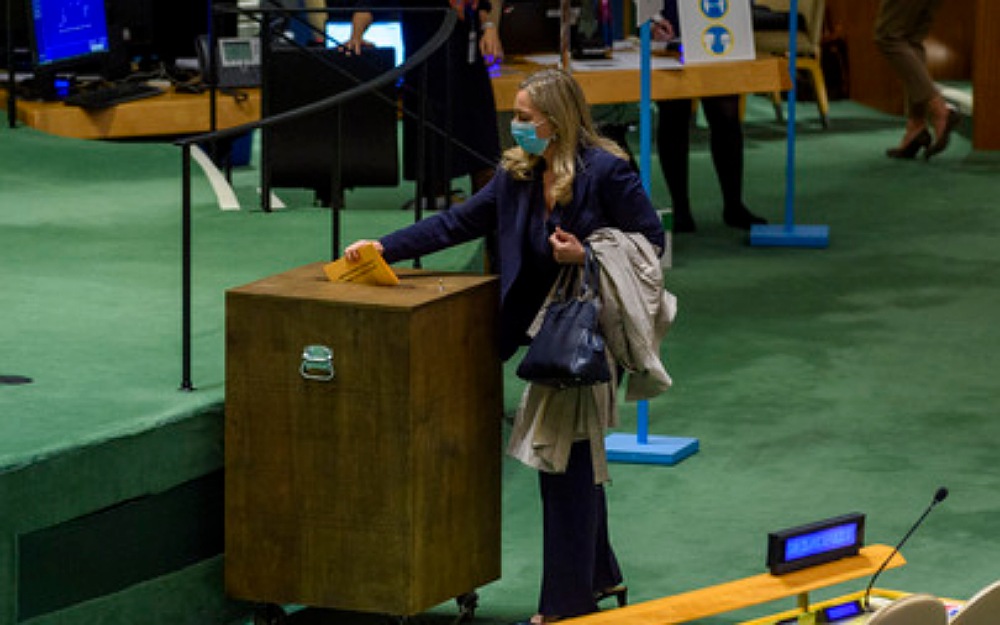
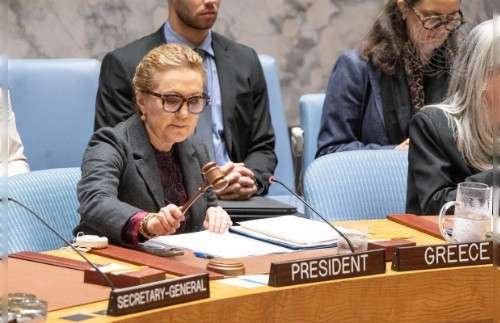
The following 15 Members were elected to the Human Rights Council for a period of two years (2021-2023): Bolivia, China, Côte d’Ivoire, Cuba, France, Gabon, Malawi, Mexico, Nepal, Pakistan, Russian Federation, Senegal, Ukraine, Uzbekistan, and United Kingdom- UN Photo by Loey Felipe
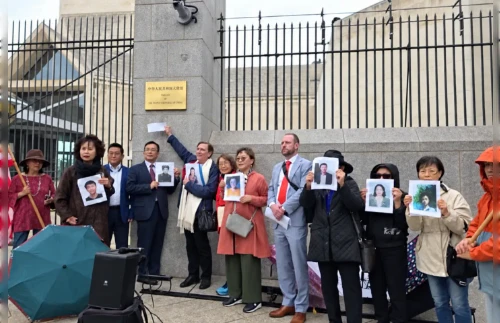
China narrowly won a seat on the United Nations’ Human Rights Council Tuesday, prompting a rights group to call the vote “embarrassing” for a country that has worked overtime to whitewash its image and used its growing power to stifle criticism of its persecution of ethnic Uyghurs and Tibetans.
The Asian power secured only 139 votes during a secret ballot at the 75th U.N. General Assembly in Geneva from among 193 member-nations, placing fourth out of five countries vying for four seats in the Asia-Pacific region.
China beat out only Saudi Arabia, which has faced its own share of condemnation over its rights record. Pakistan, Uzbekistan, and Nepal also won seats in the race to represent Asia-Pacific countries on the 47-member council.
Fifteen nations in total secured seats on the council Tuesday—including Russia and Cuba, whose rights records the U.S. called “abhorrent”—and will serve for three years from January next year. The vote marks the fifth time China was elected to the council, after winning seats in 2006, 2009, 2013, and 2016.
Sophie Richardson, China director for New York-based Human Rights Watch (HRW), called China’s vote tally “a significant drop” from the support it received when it was elected to the council in 2016.
“It’s an incredibly embarrassing loss for China—it got 11 fewer votes than Nepal and it came in fourth out of five for that regional group, doing better only than Saudi Arabia,” she said. “That’s a pretty bad standard.”
Richardson noted that in 2016, China’s Foreign Ministry said that the 180 votes the country received in 2016 reflected “global support” for its position on human rights issues.
“I’m extremely eager to hear how the Ministry of Foreign Affairs tries to spin having hemorrhaged support at this year’s vote,” she said.
“I want to be very clear that Human Rights Watch called for China not to be elected to the council. But seeing this drop in support is significant and I think it tells us a lot about what we can try to accomplish at the Human Rights Council, even though China is a member again.”
Richardson said that having a seat at the council is a “two-way street,” noting that member governments “are also subject to greater scrutiny themselves.”
“And so, in that sense, I think we can probably reasonably hope to see more discussion of Beijing’s appalling human rights violations against Tibetans and against Uyghurs,” she added.
Eroding support
A press release issued by China’s mission to the United Nations welcoming its election to the council said Beijing “attaches great importance to the promotion and protection of human rights” and suggested that “following a path with Chinese characteristics, China has made great achievements in human rights development.”
In addition to working to promote international exchange and cooperation, the mission said China will use its seat on the council to “oppose the politicization of human rights issues and wrong practices of double standards to make greater contributions to the healthy development of international human rights.”
Last week, the U.K. and Germany led a group of 39 member states at the U.N. General Assembly in condemning China’s policies in the Xinjiang Uyghur Autonomous Region (XUAR), where authorities are believed to have held up to 1.8 million Uyghurs and other Muslim minorities since early 2017.
The two nations—as well as the U.S., Canada, Australia, Japan, and several members of the European Union—insisted that China also respect human rights in the Tibetan Autonomous Region (TAR), where Tibetans have similarly seen their freedoms eroded under Beijing’s rule and are facing forced labor and other abuses seen in the XUAR.
The condemnation marked a significant increase in the number of countries willing to stand up to China’s threats of cutting off trade with nations that support such statements. A similar resolution last year received only 23 backers.
On Tuesday, the Trump administration—which withdrew the U.S. from the Human Rights Council in 2018 in part for what it has said are membership rules that “allow the election of the world’s worst human rights abusers to seats on the Council”—condemned the General Assembly vote in a statement issued by Secretary of State Mike Pompeo.
“Prior to making this decision, and after our exit, the United States has urged U.N. member states to take immediate action to reform the Council before it became irreparable,” the statement said.
“Unfortunately, those calls went unheeded, and today the U.N. General Assembly once again elected countries with abhorrent human rights records, including China, Russia, and Cuba.”
The administration has sanctioned Chinese officials for rights abuses in both the XUAR and the TAR, despite Beijing’s claims that its policies in the regions protect the country against “terrorism,” “religious extremism,” and “separatism.”
Exile groups dismayed
Exile groups dismayed
Uyghur and Tibetan exile groups expressed dismay over Tuesday’s vote, saying China’s re-election must serve as a means by which member states can hold China to account for its rights violations.
“Governments committing genocide shouldn’t be allowed anywhere near the Human Rights Council,” said Uyghur Human Rights Project (UHRP) executive director Omer Kanat,” in a reference to a June report about a dramatic increase in recent years in the number of forced sterilizations and abortions targeting Uyghurs. Author Adrian Zenz believes the campaign may amount to government-led genocide under United Nations definitions.
“It’s clear from the vote, however, that China has been losing the confidence of the international community over time,” Kanat added.
Rushan Abbas, executive director of Campaign For Uyghurs, said in a statement that China’s participation as an equal in the United Nations “effectively cripples the U.N. from fulfilling the purpose for which it was formed.”
“No words can express the feeling of watching the world’s greatest human rights abuser be granted a greater platform to perpetuate its genocidal ideology,” she said.
The U.N. has made its own reputation the laughingstock of the world, and its corruption has compromised the lives of billions.”
Kai Mueller, executive director of the International Campaign for Tibet’s Germany office, called the vote a “setback” and warned that activists will now “need to be more aware of the … intention of the Chinese government to change the international perception of human rights” to fit more with that of the country’s ruling Communist Party.
“The Chinese government will more forcefully push the narrative on so-called ‘development,’ of so-called ‘poverty alleviation’ in Tibet, and Tibetans need to be ready to counter those positions by the Chinese delegation at the Human Rights Council,” he said, referring to pretexts that Beijing uses to justify its policies in the TAR.
“China is certainly pushing for support, is certainly organizing support, at the United Nation bodies such as the Human Rights Council … Foremost it’s those unfortunate human rights violators such as Venezuela, Cuba, and Belarus, Russia for example, that speak out for China and that should give reason for concern for the international community.”
Reported by Tashi Wangchuk for RFA’s Tibetan Service and Alim Seytoff for RFA’s Uyghur Service.
Copyright © 1998-2020, RFA. Used with the permission of Radio Free Asia, 2025 M St. NW, Suite 300, Washington DC 20036. https://www.rfa.org
Could ‘Apron Dad’ on North Korean TV Pave the Way for Kim Jong Un’s Daughter to Rule?
UN Security Council Meets on Maintenance of Peace and Security of Ukraine

Pet Iguana in Kansas Neighborhood Rescued from Tree
Curly Coated Retriever

Backpropagation
UN Security Council Meets on Sudan and South Sudan
From a Cardboard Box to an Iron Cage: a Father’s Fight for His Daughter’s Freedom

British Grower Set New World Record for the Title of Heaviest Pumpkin
Subscribe Our You Tube Channel

Fighting Fake News
Fighting Lies