




“If these intellectuals can no longer influence the Tibetan public, that public can be more easily manipulated and fooled,” says Pema Gyal, a researcher at the Dharamsala, India-based Tibetan Centre for Human Rights and Democracy.
Beginning in 2008—when widespread protests against Chinese rule swept Tibetan regions—and until 2010, nearly 60 influential Tibetan poets, writers, and other literary figures and academics were arrested by Chinese police, with the whereabouts of many still unknown, Gyal said.
“And the reason usually given for the arrests was that they had all threatened national security and stability.”
But what these arrests really show, Gyal said, “is that Tibetans have been deprived of their freedom of academic expression, and that the Chinese authorities can arrest them at any time simply by calling them a national threat.”
Previously reported by RFA, the arrests in recent weeks in Sichuan’s Kardze (in Chinese, Ganzi) and Ngaba (Aba) Tibetan Autonomous Prefectures of at least five Tibetans considered prominent in their communities, and of two others in Qinghai toward the end of last year, show the crackdown is continuing.
Many held before
Gangkye Drubpa Kyab, a well-known writer in Tibetan areas of Sichuan also called Gangme Thak, was arrested in Kardze’s Sertha (Seda) county on March 23, and had been jailed on political charges before.
Also arrested in Kardze’s Sertha county was writer and environmental activist Sey Nam, who was taken into custody on April 2.
Long-time activist and former political prisoner Tsering Dolma was also arrested in Kardze on April 2, and had been detained at least twice before in 2008 and 2012 after she took part in protests against Chinese policies and rule in Tibetan areas.
Political activist Gangbu Yudrum was taken into custody in Kardze on March 22, and had previously served a three-year prison term beginning in 2008 for his role in a protest in which he raised the banned Tibetan national flag and called for the return to Tibet of exiled Tibetan spiritual leader the Dalai Lama.
He was arrested again in 2012 and released in 2014, receiving a warm welcome from people in his village, who hailed him as a “Tibetan fighter for the truth.” Upon his release, he wrote and distributed copies of a letter to local Tibetans urging them to work to free Tibet from Beijing’s rule.
Go Sherab Gyatso, a 46-year-old monk at Kirti monastery in Sichuan’s Ngaba (Aba) Tibetan Autonomous Prefecture, was taken into custody by state security agents on Oct. 26 in Sichuan’s capital Chengdu. He had authored a book, We Need to Wake Up, and published several articles describing restrictions on Tibetans’ freedom of expression under Chinese rule.
Unauthorized views
In China’s neighboring Qinghai province, Kunsang Gyaltsen—a native of Qinghai’s Mangra (Guinan) county and researcher at Tibet University in Tibet’s regional capital Lhasa—was arrested in June 2020 for circulating booklets containing unauthorized views of Tibet’s political history. Word of Gyaltsen’s arrest was delayed in reaching outside contacts, and his present whereabouts are still unknown.
And in Qinghai’s Rebgong (Tongren) county, Gendun Lhundrub—formerly a monk at Rebgong’s Rongwo monastery—was arrested on Dec. 2 by police who had monitored his activities for signs of political dissent. In October, Lhundrub had released an anthology of poetry, and had written on social media that writers and artists should be allowed the freedom to express their thoughts and emotions without restriction.
Formerly an independent nation, Tibet was invaded and incorporated into China by force 70 years ago, and the Dalai Lama and thousands of his followers later fled into exile in India and other countries around the world following a failed 1959 national uprising against China’s rule.
Chinese authorities maintain a tight grip on the region, restricting Tibetans’ political activities and peaceful expression of cultural and religious identity, and subjecting Tibetans to persecution, torture, imprisonment, and extrajudicial killings.
Reported by Lobsang Gelek for RFA’s Tibetan Service. Translated by Tenzin Dickyi. Written in English by Richard Finney.
Copyright © 1998-2020, RFA. Used with the permission of Radio Free Asia, 2025 M St. NW, Suite 300, Washington DC 20036. https://www.rfa.org

Could ‘Apron Dad’ on North Korean TV Pave the Way for Kim Jong Un’s Daughter to Rule?
UN Security Council Meets on Maintenance of Peace and Security of Ukraine
Pet Iguana in Kansas Neighborhood Rescued from Tree
Curly Coated Retriever

Backpropagation
UN Security Council Meets on Sudan and South Sudan
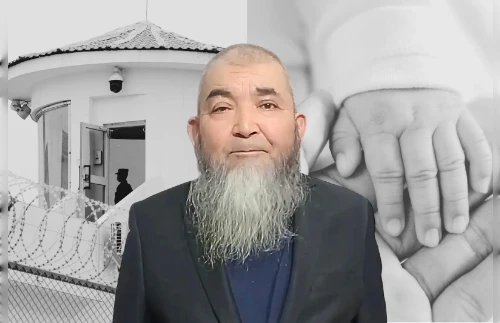
From a Cardboard Box to an Iron Cage: a Father’s Fight for His Daughter’s Freedom