



Kamran Reza Chowdhury/BenarNews
Dhaka
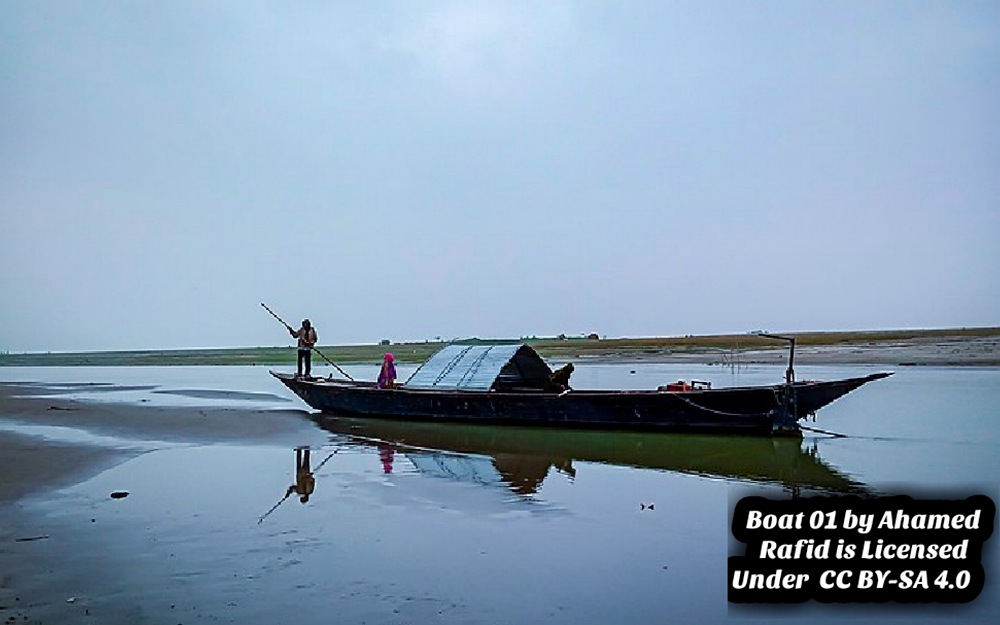
Bangladesh is to receive a loan of nearly U.S. $1 billion from China for a project to maintain levels in the Teesta River during the drought season after efforts to approve a water-sharing deal with India failed, government officials said.
In May the Ministry of Finance asked for $853 million to implement the Teesta River Comprehensive Management and Restoration project in the greater Rangpur region. The Chinese loan marks the first time that China, India’s regional rival, will be involved in a river management project in Bangladesh.
“A massive project funded by China has been adopted for the management of the Teesta River and China has agreed to fund it. Hopefully, we can start the project by December,” Jyoti Prosad Ghosh, an additional chief engineer at the Water Development Board, which falls under the Ministry of Water Resources, told BenarNews.
The Teesta project, which is estimated to cost $983 million, is one of nine projects where officials in Dhaka have sought $6 billion from China on top of a previous $22 billion in loans from the superpower, as Beijing expands its footprint in the South Asian nation largely through the construction of infrastructure works.
“The Teesta River’s width varies between one kilometer and five kilometers at different places. So, we will narrow the width of the river to one kilometer all along and enhance the depth of the river to at least 10 meters so it can hold more water,” Ghosh said.
While the river floods during the monsoon season, it runs nearly dry between November and February each year.
“Hopefully, the project would bring benefits,” he said.
Ghosh did not release details about whether Bangladeshi or Chinese companies would be responsible for the project or a timeline for its completion. Chinese Embassy officials in Dhaka did not immediately respond to a request from BenarNews seeking confirmation on the loan for the river scheme.
Source in India
The Teesta is one of the 54 rivers that enter Bangladesh from upstream India before flowing into the Bay of Bengal.
The flood plains of the Teesta, which originates in the Indian state of Sikkim, span 2,750 square km (1,061 square miles) in Bangladesh.
A report by the Asia Foundation on the political economy of the Teesta referred to it as the fourth largest transboundary river in Bangladesh. It flows through the five northern districts of Gaibandha, Kurigram, Lalmonirhat, Nilphamari, and Rangpur.
The study said at least 21 million people in Bangladesh were directly or indirectly dependent on the river for their livelihoods including through fishing.
Bangladeshi officials have complained that water levels along the river have fallen dramatically over the years because of India’s failure to implement its side of a water-sharing deal despite decades of negotiations and partly because of dams built on the Indian side.
An environmentalist raised concerns about the river restoration project that will be financed with Chinese money.
“The Teesta carries a huge volume of silt from upstream. During the rainy season, the bulk water would carry huge amounts, so within three years, the river would be silted up and cause flooding again,” Ainun Nishat told BenarNews.
“The way the Water Development Board is going to reduce the width of the river would cause harm to the river and its fishing resources,” said Nishat, a water resource and climate change specialist who is a professor emeritus at Bangladesh’s BRAC University.
“If the river depth is made 10 meters or more, ground water would flow into the river during dry season, making the nearby farmland unusable,” he said.
Nishat also expressed concern for fish and wildlife linked to the river.
“The Teesta River provides a sardine-type sweet piyali fish. What would happen to the fish if the depth is increased through dredging? What would happen to the turtles and other aquatic species,” he asked.
Dredging machines cut riverbeds and shoals and pump out sand, a process that could destroy habitats for fish, turtles and other species.
Decades of negotiations
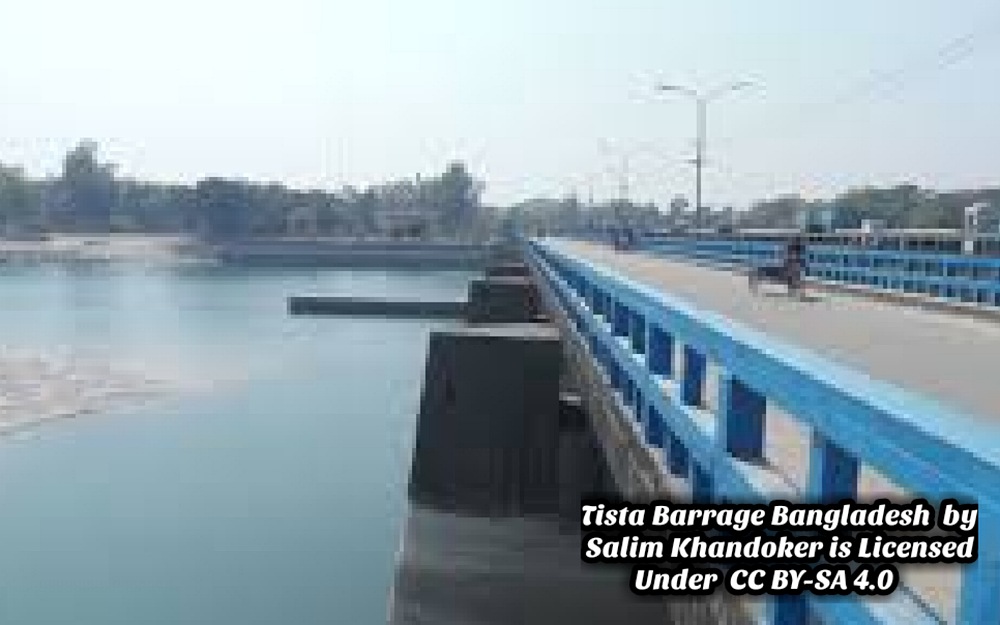
The Teesta issue has long been a thorn in Indo-Bangladeshi relations.
Nishat said India and what was then East Pakistan started negotiations in 1951 to share water from the river. Nearly seven decades later, the deal has not been signed even as officials have continued with negotiations.
Discussions were expedited after Sheikh Hasina came to power in 2009 when negotiators worked out a sharing formula with India getting 42.5 percent water while Bangladesh would get 37.5 percent. The remaining 20 percent would be kept for maintaining the health of the river.
The deal was supposed to be signed during the Bangladesh visit of then-Indian Prime Minister Manmohan Singh in 2011, but Mamata Banerjee, the chief minister of West Bengal, blocked it.
The Teesta forms the border between West Bengal and Sikkim, and Banerjee protested, saying the treaty would render parts of her state dry.
Under the Indian constitution, the central government cannot make any decisions on water issues without the consent of state governments affected by such decisions.
During Hasina’s visit to New Delhi last year, she urged the Indian government to sign the Teesta deal “finalized in 2011.”
Indian Prime Minister Narendra Modi told Hasina that his government had been working on the deal with all stakeholders, according to the joint statement of issued during the visit.
“At this moment, there is no progress on signing the Teesta deal,” Mahmudur Rahman, the lone member of the Bangladesh-India Joint Rivers Commission, told BenarNews.
A Bangladesh official said the nation should have access to the river.
“According to international law, Bangladesh as a lower riparian country must get its due share of water from the Teesta. We recognize that India also needs the water,” Faruk Khan, chairman of Bangladesh’s Parliamentary Standing Committee on Foreign Affairs, told BenarNews. “So, we need to sign the deal which would be win-win for both the countries.”
He said technical negotiators from the two countries had finalized a deal on the sharing the river’s waters, but it was not signed.
“Now, the experts of the countries should work out another sharing formula,” Khan said.
“Signing of the Teesta water-sharing treaty mainly goes to India. The friendly bilateral relations between Bangladesh and India came under question for not signing the agreement. So, we hope the Indian government would sign the deal as soon as possible, valuing the friendly ties between the two countries,” he said.
On Thursday, Banerjee along with other West Bengal officials did not immediately respond to requests for comment from BenarNews.
In July, Shariar Kader Siddiky, the joint secretary in-charge of the finance ministry’s Economic Relations Division, said Chinese funding was needed for the Teesta and the eight other projects, calling them necessary.
“If we can implement the projects in time, we will not fall into a debt trap,” he told BenarNews when asked about a May 21 letter from the division outlining a proposal for the projects.
Paritosh Kanti Paul in Kolkata, India, contributed to this report.
Copyright ©2015-2020, BenarNews. Used with the permission of BenarNews.

While Being Arrested in Connecticut, Suspect Bites Police Dog


Retrieval-Augmented Generation (RAG)
Bridges to China, Russia Preparing to Open as North Korea Deepens Ties with Both
Minister for Foreign Affairs of Togo Briefs Press on “Correct the Map” Resolution

From Rocksprings to Kerrville,Texas, Newborn Kitten Stuck in Engine Rescued

French Bulldog

Emergent Behavior
Subscribe Our You Tube Channel

Fighting Fake News
Fighting Lies