Experts say Bangladesh is emerging as a major trafficking hub.
Subel Rai Bhandari for RFA/Bangkok
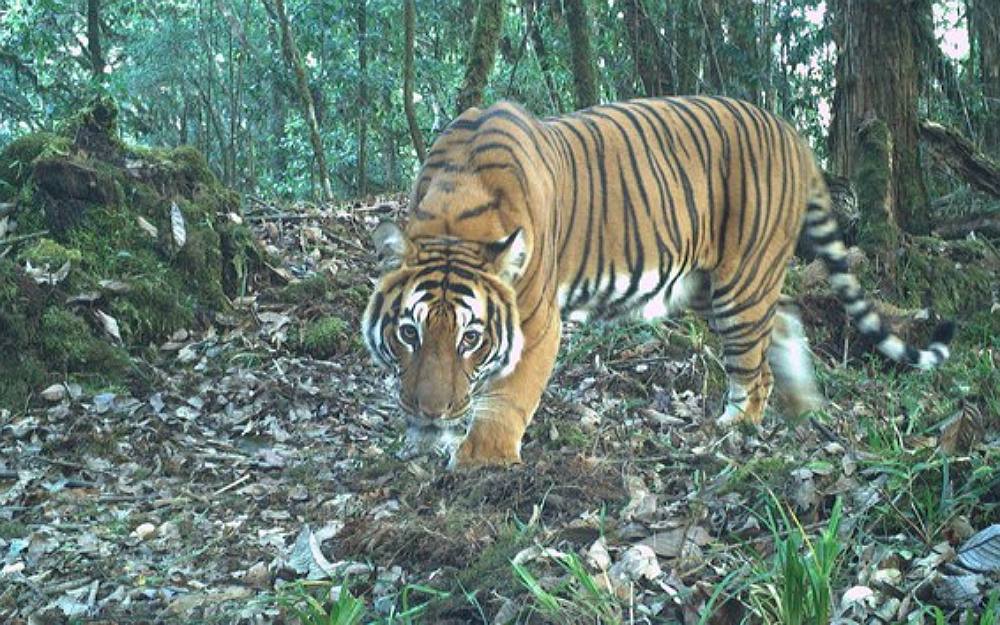
India and Bhutan have seen a significant surge in their wild tiger populations, according to newly released data.
India recorded a count of 3,682 tigers, establishing it as the habitat for 75% of the global wild tiger population, while Bhutan’s wild tiger population has increased to 131, up 27% since the first systematic survey in 2015.
The two governments released the new numbers on Saturday, World Tiger Day.
Tigers are the largest cats in the world. They are found in Asia in different environments, from rainforests to mountains.
Widespread deforestation, habitat loss, and poaching due to the high demand for tiger bones and skin led to the drastic decline in tiger populations since the start of the 20th century, from about 100,000 in the early 1900s to an estimated 4,500 individuals today.
According to Panthera, a global wild cat conservation organization, China and Vietnam are the most significant overall drivers of demand, mainly for using body parts in traditional medicine.
In 2015, Bhutan had 103 tigers in the wild. With 131 individuals, the South Asian kingdom now has an overall density of 0.23 tigers per 100 square kilometers, a statement from the royal government of Bhutan said.
“It is of immense pride for our country to confirm an increase in the tiger population in our country,” Bhutan’s foreign minister, Tandi Dorji, said Saturday during an event releasing the National Tiger Survey Report, which covered more than 85% of the country.
This conservation success results from increased law enforcement, community-based tiger conservation programs, and habitat improvement, said the Worldwide Fund for Nature (WWF), which is known as the World Wildlife Fund in North America.
The government survey identified significant threats to these big cats in Bhutan, including poaching, habitat loss, and human-wildlife conflict.
WWF said that Bhutan also holds the world record for tiger sightings at the highest elevations, over 4,400 meters (14,435 feet).
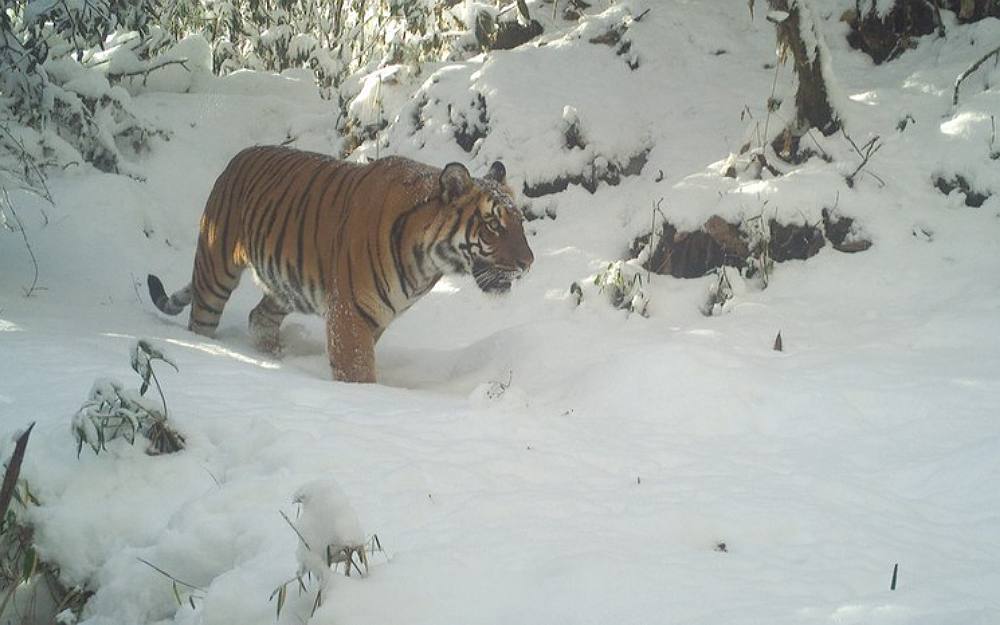
India doubles tiger numbers
In India, the tiger population grew by 6% to 3,682, doubling the number of tigers in five decades, according to the country’s environment, forest and climate change ministry.
The first all-India tiger census revealed just 1,827 individuals in 1972, down from an estimated 40,000 in the early twentieth century due to rampant poaching and loss of habitat.
“India’s exemplary efforts in tiger conservation and the increase in tiger numbers is not just a statistic but a testament to the determination and commitment of the nation,” union minister of environment, forest and climate change Bhupender Yadav said.
The tiger is the national animal of India. Their population is concentrated mainly in 53 dedicated reserves spread across 75,796 square kilometers (29,264 sqare miles), 2.3% of the country’s total land area.
“Various tiger reserves have shown remarkable growth, while others face challenges. Approximately 35% of the tiger reserves urgently require enhanced protection measures, habitat restoration, ungulate augmentation, and subsequent tiger reintroduction,” the ministry said in a statement.
In neighboring Nepal, the population of wild tigers has nearly tripled since 2010 to 355, according to the census last year.
The increase in tiger population is welcome news as the world grapples with the increasing loss of species due to human-induced climate change and deforestation.
However, there are also concerns about more human-wild animal conflict. Between 2019 and 2021, more than 100 people were killed in tiger attacks in India.
“While the number of tigers is growing, the increasing number of human-tiger conflicts has been a cause of concern,” Nepal’s Prime Minister Pushpa Kamal Dahal said in a message on Saturday.
There should be concerted efforts for habitat conservation, including protected areas, as well as the need to ensure the availability of prey species for tigers, Dahal said.
Tigers are an endangered and protected species, as their parts are sold in a U.S.$20 billion illegal wildlife trade globally.
Nepal, Bhutan, and India are among the 13 tiger range countries that pledged in 2010 to double the global tiger population by 2022.
Bangladesh may be major trafficking hub
Bangladesh has about 114 tigers, mainly in the Sundarban Reserve Forest, according to the last census conducted in 2018.
Due to some 30 pirate groups operating in the Sundarbans region, the tiger population plummeted by more than 50%, from 300-500 in 2009 to an estimated 114 in 2018, according to new research released over the weekend, identifying Bangladesh as “a previously unrecognized and major hub in the illicit poaching and trafficking of endangered tigers.”
The scientific study conducted by Panthera and the Chinese Academy of Sciences said, “a growing class of Bangladeshi elite in country and abroad has been found to drive recent demand for tiger parts and deaths, poached from Bangladesh’s Sundarbans, Northeast India and northern Myanmar.”
“India, China and Malaysia lead the pack in demand, followed by developed G20 nations ranging from the United Kingdom and Germany to Australia and Japan,” they said in a statement.
Four source sites where tigers were poached were identified by scientists.
These sites are the Sundarbans, spanning across India and Bangladesh, India’s Kaziranga-Garampani Parks, Myanmar’s Northern Forest Complex, and India’s Namdapha-Royal Manas Parks.
Traders involved in the illegal wildlife trade were discovered to frequently possess logistics companies and, in certain instances, hold licenses for legal wildlife trade, which they misuse to hide the illegally sourced tiger parts effectively.
“Southeast Asia has been identified as ground zero for tiger poaching, but this study shows that tiger poaching still remains the most significant threat to the species,” the study’s co-author and Panthera Tiger Program Director, Abishek Harihar, said.
“While not on par with tiger trade influence out of China and Vietnam, Bangladesh is a country on which international law enforcement and scientists must stay focused, particularly given its explosive economic and infrastructure growth facilitating illegal tiger trafficking.”
Edited by Mike Firn.
Copyright © 1998-2020, RFA. Used with the permission of Radio Free Asia, 2025 M St. NW, Suite 300, Washington DC 20036. https://www.rfa.org.