




An Uzbek governor has apologized after saying that Muslim women’s head scarves and the long, bushy beards many men wear promote Islamic extremism.
Shuhrat Ghaniev, the governor of the populous Ferghana Province, said publiclyon September 30 that he was sorry for the remarks and that he had gone too far in the linkage.
“I admit the error [in making the comments],” Ghaniev said on September 30. “My parents, my relatives, wear national clothes. I wear national clothes myself at home.”
But the late apology was belied by his toxic comments just days before.
Speaking at a government meeting last week, Ghaniev said hundreds of women in Ferghana had been reprimanded for wearing Islamic head scarves and a similar number of warnings had gone out to men wearing long beards.
“The government and government officials can’t turn a blind eye to some illegal movements acting behind the mask of religion,” he said. “This year alone, several people were prevented from going to Syria after falling victim to propaganda groups.”
Ghaniev continued, “Studies show that those groups use religious teachings to make the men grow beards and force women to wear the hijab.”
RFE/RL’s Uzbek Service obtained an audio recording of the governor’s speech about the campaign in Ferghana against the hijab and bushy beards that are widely seen as outward signs of Islam.
Ghaniev, who is in his early 50s, can be heard on the recording speaking about men with “ugly beards” in public places, repeatedly raising his voice and cursing such hirsute men.
He spoke of “studies” that had allegedly established which areas of the province he governs have higher percentages of men with long beards.
“There are 386 men with bushy beards — the cowards,” he said. “According to the studies, most of the men with these ugly beards are residents of the cities of Qoqon, Ferghana, and Marghilon, and the districts of Buvaida and Ferghana.”
“Among women, it’s been established that a total of 851 women wear the hijab,” Ghaniev added.
The Ferghana region, located in eastern Uzbekistan, has a population of some 3.6 million people.
“Explanatory works were conducted with them and eventually 300 people agreed to change their appearances,” the governor said.
Ghaniev, who has governed the agriculturally rich Ferghana region since 2011, can be heard issuing an angry warning to district governors that he had zero tolerance for women wearing traditional Islamic clothing:
“Remember this, dear governors: if I see a woman in such clothing in your official meetings — I don’t care if she’s a neighborhood chief, a teacher, a businesswoman, an activist, a lawmaker — I’ll remove her head scarf and shove it in your mouth,” he growled.
Ghaniev urged officials to take action against businesses that import and sell Islamic clothing in Uzbekistan. “These garments that belong to Arabs, Turks, and Syrians don’t suit us. Uzbeks have their own national clothing,” he said.
Ghaniev, who is known for his rude remarks, also called those at the meeting “stupid.”
He is also heard on the recording reminding officials that Uzbek law allows for certain punishments for opening Muslim prayer rooms at state institutions.
Tanzila Narbaeva, the chairwoman of Uzbekistan’s upper house of parliament, said on Facebook on September 30 that Ghaniev’s behavior was discussed during a Senate committee session after the audio of his speech was posted on social media.
Ghaniev is also a member of the Senate.
Unofficial Campaign
The incident comes as Uzbekistan has in recent months intensified what seems to be an unofficial campaign against Islamic clothing and bushy beards.
Earlier in September, sources told RFE/RL that schools in Qoqon were making lists of female students wearing the hijab. The lists were reportedly given to city authorities so they could start “explanatory works” with the students and their parents.
In the capital, Tashkent, police raided a crowded market in August and rounded up young men with long beards. The men were taken to the police station and their beards were shaven off.
Similar raids have taken place in the eastern city of Namangan, eyewitnesses told RFE/RL recently.
It seems that controlling other people’s hair preferences is a prevalent practice in Uzbekistan, as a school official in the Samarkand region’s Urgut district was disciplined for using scissors to forcibly cut students’ hair that he deemed to be too long — injuring some of them in the process.
Written by Farangis Najibullah based on reporting by RFE/RL’s Uzbek Service
Copyright (c) 2019. RFE/RL, Inc. Reprinted with the permission of Radio Free Europe/Radio Liberty, 1201 Connecticut Ave NW, Ste 400, Washington DC 20036

North Carolina Police Encountered Two Men Travelling Down Couch Mounted on E-Scooter
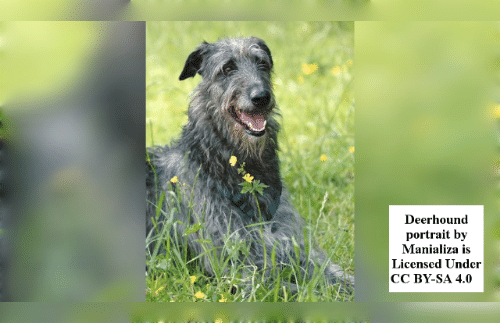
Scottish Deerhound Dog Breed

AI-Powered Mortgage Fraud
Exclusive: North Korean Army Video Says K-Drama Watchers Deserve to be Executed

Press Briefing by Special Rapporteur on Sale and Sexual Exploitation of Children
Opossum Hanging on Fishing Hook Saved from Tree in North Carolina

Cane Corso Dog Breed