



Knowing the importance of the Deobandi school for Pashtun society on both sides of the Durand Line, Saudi money bankrolled the infusion of the Wahabi ideology in Deobandi seminaries during the war against the Soviets in Afghanistan. It is this historical reality that presently defines the outlook of Deobandi seminaries in the Pashtun belt. And, the Taliban’s model of Islamic governance is predicated on this morphed model.
As attempts continue to be made to put into operation various elements of the US-Taliban deal, the varied linkages of the Taliban with Pakistan-based extremist groups and transnational extremist organisations such as Al-Qaeda remain the main concern of the international community.
In this connection, unpacking the Taliban and its various influences has to be factored in by the external stakeholders as they formulate their future response to a fluid environment. All Taliban are from various sub-tribes of the Pashtun ethnicity that straddles Pakistan and Afghanistan.
Pakistan hosts a significant Pashtun population, primarily in Khyber Pakhtunkhwa, where they make up 78 per cent of the population, and in the Federally Administered Tribal Areas (FATA), where they make up 99 per cent of the population. Overall, 15 per cent of Pakistanis are Pashtun. Pashtun nationalism on both sides of the Durand Line has an appeal.
Particularly prescient is the remark of Wali Khan, son of Abdul Ghaffar Khan, who once said that he had been a Pakistani for 30 years, a Muslim for 1,400 years and a Pathan (Pashtun) for 5,000 years. The rise of the Pashtun Tahafuz Movement (PTM) points in that direction. Pakistan’s deep state views Pashtun nationalism as an existential threat and this has formed the basis of its Afghanistan policy as well.
During their rule in the late 1990s, the Taliban shocked the world as they banned all sources of entertainment, including television and music, and imposed restrictive laws for women. On social media, one could spot videos of the Taliban carrying out public executions, amputating hands of thieves and flogging convicts.
Various human rights groups have voiced concerns that the return of the Taliban to the power structure in Afghanistan may severely impact and curtail the freedom of minorities and women. To better understand the Taliban’s Islamic model of governance, one has to see it through the lens of developments that led to the morphing of the Deobandi school of Islam to an altogether different result. The Deobandi movement used to be the most popular school of Islamic thought among the Pashtuns living on both sides of the Durand Line even before 1947. The Deoband school of Islam started during 1866 as part of the revivalist movement that was sweeping British India at the time.
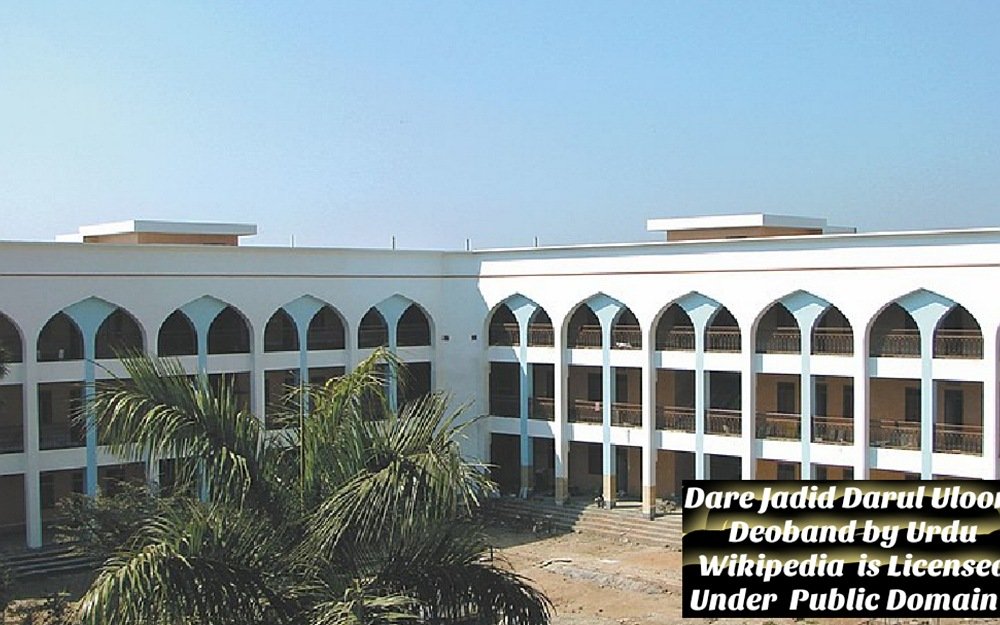
In 1867, the town of Deoband became the fountain of the Deobandi school as Darul Uloom was founded. Deoband is located in Saharanpur district of Uttar Pradesh, where Hindus form over 60 per cent of the population. During the initial period of the Darul Uloom’s establishment, many Hindus had contributed to its operating expenses. Barbara Metcalf, who wrote a seminal book, Islamic Revival in British India: Deoband, 1860-1900, says that in 1875 and 1876, for example, Deobandi scholars participated in religious debates with Christian and Hindu scholars.
Deobandi seminaries had faced competition from other Islamic schools, primarily Barelvi Islam. Barelvi Islam, for example, remains the most popular Islamic school in what is now Pakistan’s Punjab province.
Deobandi Islam is committed to a ‘correct’ interpretation of Sharia (Islamic law). Deobandi scholars are opposed to certain Barelvi practices, such as visiting the tombs of saints. Their opposition to these practices, however, is not as rigid when compared to Ahl-e-Hadith, which follows a more narrow interpretation of Islam. In that respect, Ahl-e-Hadith is similar to Saudi Wahhabism, although it is of South Asian origin.
The Partition caused the migration of many leading Deobandi scholars to Pakistan. They included Mufti Mahmood, father of Maulana Fazl-ur-Rehman, current president of Jamiat-i -U l a m a – i – I s l a m. M u f t i Mahmood, an ethnic Pashtun, became the Chief Minister of Pakistan’s North-West Frontier Province in 1972 for nine months. His son Maulana Fazl-ur-Rehman is known for crafty politics in Pakistan. He visited India in July 2003 and had even met PM Vajapyee. In November 2019, he sought to oust PM Imran Khan by staging mass protests in Islamabad.
Knowing the importance of the Deobandi school for the Pashtun society on both sides of the Durand Line, Saudi money bankrolled the infusion of the Wahabi ideology in Deobandi seminaries during the war against the Soviets in Afghanistan. It is this historical reality that presently defines the outlook of Deobandi seminaries in the Pashtun belt. And, the Taliban’s model of Islamic governance is predicated on this morphed model.
Coming to the ISIS-Taliban equation of hostility, the US special envoy for Afghan reconciliation Zalmay Khalilzad has blamed the ISIS in Afghanistan for carrying out the recent attacks on civilians to sabotage the US-Taliban deal. The idea of an Islamic caliphate poses a direct national security threat for Russia and China, who are battling insurgencies in the Chechen Muslim-dominated Chechnya, a republic in southwestern Russia Federation, and Uyghur Muslim-dominated Xinjiang provinces, respectively. This brings the US, China and Russian Federation on the same page as all three big powers favour a dialogue with the Taliban, a rarity in a polarised geopolitical environment.
The Taliban’s political orientation has an element of Pashtun pride. However, it is a fact that the Taliban-Al-Qaeda linkages were forged in the 1990s mainly on account of the presence of Arab fighters in Afghanistan. And this remains a reality for the international community as Al-Qaeda has loosely disseminated regional affiliates. Al-Qaeda is viewed as a threat by various external stakeholders, including the Saudi monarchy.
In this light, unless structural reasons rooted in the politics and history of the region that seem to dictate contemporary developments are addressed, sustainable and long-term peace will remain a hope rather than be a reality.
–Afghan Voice Agency (AVA)
Award-Winning Burmese Journalist Shin Daewe Released from Prison
UN Security Council Meets on Situation in Sudan and South Sudan

Mexican’s Zoo’s Star attraction Yuji, Abandoned Newborn Monkey
Sinhala Hound
UN Permanent Representative of Israel Briefs Press

Web Cache Poisoning

Michigan Delivery Driver Shot Missing Dog, Found Alive After Bullet Bounced Off Skull
Berger Picard Dog Breed
Subscribe Our You Tube Channel

Fighting Fake News
Fighting Lies