

Headlines
  • After the downing of a US Apache helicopter over the Strait of Hormuz, US Central Command announces strikes on Iran.
  • Several Iranian radar systems and air defense systems around the Strait of Hormuz the targets of US army strikes in Iran.
  • Iranian media reported that after US army strikes, explosions were heard in several Iranian areas.
  • A $70 billion immigration enforcement package was approved by the US House on Tuesday, providing financing for Customs and Border Protection and Immigration and Customs Enforcement for the rest of President Donald Trump's term.
  • The Artemis III crew will begin a year or more of task-specific training on Tuesday when NASA unveiled the four astronauts of the upcoming Artemis moon program mission.

More Details

South Korea Issues Travel Ban After Nationals Trapped in Cambodia Scam Centers

More than 1,000 believed among 200,000 people of various nationalities involved in scam compounds.

By Jaewoo Park for RFA Korean
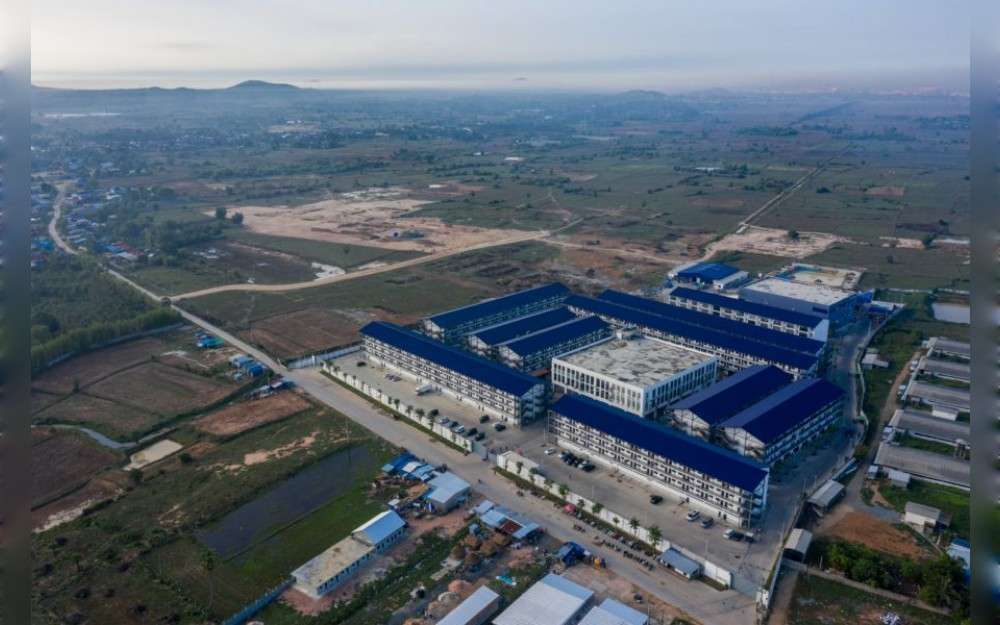
South Korea issued a “code-black” travel ban for parts of Cambodia on Oct. 15 and dispatched a team of high-level officials to help nationals lured into working in scam compounds and secure the release of those held against their will, according to the Reuters news agency.
This image released by Amnesty International on June 26, 2025, as part of a report on scam centers where it shows drone footage of a scamming compound with high perimeter walls, security cameras, and security guards.Copyright Amnesty International, 2024

RFA Perspectives — South Korea issued a “code-black” travel ban for parts of Cambodia on Oct. 15 and dispatched a team of high-level officials to help nationals lured into working in scam compounds and secure the release of those held against their will, according to the Reuters news agency.

More than 1,000 South Koreans are believed to be among about 200,000 people of various nationalities involved in the scam compounds in Cambodia, South Korea’s National Security Adviser Wi Sung-lac told reporters.

RFA Korean’s Jaewoo Park reports for RFA Perspectives: Why has Southeast Asia — especially Cambodia and Myanmar — become a “scam haven”?

It’s not just about crime. It’s the result of corruption, lawlessness, and economic desperation.

Across the region, hundreds of thousands of people are trapped inside cyber scam compounds.

They are lured by fake job ads, kidnapped, and forced to commit online fraud under brutal conditions.

Earlier this year, Chinese actor Wang Xing made international headlines after being rescued from Myanmar’s notorious KK Park.

He had flown to Thailand for an acting job — but was kidnapped and sold into a scam operation.

His rescue was extremely rare.

In August, a South Korean college student was tortured to death in Cambodia after being deceived by a fake job offer.

The case shocked the Korean public — but it’s only one part of a much larger criminal network.

Recently released footage even showed a man believed to be that student, forced to inhale drugs and explain to his captors how he ended up in Cambodia.

So why Cambodia, Laos and Myanmar?

Because they sit where lawlessness and capital meet.

A decade ago, Cambodia became an early hotspot for Chinese and Taiwanese phone scams, thanks to cheap internet and loose regulations.

When China banned online gambling in 2019, those same networks didn’t vanish — they simply moved their operations to Cambodia’s casinos.

Special Economic Zones (SEZs) in countries like Laos have become hotbeds of criminal activity due to lax regulations, while in Myanmar, a coup and civil war have made enforcement virtually impossible.

Add corrupt officials, weak law enforcement, and accessible internet, and you get a perfect breeding ground for organized crime.

The United Nations estimates that over 100,000 people have been trafficked into Cambodia for cyber scam operations — victims from China, Korea, Kenya, and across the world.

As crackdowns intensify in Myanmar and Laos, more of these criminal networks are shifting into Cambodia.

This isn’t just about online scams. It’s a new form of human trafficking — hidden behind a screen.

“Copyright © 1998-2023, RFA.
Used with the permission of Radio Free Asia,
2025 M St. NW, Suite 300, Washington, D.C. 20036.
https://www.rfa.org.”


Related Article

Dalai Lama Undergoes Left Knee Surgery…

The Dalai Lama has undergone surgery on his left knee on Monday, his personal physician confirmed.In ...
June 9, 2026

No Vigils: Hong Kong’s Victoria Park…

Hong Kong’s Victoria Park is now much quieter on the anniversary of the Tiananmen Square Massacre, ...
June 4, 2026

Exclusive: Tiananmen Victims’ Families Banned from…

Days before the 37th anniversary of the Tiananmen Square massacre, several relatives of victims of ...
June 3, 2026

Quad’s Fiji Port Plan Will Challenge…

A plan by the United States, Japan, India and Australia to collaboratively invest in port infrastruc ...
May 30, 2026

Military Buildup Triggers Housing Crisis in…

Housing costs are skyrocketing in Guam due to military buildup and a surge in military personnel in ...
May 29, 2026

EXPLAINED: Why Taiwan Wants U.S. Weapons…

With Taiwan hoping for swift delivery of a US$14 billion weapons sale approved by the U.S. Congress ...
May 27, 2026

Other Article

Pet Corner

Alopekis Dog Breed

Alopekis are a small, fox-like dog breed that originated in Greece. They have a relatively short, sm ...
June 10, 2026
Prevent Cyber Crime

Personally Identifiable Information (PII)

A person’s personal informations that might be used to identify or steal that person is considered ...
Pick of the Day

UN Security Council Meets on Central…

Martha Ama Akyaa Pobee, Assistant Secretary-General of the Departments of Political and Peacebuildin ...
Bizzare News

Tennessee Fire Department Shared Video Showing…

Along a Tennessee roadway, a trailer loading fireworks caught fire on June 7 night. Pyrotechnics sho ...
June 9, 2026
Pet Corner

Cimarron Uruguayo Dog Breed

Cimarron Uruguayo is said to be descended from dogs that the Portuguese and Spanish invaders brought ...
Prevent Cyber Crime

Zero Touch Provisioning (ZTP)

A system called zero touch provisioning (ZTP) eliminates the need for human intervention by automati ...

Top