



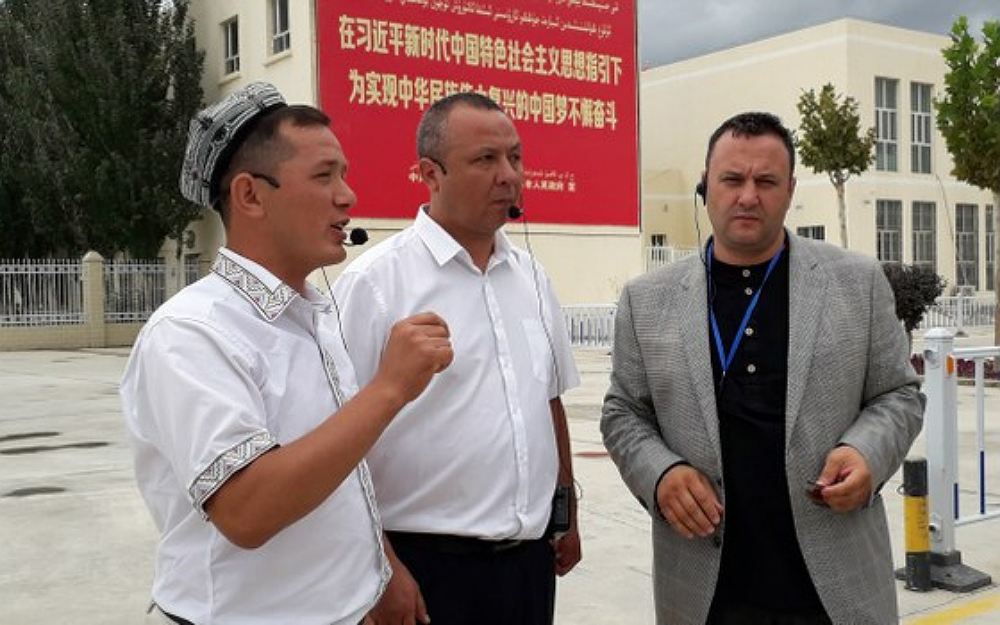
An Albanian scholar and commentator who traveled to China at Beijing’s invitation this month to disprove what he believed was biased Western media coverage of mass incarcerations of Uyghurs in the Xinjiang Uyghur Autonomous Region (XUAR) said his experience there confirmed the reports as true.
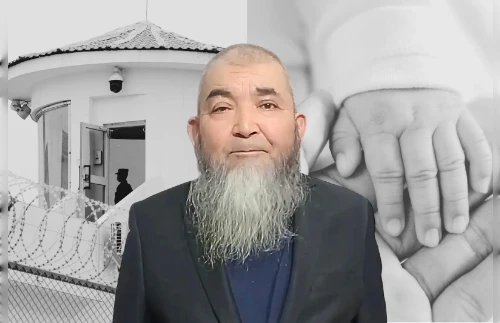
Olsi Jazexhi, a university lecturer with a PhD in nationalism studies, was selected by China to participate in a conference for journalists in the XUAR from Aug. 16-24, during which he toured several internment camps, where authorities are believed to have held more than 1.5 million Uyghurs and other Muslim minorities accused of harboring “strong religious views” and “politically incorrect” since April 2017.
“I had positive views regarding China and China’s foreign policy, and sometimes I think that China is treated unfairly by the West,” he told RFA’s Uyghur Service in a recent interview, adding that “this is probably one of the reasons I was selected to participate in this conference.”
“Reports that China was building internment camps and persecuting the Uyghurs seemed unbelievable … I was very eager to go to Xinjiang because I wanted to explore for myself what is going on there. But after visiting, I found that much of what we hear in the West about China is not actually ‘fake news.’”
Jazexhi said that after arriving, he was given tours of the XUAR capital Urumqi, as well as the regional cities of Aksu (in Chinese, Akesu) and Kashgar (Kashi), during which he and other visitors were told by handlers that the region historically belonged to China, while Uyghurs and other ethnic Muslims who live there are the descendants of “invaders,” whose culture is subordinate to that of Han Chinese.
“This official narrative was very shocking to us, and we could see it put into practice when we visited the mass detention centers … that our Chinese friends call vocational training institutes, but which we saw to be a kind of hell,” he said.
While Beijing initially denied the existence of the camps, China this year changed tack and began describing the facilities as “boarding schools” that provide vocational training for Uyghurs, discourage radicalization, and help protect the country from terrorism.
But reporting by RFA’s Uyghur Service and other media outlets suggest that those in the camps are detained against their will and subjected to political indoctrination, routinely face rough treatment at the hands of their overseers, and endure poor diets and unhygienic conditions in the often overcrowded facilities.
Jazexhi said his group’s handlers rejected Western estimates of the number of detentions as “exaggerations,” and told him that “only 500,000 Uyghurs” are currently held in a total of 68 camps, several of which they were later brought to see on highly orchestrated visits.
At the Onsu (Wensu) County Vocational Training School in Aksu prefecture—the first camp the group visited—Jazexhi said he was “expecting to see suicide bombers, terrorists, killers, murderers, and what have you, but … we found out [the inmates] were innocent people.”
“The only crime they had committed was that they were Muslim and Uyghur,” he said.
The government-organized tours at the camp in Aksu and elsewhere had been arranged ahead of time, according to Jazexhi, and select groups of young Uyghur men and women were brought out to perform music and dances for him and other contributors to the media from India, Turkey, Afghanistan, and other countries.
“We understood it was a setup and told our Chinese friends that we hadn’t come for a party … We wanted to investigate what was going on—who were these people, what crimes had they committed, and why were they being held there,” he said of the visit to the Aksu internment camp.
“I left the dance party and went out to inspect the conditions in the detention center, and tried to interview some kids doing other things there, but our Chinese friends got very upset with me and made excuses about why I couldn’t speak with them.”
‘Paranoid’ handlers
Later, Jazexhi and others were brought to see detainees “study,” and he asked their instructor why they were being held there against their will.
“[The instructor] was telling me that it was a vocational school, but when I asked whether they were free to go home, he said, ‘no, they cannot leave,’” he said.
“In a way, it proved to us these are prisons where these kids are brought against their will.”
When Jazexhi addressed the Uyghurs at the camp with the traditional Muslim greeting of “as-salamu alaykum,” or “peace be upon you,” he said they responded with the Mandarin Chinese greeting of “ni hao,” and said they did not identify as Muslims or believe in Allah because they “believe in science and the [ruling Chinese] Communist Party.”
“What we understood from visiting these mass detention centers is that [the detainees] are totally prohibited from speaking Uyghur and are forced to speak Chinese all the time, as well as to renounce their religion,” he said.
“I began to understand that China built these centers to Sinicize the Uyghurs. If they want to get out of the internment camps, the condition is that they must renounce their Uyghur identity, God, their belief in Islam, their Uyghur language, and instead always speak in Mandarin Chinese and acknowledge the supremacy of the communist party.”
Jazexhi said his handlers explained that authorities also hope to assimilate Uyghurs by bringing Han Chinese workers and settlers to the XUAR, introducing economic incentives that mix Uyghurs and Han Chinese communities together, and indoctrinating Uyghurs with Han Chinese culture and respect for the government through mass incarceration, adding that they regretted not implementing these policies during the 1970s.
He called them “paranoid,” and said they would not permit members of the group to interview anyone—even people they passed in the streets—while members of the Uyghur community “were afraid to talk to us.”
“They told us that they knew we had seen things that we didn’t like on our visit, but that they didn’t want us to report anything bad about them,” Jazexhi said.
“I went to China with the good intention of countering the narrative we hear from the West, but what I saw was really horrific … What we learned from our visit is that the government of Xinjiang was implementing selective policies to punish Uyghur Muslims.”
When Jazexhi addressed the Uyghurs at the camp with the traditional Muslim greeting of “as-salamu alaykum,” or “peace be upon you,” he said they responded with the Mandarin Chinese greeting of “ni hao,” and said they did not identify as Muslims or believe in Allah because they “believe in science and the [ruling Chinese] Communist Party.”
“What we understood from visiting these mass detention centers is that [the detainees] are totally prohibited from speaking Uyghur and are forced to speak Chinese all the time, as well as to renounce their religion,” he said.
“I began to understand that China built these centers to Sinicize the Uyghurs. If they want to get out of the internment camps, the condition is that they must renounce their Uyghur identity, God, their belief in Islam, their Uyghur language, and instead always speak in Mandarin Chinese and acknowledge the supremacy of the communist party.”
Jazexhi said his handlers explained that authorities also hope to assimilate Uyghurs by bringing Han Chinese workers and settlers to the XUAR, introducing economic incentives that mix Uyghurs and Han Chinese communities together, and indoctrinating Uyghurs with Han Chinese culture and respect for the government through mass incarceration, adding that they regretted not implementing these policies during the 1970s.
He called them “paranoid,” and said they would not permit members of the group to interview anyone—even people they passed in the streets—while members of the Uyghur community “were afraid to talk to us.”
“They told us that they knew we had seen things that we didn’t like on our visit, but that they didn’t want us to report anything bad about them,” Jazexhi said.
“I went to China with the good intention of countering the narrative we hear from the West, but what I saw was really horrific … What we learned from our visit is that the government of Xinjiang was implementing selective policies to punish Uyghur Muslims.”
Orchestrated tours
In a recent interview with ABC News, Adrian Zenz, an independent researcher who studies China’s minority policies and first put forth the now widely accepted estimate of 1.5 million Uyghurs and Muslim minorities believed to have been held in the camps, suggested that tours to the facilities are staged prior to media arrival.
“My research has shown that these camps are being modified prior to the visits,” Zenz told ABC, which was recently granted rare on-camera tours of a center in Kashgar prefecture’s Yengisheher (Shule) county and another in Atush (Atushi) city, in Kizilsu Kirghiz (Kezileisu Keerkezi) Autonomous Prefecture.
“Satellite images before and after show that several months before visits are permitted, watchtowers and other security features such as metal fencing were removed from these camps,” he said.
At the end of its government-guided tour, ABC News said it asked Chinese officials to see other centers in the XUAR, specifically ones that satellite images showed had barbed wire fences and watchtowers, but its requests were denied.
Mass incarcerations in the XUAR, as well as other policies seen to violate the rights of Uyghurs and other Muslims, have led to increasing calls by the international community to hold Beijing accountable for its actions in the region.
Last month, at the Ministerial to Advance Religious Freedom in Washington, U.S. Secretary of State Mike Pompeo called the internment camps in the XUAR “one of the worst human rights crises of our time” and “truly the stain of the century.”
U.S. Vice President Mike Pence also slammed the camps “where [Uyghurs] endure around-the-clock brainwashing” and survivors have described their experience as “a deliberate attempt by Beijing to strangle Uyghur culture and stamp out the Muslim faith.”
U.S. Ambassador-at-Large for International Religious Freedom Sam Brownback recently told RFA in an interview that countries around the world must speak out on the Uyghur camps, or risk emboldening China and other authoritarian regimes.
The U.S. Congress has also joined in efforts to halt the incarcerations, debating legislation that seeks accountability for China’s harsh crackdown on the Uyghurs. The Uyghur Human Rights Policy Act would appoint a special State Department coordinator on Xinjiang and require regular reports on the camps, the surveillance network, and the security threats posed by the crackdown.
Reported by Alim Seytoff for RFA’s Uyghur Service. Written in English by Joshua Lipes.
Copyright © 1998-2016, RFA. Used with the permission of Radio Free Asia, 2025 M St. NW, Suite 300, Washington DC 20036. 20036. https://www.rfa.org.
You know Independent Journalism needs fund to run the not for profit venture Please contribute if you like our effort Donate through  PayPal Or paytm +919903783187 phone pe +919875416249 Google Pay +919875416249 Amazon Pay +919875416249 BHIM +919875416249 or write to us editor@humanitynewsworld.com
You can get story updates or contact us on Whats App Messenger +919073399779