



Harlyne Joku/Koitaki,Papua New Guinea
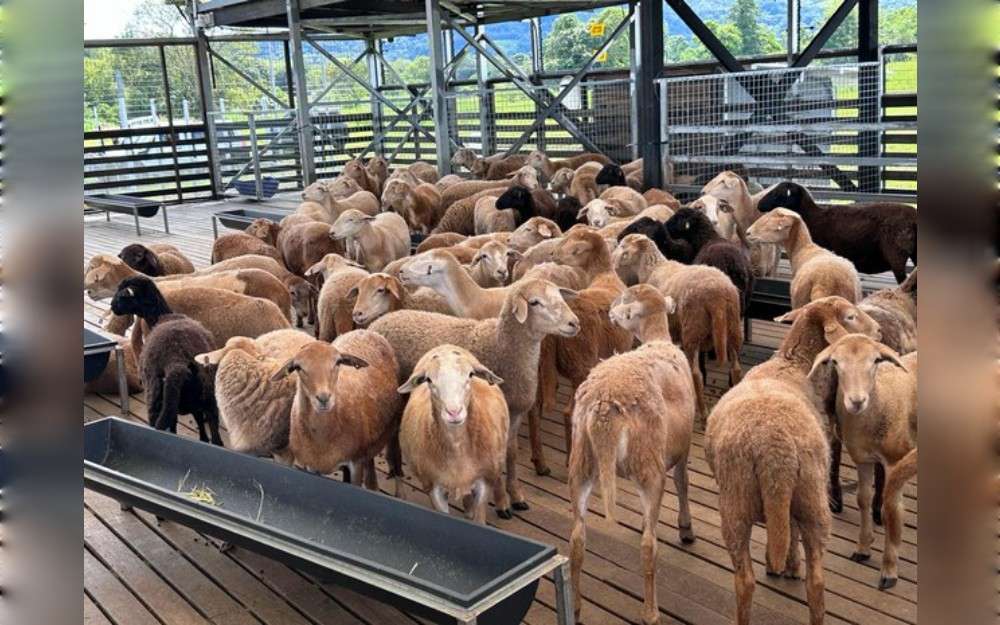
The sheep farm perched on the cool green Sogeri Plateau in the central highlands of Papua New Guinea is a novel sight in this Pacific island country.
Goats and less often sheep are raised in villages for food and traditional ceremonial purposes, but larger-scale sheep farming has not taken off in Papua New Guinea, the most populous Pacific island nation, despite earlier efforts.
“Papua New Guineans love sheep meat, especially lamb flaps which are mostly fat and treated as dog food in Western countries,” said Ralph Yamb, the farm’s manager.
The farm, aptly named PNG Protein Park, aims to develop a “sheep industry to produce PNG’s own sheep meat, to market domestically,” he said.
Dozens of the wooly creatures and a smaller contingent of goats were imported in November last year from Toowoomba in the Australian state of Queensland by BNG Trading – a subsidiary of a long-established food distributor in Papua New Guinea.
They were especially bred for the climate and conditions – mixing the Fiji Fantastic variety with five others to create the “ToeaKina” lamb featuring distinctive black hooves.
It’s hoped they’ll be the nucleus of a much larger flock that will contribute to reducing Papua New Guinea’s reliance on imported meat – predominantly the unhealthiest cuts discarded in wealthy nations and banned in some Pacific island countries.
Papua New Guinea imported 3,000 Romney, Corriedale and Perendale sheep from New Zealand in the 1970s in a government-backed effort to establish a village-based meat and wool industry.
Used to temperate climates, the animals struggled to thrive until crossbred with a Southeast Asian breed that has been present in small numbers in Papua New Guinea since the 19th century, according to the Asia-Pacific Consortium on Agricultural Biotechnology and Bioresources. Even so, by the mid-2000s there were no more than 8,000 sheep in the country’s highland provinces.
The slow progress has meant sheep meat is Papua New Guinea’s 9th largest import by value, worth US$66 million in 2022, with most coming from Australia.
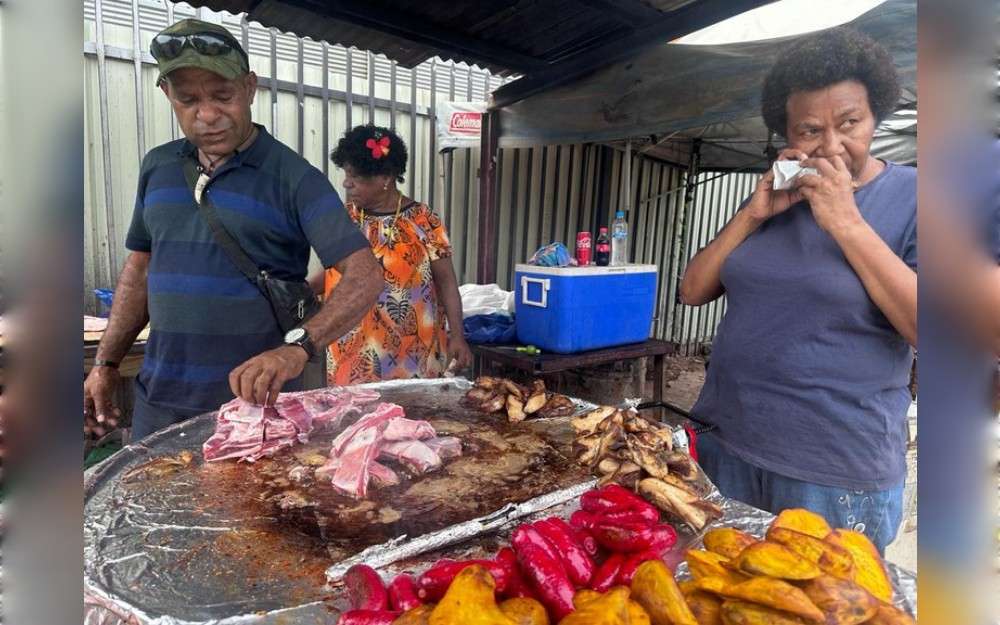
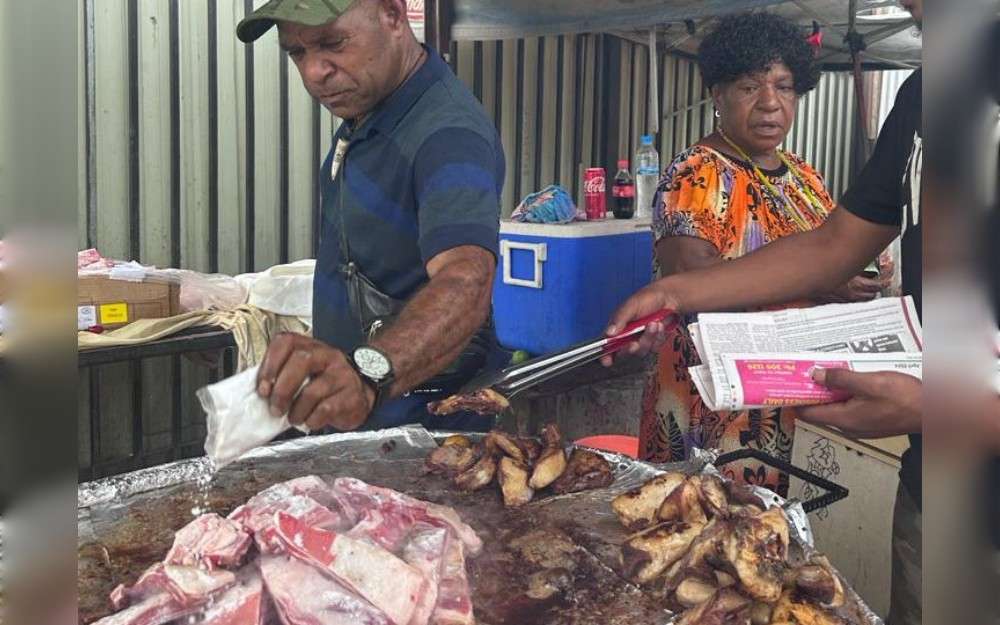
Lamb flaps – cut from the chest and up to 90% fat – and sheep tongue and neck chops, barbecued and sold at markets and roadside stalls, are affordable for Papua New Guineans and make a tasty meal for the average family.
They’re so ubiquitous that digital savvy lamb-flap connoisseurs make videos extolling the virtues of their favorite stalls and post them to YouTube.
The more grease, the cheaper a flap is – at 2-3 kina [50-80 cents]. A larger flap with more meat sells for 5-10 kina [$1.30-$2.60]. Enterprising vendors add value with tomato, greens, sweet potatoes and squirts of dressing and lime juice.
“People like to buy lamb flaps and they sell out fast so we are always putting more on the hot plate,” said a lamb flap seller in the Rainbow neighborhood of Port Moresby as hungry patrons use tongs to select portions straight from a tinfoiled hotplate swimming in bubbling oil.
Lamb flaps’ contribution to obesity and related health problems in the Pacific has led some island nations to ban them.
Fiji banned their import and sale in 2000, but as recently as 2022 health officials were calling for better enforcement of the ban. Tonga, which faces an obesity epidemic, banned the flaps in 2020 and Papua New Guinea reportedly considered a ban early last decade.
“Sheep meat is very popular in PNG but comes with a high price and this means that families are restricted to cheaper cuts of sheep meat,” said Jerry Singirok, a retired major-general who is a director of an investment company that owns the Koitaki farm land.
“So huge quantities of lamb flaps, neck chops and sheep tongue are imported and sold locally,” he said. “We need to reduce our dependence on imports. We need food security, and we need local production. And importantly we need production to be managed effectively.”
The venture aims to breed 3,000 sheep over the next three years for local sale. It also aims to help local families to generate income by raising and breeding sheep and goats for sale to the farm.
Importation of the animals took two years of discussions with quarantine officials in Australia and Papua New Guinea, which is free of the major exotic disease of livestock.
BNG Trading executive chairman, John Wallace, said after several years of planning there was considerable excitement when the sheep were transported by a Nauru Airlines charter to Papua New Guinea and then trucked to the Koitaki farm.
Success for the venture, Wallace said, will mean “sheep and goat meat will be easily accessed and cheaper too.”
Copyright ©2015-2022, BenarNews. Used with the permission of BenarNews.