



Smartphone usage is on the rise, but government controls remain strict.
By Son Hyemin for RFA Korean
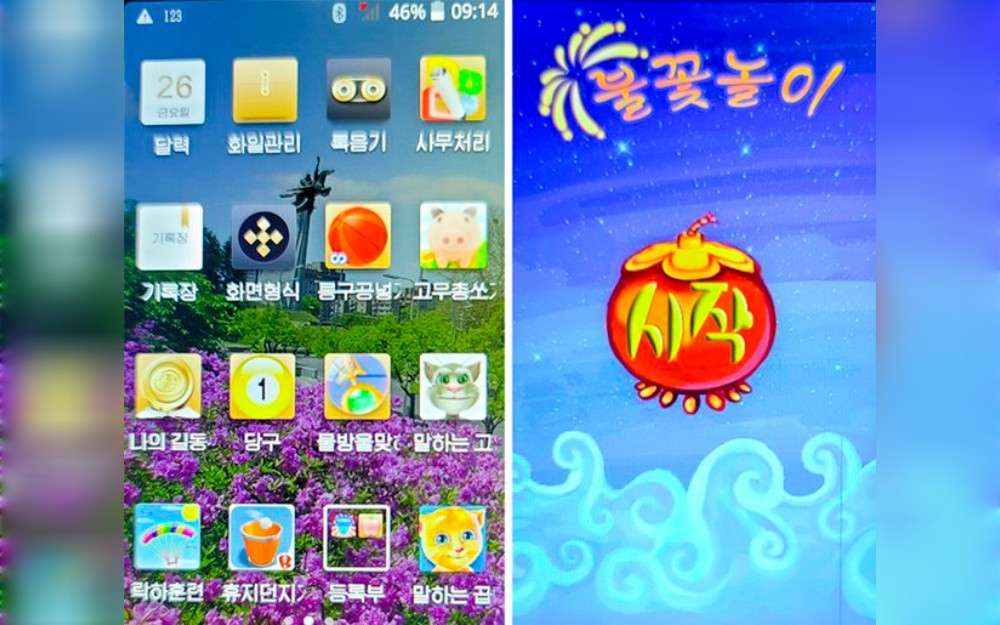
North Korea is opening more information technology exchange centers across the country – facilities that sell apps to the growing number of smartphone users, residents told Radio Free Asia.
The country has between 6.5 and 7 million active cell phones, according to estimates from the CIA and the Washington-based Stimson Center think tank. Smartphones make up a significant portion of these, and appears to be increasing given the spread of the IT centers, the residents said.
But the people do not have the freedom to download apps as they please.
To get the latest music app or popular game, users must take their phones to these IT exchange centers and pay a fee to have them installed.
A new IT exchange center opened in the city of Tokchon in the western province of South Pyongan, bringing the total number of centers in the city of 230,000 to five, a resident there told RFA Korean on condition of anonymity for security reasons.
“The information technology exchange center installs apps that allow you to watch or listen to the Rodong Sinmun newspaper, movies, songs and other media on your smartphones, and provides a phone repair service,” she said.
She added that young people like to play games and learn foreign languages on their phones, whereas cooking and farming apps are popular with middle-aged people.
The games are often made domestically, but some resemble those made abroad. A screenshot of a North Korean smartphone shows an app called “Talking Cat” that looks similar to Slovenian game developer Outfit7’s “Talking Tom,” if not the same app.
Government control
The IT exchange centers charge 10,000 won (US$1.17) for entertainment and game apps, 15,000 won ($1.76) for language learning apps, cooking apps, and greenhouse farming apps. An ebook app costs 10,000 won.
A kilogram of rice, meanwhile, costs 7,200 won (80 cents), so getting new apps is somewhat of a luxury.
Because smartphone users must go to these designated IT centers to download apps, the government has a degree of control over what is available to users.
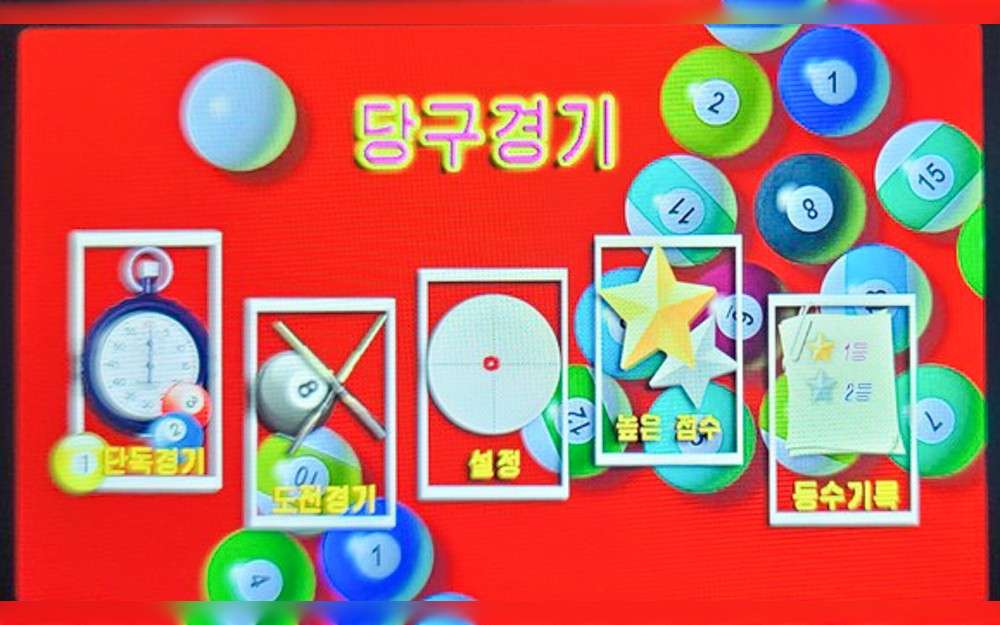
But all smartphones must have an app that tracks what apps people use, what content they view, and what websites they access on the country’s closed intranet, ensuring that almost nobody’s digital footprint is private.
The smartphones used by North Koreans are assembled from parts imported from China and sold under domestic brand names like Pyongyang, Arirang, and Blue Sky.
A new smartphone costs around $500, but there is a vibrant aftersale market that sells older models for as little as $30.
Cash cow
Since the IT centers are the only way to download apps, they are very profitable, the resident said.
“A few days ago, I went to the information technology exchange center. There were more than ten people who came to install apps or repair their phones,” she said. “If at least 20 customers come per day, they can earn more than 200,000 won ($23.40) in cash profit.”
In years past, there was only one IT center in each province. Now there are multiple centers in each town, a resident of the northwestern province of North Pyongan told RFA, asking not to be identified.
He said that the increase came after Kim Jong Un came into power in 2011, and there was a shift in the country’s IT industry to try to develop software for overseas markets. But the centers are necessary to satiate the domestic appetite for new smartphone software.
“Before, when the information technology exchange center sells a game app, 70% of the sales were donated to the Pyongyang information technology exchange center, which developed the app,” the second resident said. “The remaining 30% of sales went to the local government.”
But, starting this year, the local governments have been allowed to keep 70% of the profits, so that local governments have been installing new IT centers, he said.
He said that in Sinuiju, the city that lies across the Yalu River from China, there was only one IT center, but this year there is one in each of the city’s 49 subdistricts.
“When you go to the information technology exchange center, there is a large poster or bulletin board with the types and prices of various games, movies, and foreign language apps,” he said. “You can choose whatever you like.”
Translated by Claire S. Lee. Edited by Eugene Whong and Malcolm Foster.
“Copyright © 1998-2023, RFA.
Used with the permission of Radio Free Asia,
2025 M St. NW, Suite 300, Washington, D.C. 20036.
https://www.rfa.org.”