



The 2006 peace prize winner’s name was proposed by the students who led the anti-quota protests and the wider anti-government movement.
Kamran Reza Chowdhury/Dhaka
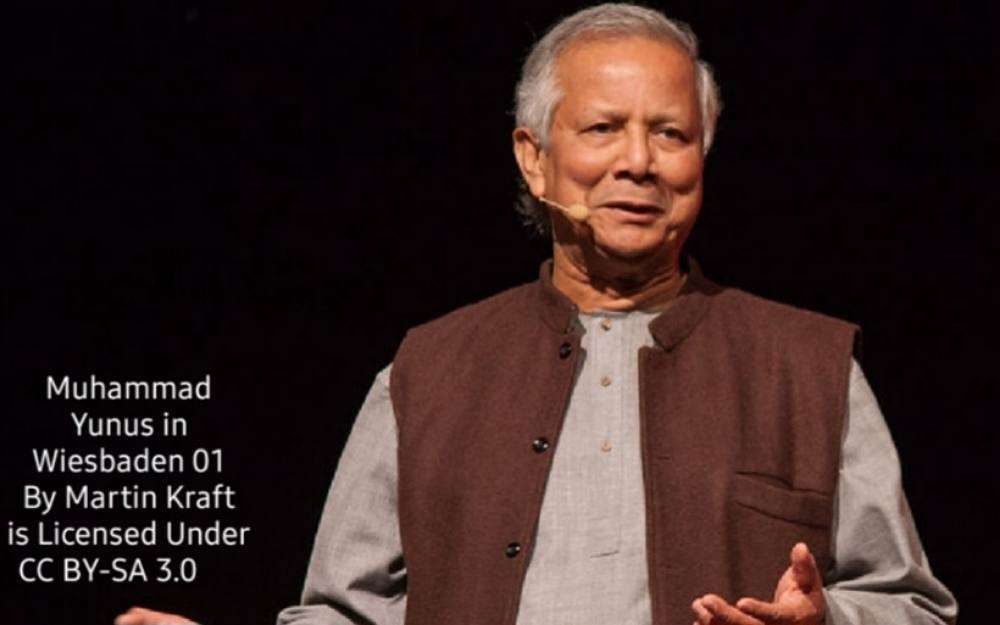
Muhammad Yunus has long advocated for peace through prosperity.
Now, the 84-year-old Nobel laureate has to restore stability to Bangladesh in the face of a flailing economy with angry youth battling unemployment and citizens crushed by the burden of inflation.
Yunus, who won the 2006 Nobel Peace Prize for pioneering microlending, was on Tuesday given the unenviable task of leading an interim government in his country, after Sheikh Hasina resigned as prime minister a day earlier and fled the nation.
Her departure came after weeks of anger following deadly clashes that claimed more than 300 lives when security forces and Hasina’s Awami League supporters went to the streets to quell university students’ protests against public service job quotas.
Since she left, at least 108 people have been killed nationwide.
Yunus, globally renowned as the “Banker to the Poor,” will be stepping into this cauldron of rage.
Many analysts, in fact, saw the morphing of the anti-quota protest into a nationwide anti-government one, as discontent over the Bangladesh economy having failed over the last decade to create enough jobs for the two million people who enter the job market annually.
In a country of about 170 million people, nearly 40% of 15- to 24-year-olds – about 12.2 million people – are neither students nor employed, according to official data.
Additionally, critics said Hasina crushed dissent, allegedly caused enforced disappearances and bent state institutions to her will.
Hasina also loathed Yunus – her government members publicly made numerous derogatory statements about him.
But he was the students’ choice to lead the interim government. Yunus was proposed as interim government chief by university students who spearheaded the anti-quota protests, and later the nationwide unrest against Hasina.
“If action is needed in Bangladesh, for my country and for the courage of my people, then I will take it,” Yunus told Agence France-Presse in a statement Monday.
Asif Mahmud, a key leader of the group Students against Discrimination, didn’t mince words in a Facebook post, reported AFP.
“In Dr Yunus, we trust,” he wrote.
‘Whims of two friends’
Yunus came to Hasina’s attention when he formed a political party during an army-backed caretaker government in 2007-2008, with reports swirling that he was attempting to sideline both the Awami League leader and her archrival Khaleda Zia.
They were embroiled in corruption cases.
Hasina returned to power in 2009, and two years later Bangladesh’s central bank removed Yunus as head of Grameen Bank, the institution through which he lent to the poor and helped lift millions out of poverty.
A year later, the World Bank canceled a U.S. $1.2-billion loan to build the Padma Bridge, citing corruption concerns.
Believing he used his friendship with former U.S. Secretary of State Hillary Clinton to influence the World Bank to cancel financing for the much-vaunted project, his supporters said dozens of politically motivated cases were filed against him.
Yunus denied the allegation, laughing them off.
“The tough world of international decision-making does not depend on the whims of two friends,” he said via a statement from his Yunus Center in July 2022.
“However ‘important’ a person Professor Yunus may be, whatever number of ‘influential friends’ he may have, a three-billion dollar project cannot be stopped just because he allegedly wants it canceled.”
A Hasina government minister said his statement was untrue and an effort “to cover fish with vegetables.”
Grameen Bank
Born in 1940 in the port city of Chattogram, Yunus studied economics at the University of Dhaka and later received a Fulbright scholarship to study for the same degree at the Tennessee-based Vanderbilt University in the United States.
After earning his doctorate, Yunus became an assistant professor of economics at Middle Tennessee State University.
He returned to Bangladesh two years later and joined the economics department at Chittagong University as an associate professor.
In Chittagong’s Jobra village, Yunus in 1976 founded the Grameen Bank project, in a bid to study how to provide banking services to the rural poor struggling with high debt and usurious loans.
In October 1983, the Grameen Bank national law authorized Grameen to operate as an independent bank.
Yunus’ microcredit system has been replicated in more than 100 countries.
Yunus and Grameen Bank were awarded the Nobel Peace Prize in 2006 for their work to “create economic and social development from below,” according to the award body.
“Across cultures and civilizations, Yunus and Grameen Bank have shown that even the poorest of the poor can work to bring about their own development.”
‘Fabricated’ charges
In January, a Bangladesh court sentenced Yunus to six months in prison for violating labor laws, his first conviction.
“I have been punished for an offense I have not committed. It was written in my destiny, and that of the nation; I have to bear it,” Yunus said after the verdict.
In June, Yunus and several others were indicted by a Bangladesh court on charges of embezzlement of 260 million taka (U.S. $2.2 million) from the employees’ welfare fund of his telecoms company.
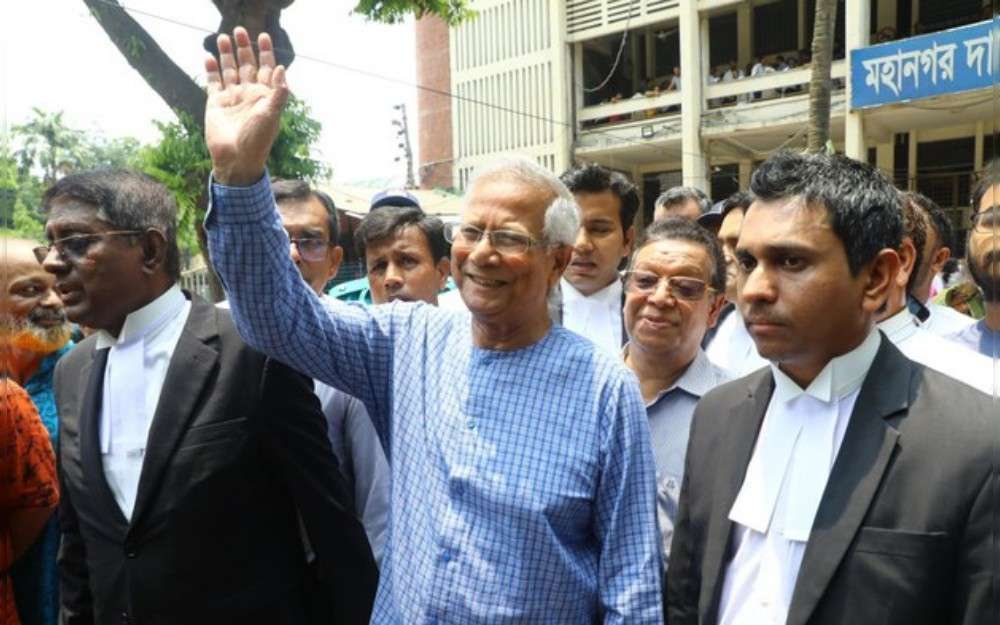
Defense attorney Abdullah Al Mamun said the charges against Yunus were “fabricated” and “politically motivated.”
And two months ago, Yunus was caged during a court hearing in Dhaka.
But those struggles may pale in comparison to the new challenge faced by the octogenarian social entrepreneur and civil society leader.
Yunus’ defense attorney believes the Nobel laureate would be the most apt person to bridge the crucial time between now and the next general election.
“He is the best person to lead the country to recover from the current political and economic turmoil left behind by Sheikh Hasina’s regime,” he told BenarNews, upon learning of Yunus’ new role.
Copyright ©2015-2024, BenarNews. Used with the permission of BenarNews.