



Stephen Wright and Pizaro Gozali Idrus/Wellington and Jakarta
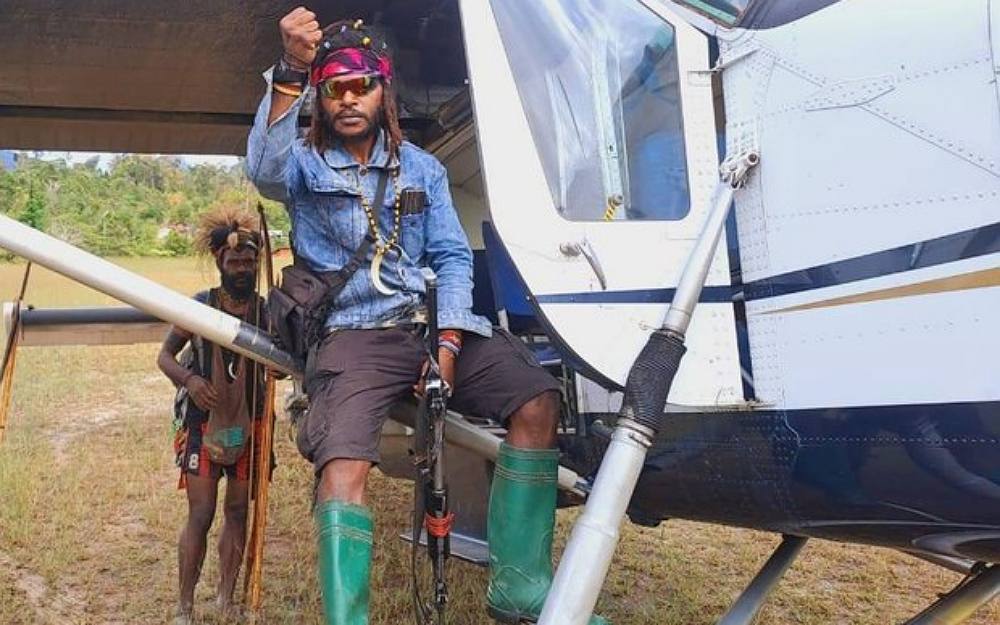
The kidnapping of a New Zealand pilot in Indonesia’s volatile Papua region is the latest in a series of attention-grabbing attacks by 24-year-old Egianus Kogoya and his faction of Papuan independence fighters.
Since about 2017 Indonesian authorities have blamed the group he leads for massacres of civilians, kidnappings, property destruction and firing at aircraft, tactics that some analysts say mark an escalation of a conflict, which has endured for decades.
“They don’t conduct regular attacks as other factions have,” said Hipolitus Wangge, a researcher at Australian National University. Instead, their focus is acts that achieve “massive public attention,” he said.
Philip Mehrtens, the pilot from New Zealand, was seized by the fighters on Feb. 7 in the central highlands of Papua, Indonesia’s easternmost region. They burned the small Susi Air plane he was piloting and released passengers who Indonesian authorities said were indigenous Papuans.
The group’s demands include independence for the region they refer to as West Papua and an end to military cooperation between Indonesia and countries including New Zealand, Australia and the United States.
Indonesia’s military attributes 65 attacks to Kogoya and his group since 2017, when the combination of his youth and radicalism began to attract the attention of conflict researchers.
Kogoya vaulted to notoriety in Indonesia in December 2018, when aged about 19 he led his group in slaying 23 people, mostly construction workers on the Trans-Papua highway that is meant to link far flung towns and cities in the mountainous and jungled region.
Poorly armed Papuan fighters – collectively known as the West Papua National Liberation Army – have battled Indonesia since the early 1960s, when it took control of the region from the Dutch.
Papuans, culturally and ethnically distinct from the rest of Indonesia, say they were denied the right to decide their own future. Indonesian control was formalized in 1969 with a U.N.-backed referendum in which little more than 1,000 Papuans were allowed to vote.
Documented and alleged killings and abuses by Indonesian military and police, from the 1960s until the present day – along with impunity and the exploitation of the region’s natural resources and widespread poverty – have fueled resentment of Indonesian rule.
Kogoya and his group are responsible for “brutal and sadistic killings” of civilians and attacks on security forces, said the Indonesian military’s spokesman in Papua, Herman Taryaman. He said Kogoya’s militancy was partly driven by internal rivalry and the desire for prestige within the liberation army.
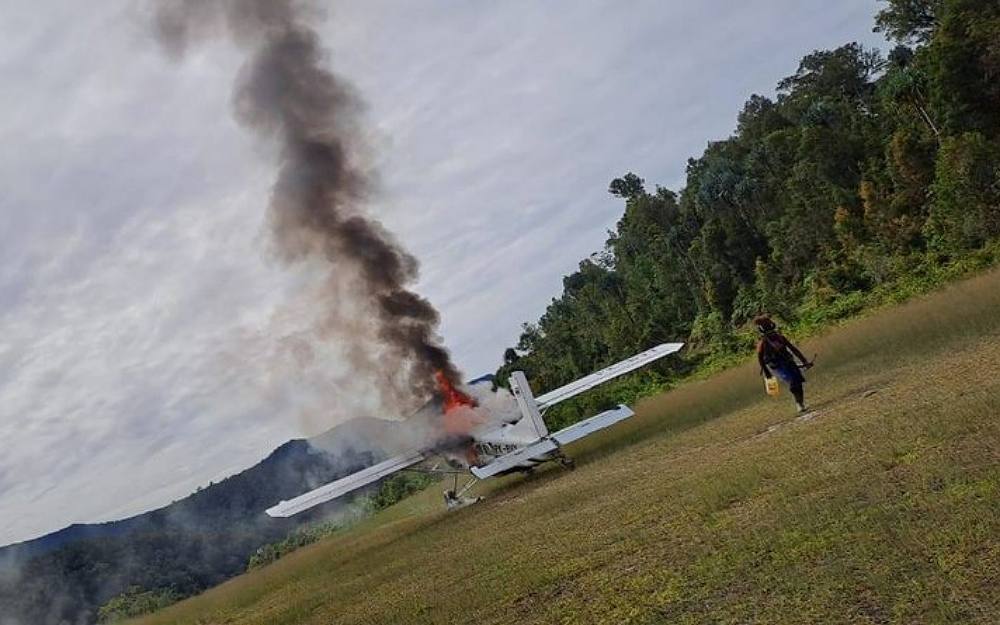
Mehrtens, the pilot, is safe and unharmed, said Sebby Sambom, a spokesman for the liberation army.
Last week it released photos and videos of Mehrtens that also show Kogoya, wearing a Papuan headdress, sunglasses, green gumboots and a camouflage-patterned t-shirt.
In one of the videos, Kogoya states that Mehrtens would be shot if Indonesian forces try to rescue him.
“We’re taking him hostage for the sake of Papuan independence, not for anything else. Countries must support our fight for independence,” Kogoya said in Bahasa Indonesia in a video recorded as he sat in the cockpit of the captured plane. “They can’t continue working with Indonesia.”
According to Sambom, Kogoya is the son of Silas Kogoya, who was prominent in the rebel army and died in 2011. He was involved in the 1996 hostage-taking of 26 people including foreigners, according to an account of events by the International Committee of the Red Cross, which attempted to negotiate the release of the captives.
Papuan activist Theo Hesegem said many of the liberation army fighters are aged 15-20.
Like them, Egianus Kogoya, he said, is a product of the conflict with Indonesia and tradition.
“They left school to join,” Hesegem said.
“It is a mandate that children must undertake to continue the struggle of their parents’ generation,” he said.
With the kidnapping of Mehrtens, the rebels are hoping for international attention to their cause and Indonesian concessions, Hesegem said.
Kogoya and his group are part of a shift in tactics under a more unified and better armed Papuan rebel army since 2018, according to a report last year by Deka Anwar at the Institute for Policy Analysis of Conflict in Jakarta.
Attacks have become more frequent and more civilian deaths are being suffered on both sides, the report said. In April 2021, an Indonesian intelligence chief was assassinated by fighters commanded by Lekagak Telenggen, a top figure among the rebels.
Some 125 civilians were killed in insurgency-related violence between 2018 and 2021, the report said, more than double the deaths between 2010 and 2017.
Recent developments such as Indonesia’s further administrative subdivision of Papua into six provinces and changes to the special autonomy law for the region are also fuel for the conflict, said Matthew Wale, leader of the Solomon Islands opposition and a long-time advocate of West Papuan self-determination.
Indonesia also has attempted to reduce support for the nonviolent wing of the independence movement by cultivating ties with Pacific island nations that have criticized human rights abuses in Papua.
Western nations have consistently backed Indonesia’s sovereignty over Papua. The massacre of communists and leftists in Indonesia in the mid-1960s put the country into the pro-Western fold and was a Cold War-era victory for the United States.
Nowadays, the United States and countries such as Australia seek closer security ties with Indonesia in response to China’s burgeoning influence in Southeast Asia and elsewhere.
Wangge, the ANU researcher, said the liberation army has for several years warned commercial flights and non-Papuans to stop entering areas it considers to be conflict zones. The landing site of the plane piloted by Mehrtens also was far from the reach of Indonesian forces.
“We should have seen this one coming,” he said.
Copyright ©2015-2022, BenarNews. Used with the permission of BenarNews.https://www.benarnews.org/