



Xi Jinping’s call for ethnic minorities to prioritize the interests of the nation amounts to an ‘aggressive approach to ethnic assimilation,’ says one analyst.

Chinese President Xi Jinping’s call for ethnic minority groups to put the interests of the nation first has fueled concerns that the government will double down on up its repressive policies against them, analysts said.
Xi’s speech at the two-day Central Conference on Ethnic Affairs in Beijing late last month focused on guiding ethnic groups to put the interests of China above all else and to share a sense of community with the Chinese nation.
China has 56 ethnic groups, with the majority Han comprising more than 91 percent of the country’s population of 1.4 billion people.
Xi told assembled officials they must to prevent risks and hidden dangers in ethnic affairs.
“[We] should hold the ground of ideology. [We] should actively and steadily address the ideological issues that involve ethnic factors, and continue to eradicate poisonous thoughts of ethnic separatism and religious extremism,” Xi was quoted as saying by Xinhua news agency.
“International anti-terrorism cooperation should be also intensified, working with major countries, regions, international organizations and overseas Chinese ethnic minorities,” added Xi, who is general secretary of the Chinese Communist Party’s Central Committee.
The conference was held amid intensifying criticism and sanctions from Western countries over Beijing’s increasingly repressive policies in northwestern China’s Xinjiang region, Hong Kong, Tibet, and Inner Mongolia. Beijing vehemently rejects the criticism.
There are 12 million Uyghurs in Xinjiang, up to seven million Tibetans in the Tibet Autonomous Region, and nearly six million Mongols, mainly concentrated in the Inner Mongolia Autonomous Region on China’s northern border with Mongolia and Russia.
Previous RFA reports have documented Chinese government policies to reduce or eliminate culture and language education in schools in Xinjiang, Tibet, and Inner Mongolia, causing friction with local communities and prompting protests against the moves.
In some cases, government censors also have shut down ethnic-language websites and social media platforms and censored comments on their policies on the WeChat messaging app.
Chinese authorities have banned the Uyghur language from being used in schools in the Xinjiang Uyghur autonomous Region (XUAR) in favor of Mandarin Chinese, a reversal of a bilingual education policy introduced in 2010 for schools in all minority areas in China.
Likewise, authorities in Tibet have forced primary, middle schools, and kindergartens to offer instruction and courses in Chinese, reducing ethnic students’ competency in the Tibetan language.
The Chinese government also has implemented a policy that banned Mongolian-language education in schools in Inner Mongolia starting in September 2020, a move that sparked calls by ethnic Mongolian rights activists for independence from China.
Forced assimilation
U.S. and EU lawmakers have called for boycotts of the 2022 Beijing Winter Olympics unless China stops its repression of the Uyghurs in Xinjiang, where Beijing maintains that firm measures are necessary to prevent religious extremism and terrorism.
China has held up to 1.8 million Uyghurs and other Muslim minorities in a network of detention camps since 2017. Beijing has said that the camps are vocational training centers and has denied widespread and documented allegations that it has subjected Muslims living in Xinjiang to severe rights abuses.
China’s other heavy-handed policies targeting the Uyghurs includes the demolition of mosques; the imprisonment of Uyghur intellectuals, artists and business leaders; the replacement of Uyghur with Chinese as the main language in schools; the use of a pervasive and intrusive surveillance system to monitor Uyghurs’ move; forced labor at factories and farms; and forced birth control and the sterilization of Uyghur women.
The U.S. and other countries and legislatures have deemed the measures as constituting genocide and crimes against humanity.
Xi’s speech expressed China’s intention to try to create a “Zhonghua Minzu” through what minorities see as forced assimilation, Uyghur political analyst Asiye Uyghur said, using a Chinese term for the notion of a Chinese nationality transcending ethnicity.
“China’s current goal is to create a Chinese nation state under the pretext of socialism with Chinese characteristics through forceful means,” she told RFA.
“If there is not any force to stop China, then it may achieve its goal to forcefully assimilate other ethnic groups in China, including Uyghurs,” she added.
Inner Mongolian scholar Yang Haiying, a professor at Japan’s Shizuoka University, said that the Xi’s “so-called modernization is to cover up the cultural destruction in Xinjiang — genocidal policies in Xinjiang.”
“To cover up the assimilation policy, [Beijing] unilaterally emphasizes unity and does not emphasize equality,” he said.
“The authorities have lowered the banner of multi-ethnicity in an all-around way and even ignored the provisions of their own constitution,” Yang added, in a reference to the 1982 charter’s stipulation that all ethnic minorities in China are equal and that the state is responsible for protecting their rights and interests.
Xi’s speech shows China aims to “use the concept of the Chinese nation community to replace individual nationalities and to accelerate the process of assimilation,” said ethnic Mongolian scholar Khubis.
By way of example, he cited the campus of Zhenglan Banner Mongolian Middle School in Xilin Gol League, where poems in Mongolian praising the Mongolian language and culture were erased and written over with a slogan in Chinese and Mongolian that read: “Building a strong sense of community of the Chinese nation.”
Policies implemented under tyranny’
Jianglin Li, an independent writer and researcher who is an expert in Tibetan history and the Tibetan diaspora, said that Xi speech repeated a message in a talk he gave at the last such conference seven years ago, emphasizing the forging of all China’s ethnic groups to support a Chinese nation community.
Xi’s most recent speech emphasized the implementation of the Communist Party’s policies, though the policies do not correspond to the reality of ethnic peoples, he said.
Forcing nomadic populations to relocate to cities, for example, went against their wishes and resulted in protests, Li said.
“These policies are implemented under tyranny, and the result of such tyranny is that we see ethnic issues in China persisting,” he said.
Li said that while Xi discussed the preservation of ethnic languages in his speech, his actions belied his words in order to present a “picture-perfect image to the outside world and combat the flood of criticism that China is facing.”
“Except for a few changes in the use of terms, Xi’s speech depicts the same meaning and wants to meld the nation’s dozens of ethnic groups into a singular national identity,” he said. “The aggressive approach to ethnic assimilation remains intact.”
Xi’s speech and his policies are keeping China on the path of “genocide and crimes against humanity,” said Gordon Chang, a columnist, author and lawyer.
“The reality is that Xi Jinping wants to eliminate all ethnic consciousness,” he said. “He wants a purified Han consciousness, and that is ethnic cleansing in its purest form.”
If the policy he discussed is implemented, it would mean the elimination of Uyghur consciousness and the Uyghur people, Chang added.
Chang said the international community should respond to China’s maltreatment of the Uyghurs by honoring their obligations under the Genocide Convention of 1948 to prevent and punish acts of genocide.
Reported by Jilil Kashgary for RFA’s Uyghur Service, Dorjee Tso for RFA’s Tibetan Service, and Qiao Long for RFA’s Mandarin Service. Written in English by Roseanne Gerin.
Copyright © 1998-2020, RFA. Used with the permission of Radio Free Asia, 2025 M St. NW, Suite 300, Washington DC 20036. https://www.rfa.org
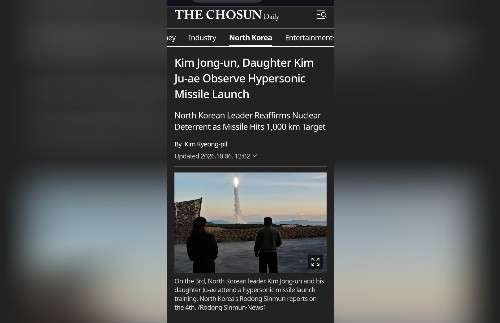
Could ‘Apron Dad’ on North Korean TV Pave the Way for Kim Jong Un’s Daughter to Rule?
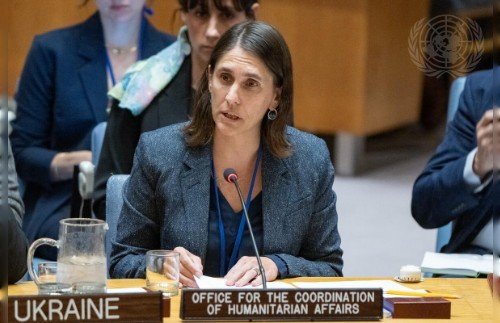
UN Security Council Meets on Maintenance of Peace and Security of Ukraine

Pet Iguana in Kansas Neighborhood Rescued from Tree

Curly Coated Retriever

Backpropagation
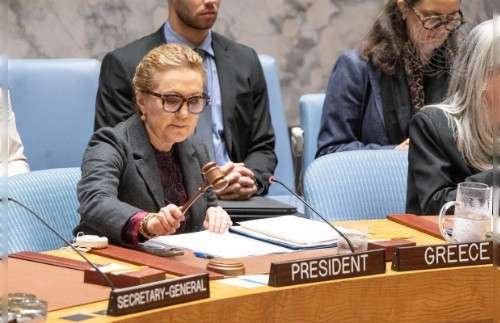
UN Security Council Meets on Sudan and South Sudan
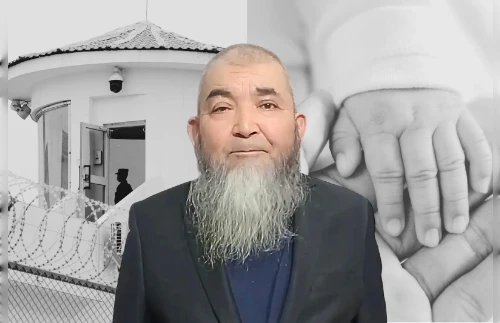
From a Cardboard Box to an Iron Cage: a Father’s Fight for His Daughter’s Freedom