



Golnaz Esfandiari
RadioFreeEurope/RadioLiberty
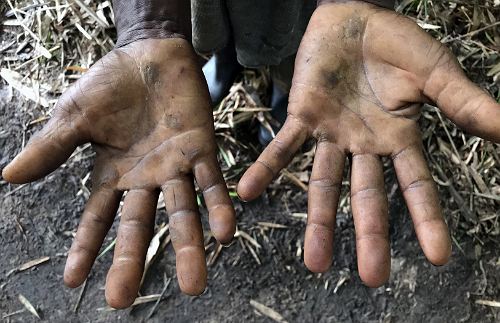
Iran’s chief prosecutor has tried to walk back his own suggestion that the country’s courts sometimes avoid amputations or controversial punishments when sentencing criminals due to UN human rights criticisms.

Mohammad-Jafar Montazeri was initially quoted expressing regret at a law enforcement conference in the capital that such pressure had forced Tehran to limit the number of “divine punishments” it carried out, referring to the severing of convicted thieves’ hands.
Many rights groups in Iran and abroad say such punishments amount to torture.
Iran’s religiously dominated system frequently organizes hangings and corporal punishments as public spectacles to discourage would-be criminals and has been called out over its rights record, including the frequent use of the death penalty and occasional reports of blindings or stonings.
The January 16 comments appeared to be a rare acknowledgement by an Iranian official that international pressure can be effective in forcing the heavily Shi’ite country to improve its human rights record.
“One of the mistakes we have is that we are worried about propaganda under the excuse of human rights — that they say we treat thieves with violence,” Montazeri said on January 16, according to the semiofficial Fars News Agency.
He added that the Koran prescribes that any man or woman caught stealing and meeting certain Islamic criteria must have their hand chopped off.
“But, unfortunately, to avoid being condemned for human rights issues by the United Nations, we stopped implementing some divine punishments,” he said.
The remark caught the attention of close followers of Iran’s legal and rights policies, who noted hundreds of amputation sentences in the decade to 2017, for instance.
But Montazeri appears to have quickly walked back his comments.
Quoted elsewhere on the sidelines of the same conference, Montazeri said human rights concerns will not compel the powerful Judiciary branch into leniency when implementing religiously prescribed punishments.
“We do not retreat from the implementation, or moderate treatment, of our punishments,” another semiofficial agency, ISNA, quoted Montazeri as saying.
ISNA added that Montazeri’s comments came in response to a question about whether “human rights excuses” would push the Judiciary to adjust Islamic punishments.
In 2010, the secretary of Iran’s state High Council for Human Rights, Mohammad Javad Larijani, told the UN Human Rights Council that many of the much-criticized punishments handed down in Iran were “culturally and religiously justified.”
Iranian officials publicly condemn human rights concerns expressed by rights organizations and Western governments as interference in the country’s internal affairs, and they frequently jail or harass Iranian rights activists or their lawyers.
Yet they are also sensitive to how the country is seen by the outside world.
Montazeri suggested that fewer offenders might get sentenced to hand amputations because “the rules of Islamic jurisprudence” make it less likely that a convict meets all the criteria.
Nevertheless, he added, once the decision is made by a judge, the Judiciary “is not wary of implementing the law.”
In the past, Iran has imposed multiple Koranic punishments that are described by rights groups as “cruel” and “inhuman,” including stonings, amputations, blindings, and floggings.
In 2002, the Judiciary introduced a moratorium on stoning. Such cases are difficult to track in Iran’s secretive judicial system, but several stoning sentences were said to have been issued and carried out in the years since.
In 2010, following an international outcry, a stoning sentence was overturned for an Iranian woman accused of adultery.

Only a small number of the reported amputations are carried out publicly.
In January 2018, local media reported that a 34-year-old man had one of his hands chopped off publicly as punishment for stealing livestock in the northeastern province of Razavi Khorasan. The amputation was condemned by Amnesty International as an “unspeakably cruel” punishment that highlighted Iranian authorities’ “complete disregard for human dignity.”
In one particularly gruesome case, authorities in Shiraz amputated the hand of a man convicted of robbery in April 2017 before executing him 10 days later for murder.
At the January 16 conference, Montazeri also acknowledged a rise in property crime in Iran and hinted that the country’s economic situation was a contributing factor.
“The crime rate increases when people and the society face economic problems,” he said.
Joblessness and price rises have sparked angry protests over the past 13 months, and Iran’s currency has plummeted as the United States returned to economic sanctions to punish what Washington sees as Iranian misbehavior.
Montazeri said prison sentences are not enough to fight theft and robbery.
“Jailing has negative consequences for the prisoner and for the family of the prisoner. And increasing the number of prisoners is not in our interests,” Montazeri told journalists. “It is not logical for us to think that we can stop a thief from committing the crime of theft through imprisonment.”
He added that “there are definitely other” methods to discourage crime and urged pundits to send their suggestions.
Copyright (c) 2018. RFE/RL, Inc. Reprinted with the permission of Radio Free Europe/Radio Liberty, 1201 Connecticut Ave NW, Ste 400, Washington DC 20036