




The ruling Chinese Communist Party is using AI and big data to monitor citizens at home and abroad, and is exporting its technology for use overseas.
By Lin Yueyang for RFA Mandarin
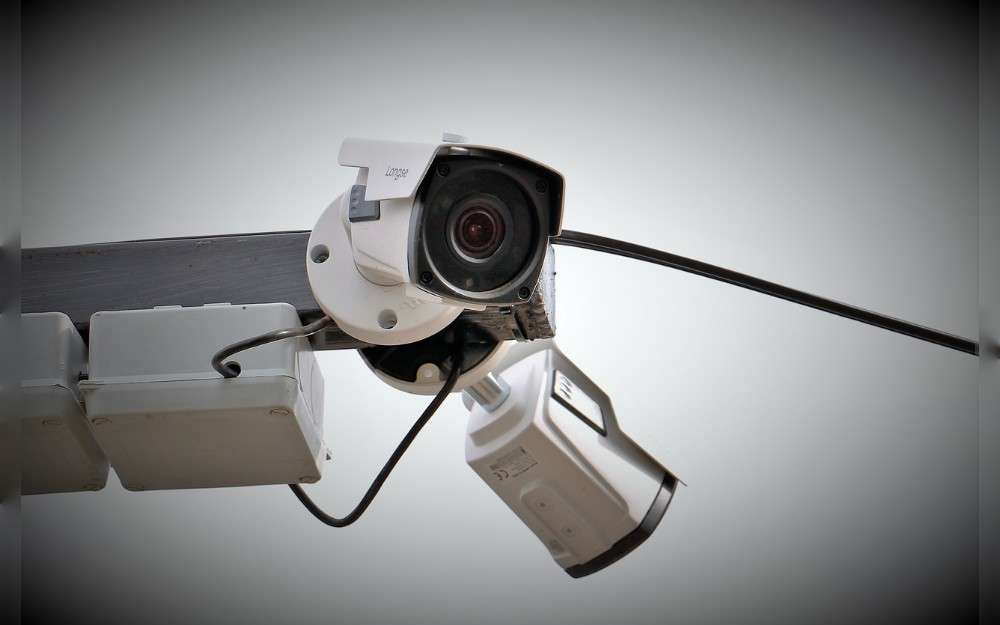
Homegrown AI and other cutting-edge technology is boosting internal surveillance by the ruling Chinese Communist Party and expanding its overseas influence and infiltration operations, and is already in use far beyond its borders, according to a recent report.
China’s recent advances in AI and big data, including its recently launched DeepSeek AI model, will boost the government’s surveillance capabilities, including overseas, according to Feb. 11 report from the Washington-based National Endowment for Democracy.
“The People’s Republic of China stands out for its quest to collect and leverage unprecedented types and volumes of data, from public and private sources and from within and beyond its borders, for social control,” according to the report.
China’s increasingly powerful AI surveillance systems use facial recognition and combine data streams to create sophisticated “city brains” that can track events in real time, wrote report author Valentin Weber.
“These tools create a pervasive surveillance dragnet and may be used by state authorities to quell protests before they start,” it said.
China is also developing virtual reality tools and brain-computer interfaces that could potentially allow the authorities to influence people’s mental states, affecting their privacy and agency, according to the report.
Under Chinese law, any data harvested from such processes must be handed over the the government, even if it was gathered by a private company.
‘Fine-tuned control’
The country’s advances in quantum computing suggest it could one day render present-day encryption obsolete, the report found, endangering anyone who dares to criticize Beijing.
And its ongoing investment in the digital yuan paves the way for further controls over citizens by enabling the government to track what people are buying or spending.
Zhou Fengsuo, executive director of Human Rights in China, said technology has made the Chinese government far more effective at controlling people than it ever was in the past.
“In the past, totalitarian countries such as the former Soviet Union would always show a certain amount of inefficiency,” Zhou said. “But the current Chinese government leads the way in these technologies, which can indeed make fine-tuned control of population a reality that could never have been achieved by traditional methods.”
“This is very worrying,” Zhou said.
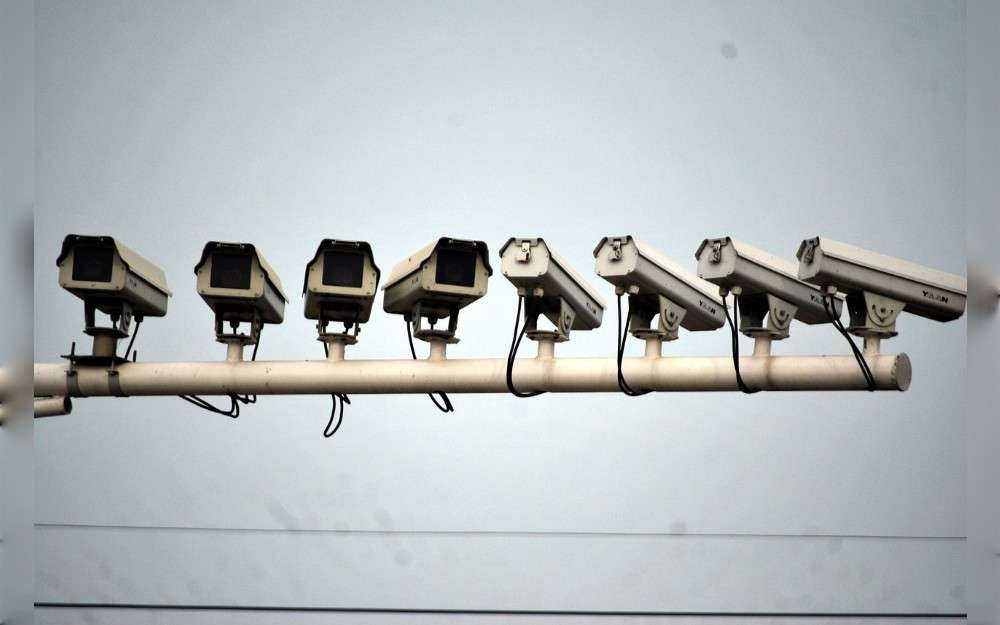
U.S.-based political commentator Wang Juntao said that while facial recognition technology isn’t unique to China, the authorities there deploy it in a way that no other government has.
“It has to do with the camera lens and the sampling of individual citizen [data],” Wang said. “Other countries can’t do that yet, but [China] can.”
Wang said there is currently high-precision surveillance equipment installed in Beijing’s Tiananmen Square, site of former mass protests against the government, that can monitor the blood pressure and emotional state of passers-by to assess whether they were a security threat.
Zhou said police routinely use cell phones to track the movements of anyone they are watching, including peaceful critics of the regime.
Exporting surveillance systems
The report, titled “Data-Centric Authoritarianism: How China’s Development of Frontier Technologies Could Globalize Repression,” warned that Beijing will also be at the forefront of exporting its tech-enabled authoritarian surveillance systems.
The Chinese techno-authoritarian state can be traced back to the 1998 “Golden Shield” project, a nationwide plan for integrated digital surveillance, also encompassing the censorship system that came to be known as the “Great Firewall,” the report said.
By the mid-2000s, China had reportedly exported the first radio jammers to the government of Zimbabwe, which used them to intercept citizens’ communications.
The report said China’s digital authoritarian exports have become “smarter,” including, for example, network filtering equipment able to recognize and block specific keywords.
Chinese vendors have also claimed a leading role in the booming global market for surveillance tools that monitor physical spaces, offering CCTV systems and eventually “smart” cameras linked to license plate readers or facial recognition technologies, it said.
These emerging technologies make it possible to refine sophisticated and targeted propaganda campaigns; carry out mass algorithmic repression and movement controls of the kind that have been implemented against the Uyghurs in Xinjiang, the report said.
Reports have already emerged of Chinese government surveillance of Uyghurs far beyond China’s borders.
Algorithms are used in biometric surveillance, where they lock onto distinctive characteristics like the shape of a person’s nose, eyes, and eyebrows, the way they walk, or the sound of their voice, enabling them to be recognized in video, audio or images.
While they can be used for traditional law enforcement, they also enable “much more pervasive forms of monitoring,” the report said.
Translated by Luisetta Mudie.
“Copyright © 1998-2023, RFA.
Used with the permission of Radio Free Asia,
2025 M St. NW, Suite 300, Washington, D.C. 20036.
https://www.rfa.org.”