



Escapee Park Sol-ji often gets homesick for the port city of Chongjin. A beach day in Busan comes close.
By Kim Jisu for RFA Korean
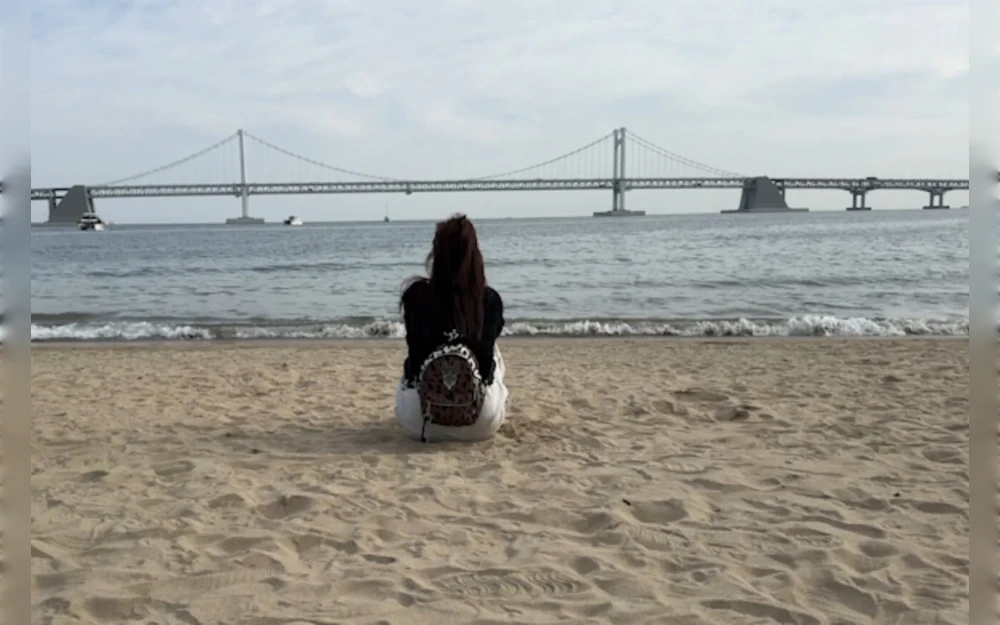
Park Sol-ji stared out over the water at Gwangalli Beach with the iconic Gwangan Bridge in the distance, just above the horizon. South Korea’s touristy second largest city of Busan is a drastic change from heavily industrialized Chongjin – her hometown in North Korea. But both cities are large ports on the eastern side of the peninsula, and the sand, the breeze, and the smell of the sea reminds her of home.
“I love looking at the sea, and coming here whenever I miss my hometown is a big part of it,” she told Radio Free Asia Nov. 3. “Also, coming to the seaside makes me feel like I can finally breathe. I think I like it because it gives me such a sense of liberation.”
Park Sol-ji is a pseudonym she is using for safety reasons. Sol-ji fled North Korea 19 years ago when she was 20 years old, arriving in South Korea the following year. Adjusting to life in the fast-paced South was jarring. Though she tried her best to blend in among South Korean 20-somethings , it would all come crashing down whenever she spoke with her unmistakable North Korean accent.
She often found the degree of change in her life to be overwhelming, and she longed to return home, but that was now impossible. In times like that a trip to the sea would always remind her just enough of home to boost her spirits.
These days, she’s shed the accent and looks about the same as everyone else, but she still gets homesick and often travels to the seaside.
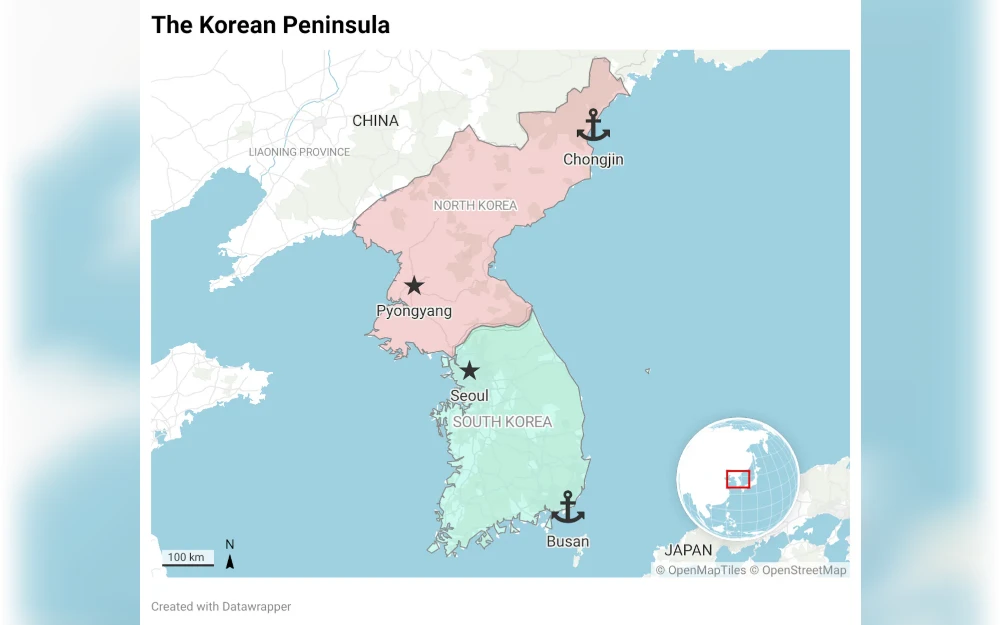
Busan is very different from Chongjin. Though both cities are industrialized ports, the South Korean city has – over many decades – invested in travel infrastructure and branded itself as a global tourist destination.
According to tourism statistics compiled by the Busan city government, more than 3.93 million foreign tourists have already visited Busan this year alone. CNN introduced Busan as “Asia’s Next Coastal City,” and Expedia selected Busan as the only Korean destination among its “Top 10 Destinations of the Year for 2027.”
But for Sol-ji, it’s not the glitz and glamor she’s coming for. She is here to take in the memories of the seaside of her childhood, where she played in the sand with her friends and spent precious moments with her family.
Memories roll in with the rising tide
Though the forecast called for cloudy weather, Gwangalli Beach had quite a few visitors from midday, perhaps due to the unexpectedly clear sky. Couples were taking photos with the sea as a backdrop, groups of noisy students on a field trip made their way across the sand, and foreign tourists walked barefoot. Everyone had smiles on their faces. Gwangalli Beach is well known as a romantic spot where the blue sea harmonizes with the spectacular night view of the Gwangan Bridge.
Sol-ji slowly surveyed the seascape and her face lit up as she spoke of the days she and her family would break out a large cauldron, build a fire, catch fish, and cook eojuk, a type of spicy fish porridge. She also remembered how she and her friends used to play by pulling up seaweed to gather in makeshift nets made of their extra clothes. Although these were ordinary childhood games, looking back now, they were moments she can never have again. To her, the sea is a landscape she longs for, as well as a place where she finds solace for her wounds.
“I even dreamt of returning to Chongjin because I missed my hometown, but even in the dream, seeing my dyed hair and decorated nails, I thought I would get caught,” she said. North Korea is notorious for fashion police who crack down on “capitalist” looks like dyed hair, colored nails, blue jeans, clothing with English words and phrases, and other no-nos. In South Korea, Sol-ji is free to dress how she wants to, but that does not erase her longing.
“I really do want to go back just once.”
The old village in the hills
Prior to visiting the beach, Sol-ji had started the day with a train ride to Busan Station, disembarking in the morning. The first spot on her itinerary was Gamcheon Culture Village, a 10-minute taxi ride away. The village started as a ramshackle town built up in the hills for laborers, and it expanded greatly with the swell of refugees fleeing to Busan from the advancing North Korean army in the opening weeks of the 1950-53 Korean War. In recent years the village was painstakingly restored through cultural preservation and beautification projects.
These days, tourists flock to its narrow meandering streets, attracted by the colorfully painted houses, many of which have been converted to shops, cafes and mini-museums. Near the high point of the village sits a colorful statue of the Little Prince, presiding over a space dedicated to the mythos presented in Antoine de Saint-Exupéry’s world-renowned novella.
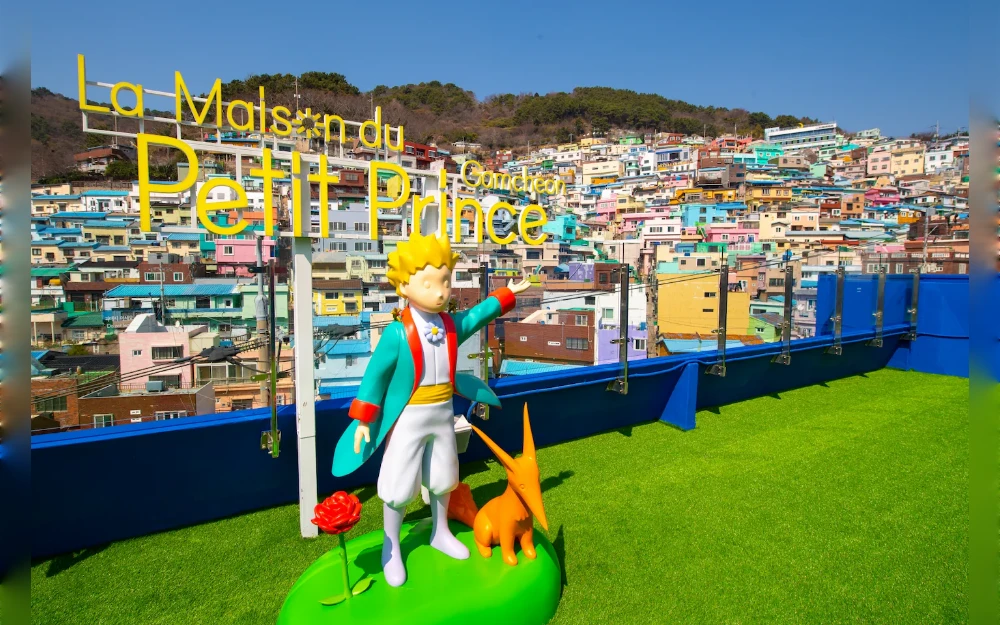
Today, the tourists have come in force. More often than not, passersby who came for the village’s unique artsy flair will be speaking in a language other than Korean.
While most tourists are browsing the shops, ordering refreshments, or taking in one of the museums, Sol-ji slowly looks around the alley, finally focusing on a clothesline in the courtyard of one house. She noticed three or four items of clothing hanging on a single line, swaying in the breeze. It was this evidence that people actually live here that conjured up the feelings of her childhood.
“People here hang their laundry on clotheslines like that. It’s exactly the same in North Korea,” she said. She explained that in North Korea some families have washing machines, but rolling blackouts are common in most places, so people still have to do laundry by hand.
“So here they also dry their laundry in the sun,” she said. “Knowing this is quite heartwarming.”
In another area of town she operated a manual pump that once drew water out of the ground. She said it made her think of her grandmother’s house in Chongjin.
Sol-ji walked along, looking around every corner of the alley. Though sun-dried laundry and the hand pump might be similar details, the nature of this town, built up on a hillside, would never make sense in Chongjin, she said.
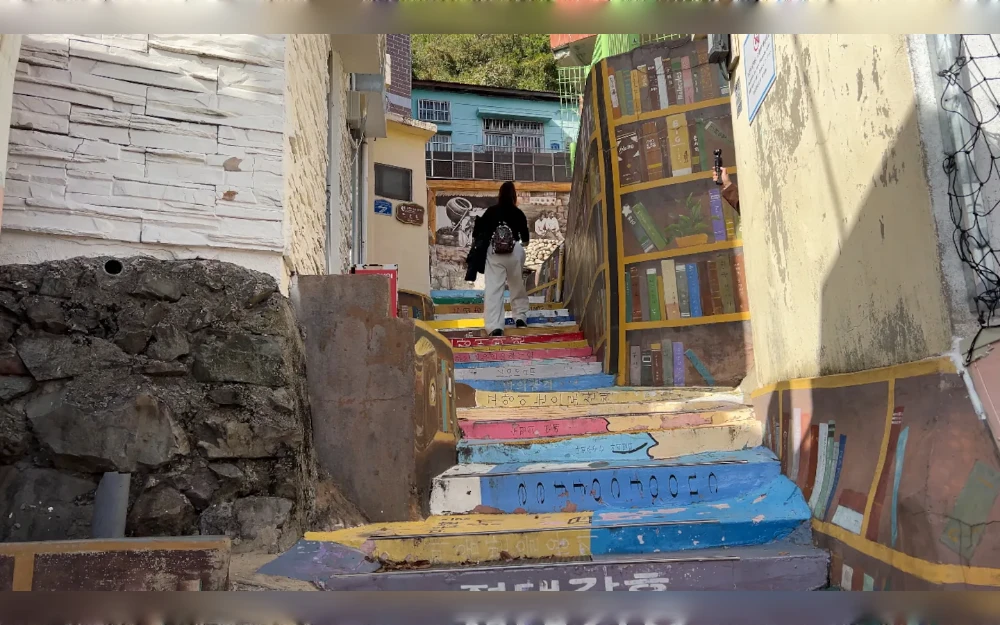
“There aren’t many houses on slopes like this in Chongjin. It costs a lot of money to build roads and houses up to these inclines,” she said. “Instead, there are many fields on these mountain slopes. It is land where people make a living through farming.”
Noon approached, and it was time for lunch.
Food for reminiscing
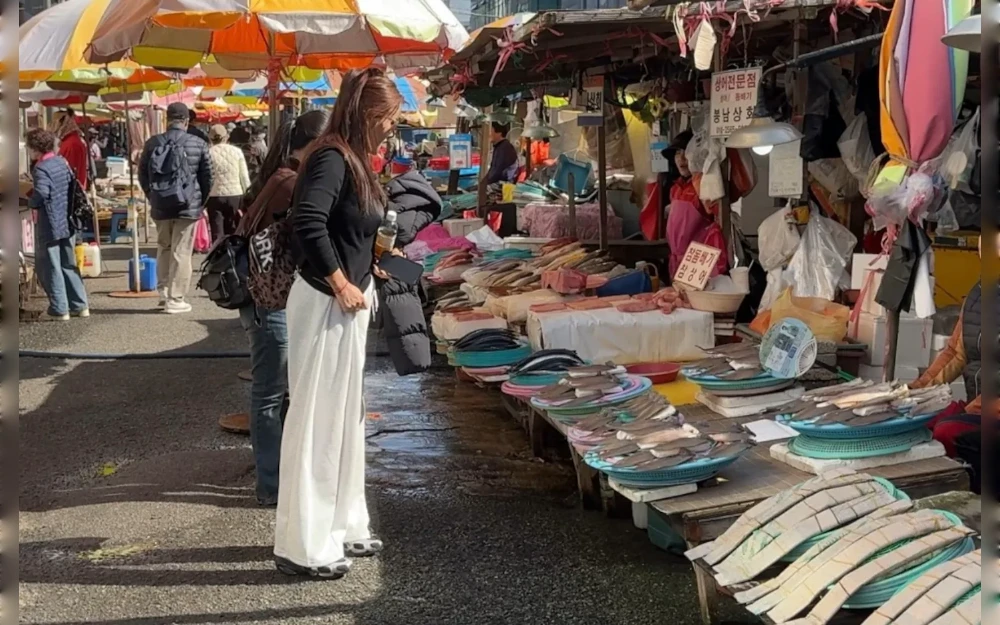
Sol-ji’s next destination was the famous open-air Jagalchi seafood market. As she walked from stall to stall, the boisterous calls of merchants mingled together, as they tried to attract customers by shouting out prices in their folksy Busan accents while holding up wriggling fish. Jagalchi is the largest seafood market in the country, and it is another big Busan tourist destination.
Sol-ji looked around the market, carefully observing the fish leaping out of the ice. She seemed to be searching for familiar fish such as flounder, cutlassfish, mackerel, and squid. Although it was an unfamiliar market, the seafood displayed on the stalls was something she often saw back in her hometown, she said.
She recalled how North and South Koreans use different words for squid and two types of octopus and this led to confusion.
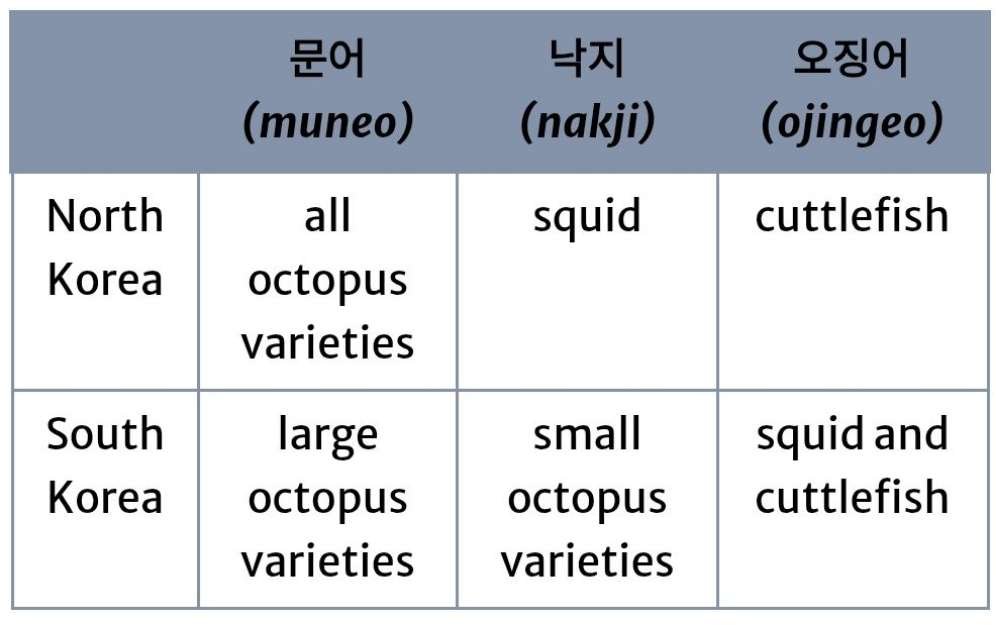
” We called squid nakji. So when I’m here and I see the small octopus that they’re calling nakji, that’s what we used to call baby muneo,” said Sol-ji.
She recalled that during her childhood she would often snack on dried squid, tearing off tasty parts and chewing it by the mouthful.
The marketplace also conjured up memories of eating raw fish, but the way she enjoyed it up North was very different. In Chongjin raw fish is served slathered in a thick sauce, and wrapped with other ingredients in lettuce. But she was surprised when she came to South Korea and saw people eat the plain white flesh dipped in only a little bit of sauce.
“I think the seafood I ate in Chongjin was tastier,” she said, smiling broadly. She explained that fish caught in colder places is saltier and tastier.
But then again, she said, it might have just been that she was hungry all the time back then.
“It’s like something out of a dream.”
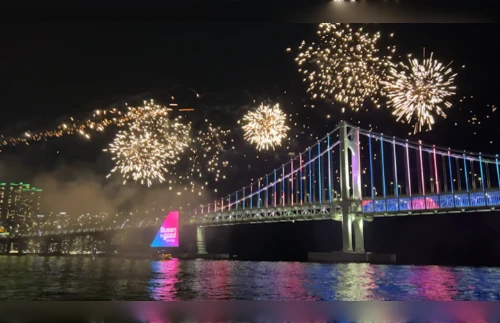
As the sun set behind Gwangalli Beach, Gwangan Bridge lit up the night sky in a dazzling flash of color. Sol-ji got in line to ride a yacht under the bridge, out to sea to catch the fireworks show exclusively for the passengers.
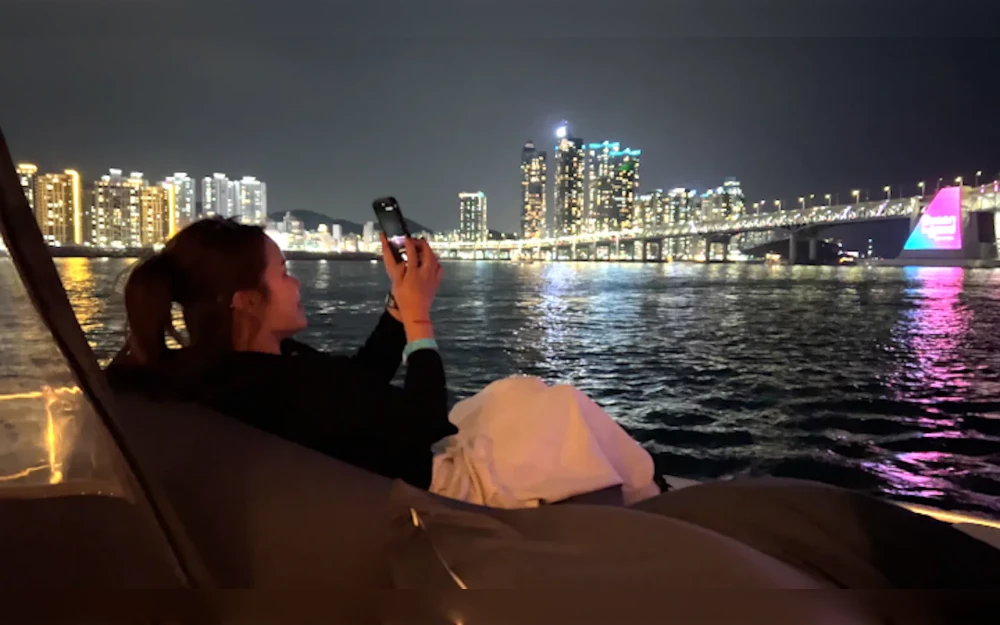
As the yacht moved along, Sol-ji couldn’t help but notice that it was a stark difference from the pitch black nighttime seascape in Chongjin – out at sea, Busan’s night sky is brightly and colorfully illuminated by the bridge, the cityscape – and soon, the fireworks.
Sol-ji sat on the deck, quietly closing her eyes and feeling the sea breeze. Then in one magic moment, lights shot out of the sky with a loud boom. The fireworks brought a bright smile across her face.
In all her excitement, her thoughts drifted to her childhood friends. Although they live in different places now, she thought how wonderful it would be if they could gaze at the dazzling night sea of Busan together.
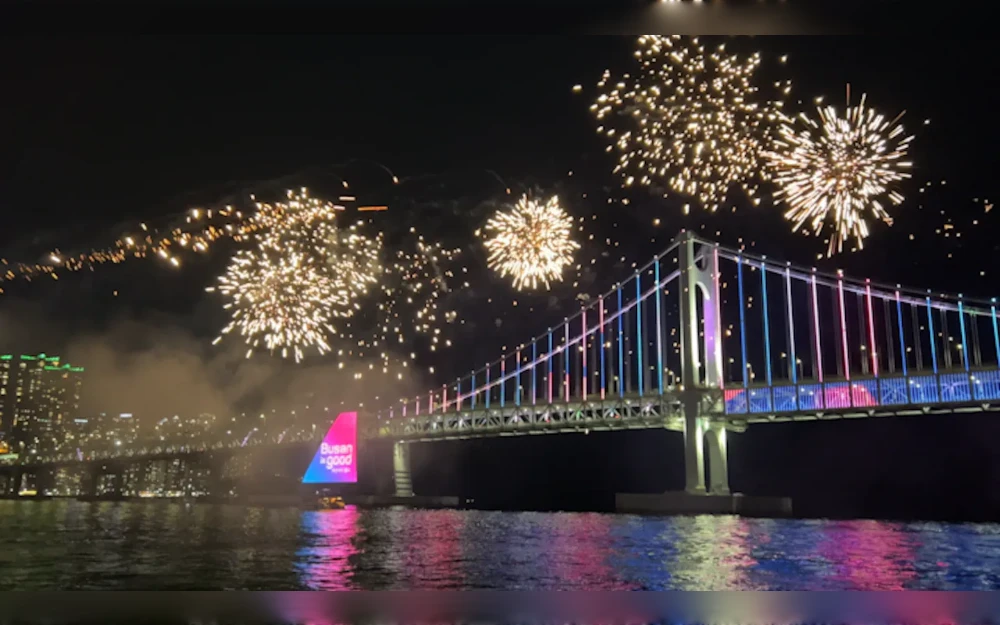
“This really feels like a dream, but I really do want to try it with them at least once,” she said. “I want to take lots of photos with my friends and go sightseeing like this.”
Under the glowing bursts, she reflected on her current daily life. Nothing like this would ever be possible in North Korea, she said. But in South Korea she can go wherever she wants, with whomever she wants, wearing whatever she wants. She smiled, realizing that “freedom” isn’t a grandiose ideal or political buzzword, it is contained in an ordinary moment like this, on a boat at sea near Busan, under the brightly lit night sky.
Edited by Yi Yongin in Korean and Eugene Whong in English.
“Copyright © 1998-2023, RFA.
Used with the permission of Radio Free Asia,
2025 M St. NW, Suite 300, Washington, D.C. 20036.
https://www.rfa.org.”