



Killings, arrests and torture were part of Awami League strategy to cling to power, United Nations human rights chief says.
Mostafa Yousuf/Dhaka
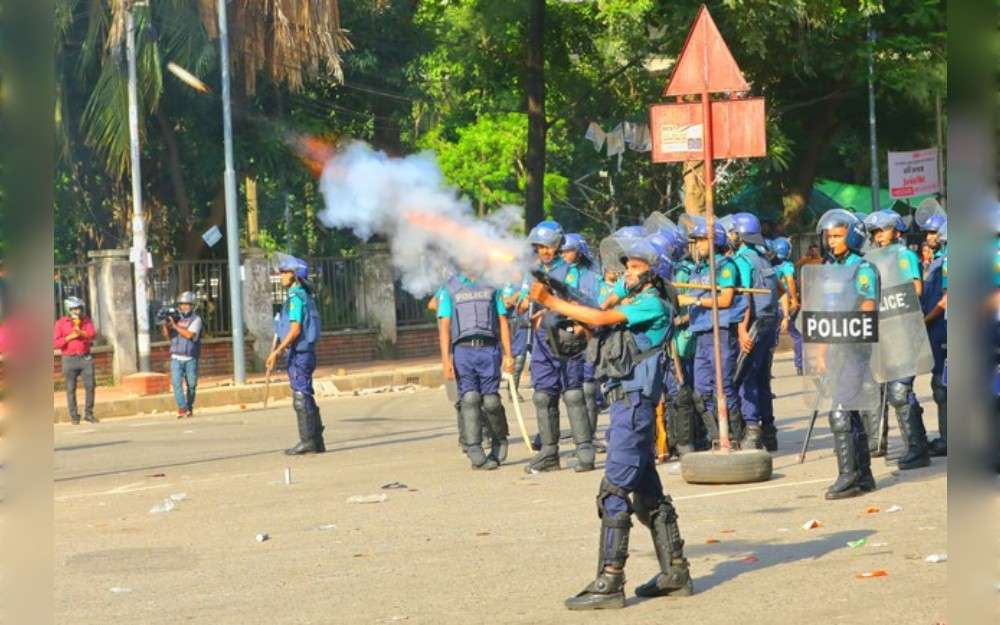
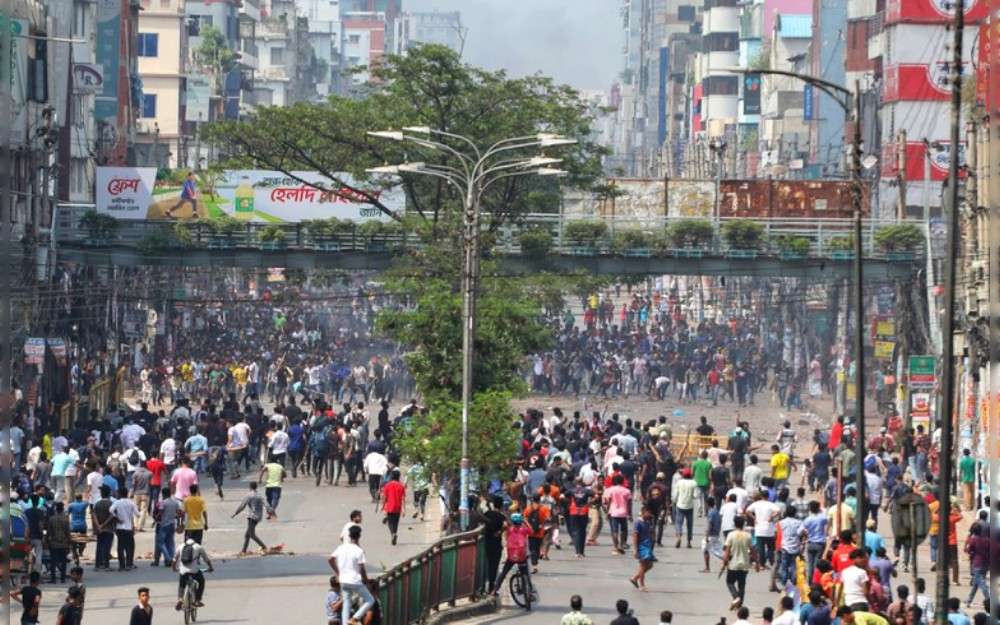
Bangladesh’s top leaders, including then-Prime Minister Sheikh Hasina, directed large-scale operations where law enforcers fatally shot anti-government protesters despite concerns from senior security officials about excessive use of force, according to a new report by the United Nations.
The fact-finding report by the U.N.’s human rights office focused on protests during a student-led uprising in July and August 2024 that toppled Hasina’s government. It found that about 1,400 people were killed in her government’s efforts to crush the revolt – including as many as 180 children younger than 18.
The U.N. Office of the High Commissioner for Human Rights (OHCHR) based its findings on more than 230 confidential interviews with victims, witnesses, students and other protest leaders, human rights defenders, experts as well as other persons of relevance.
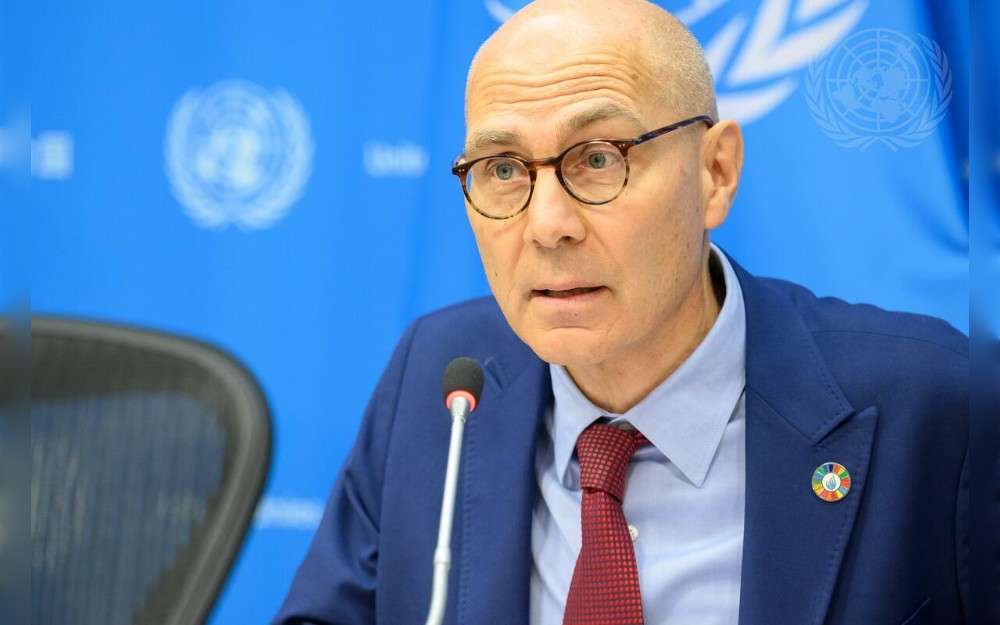
“The brutal response was a calculated and well-coordinated strategy by the former government to hold onto power in the face of mass opposition,” U.N. High Commissioner for Human Rights Volker Türk said in a statement released with the report in Geneva on Wednesday.
“There are reasonable grounds to believe hundreds of extrajudicial killings, extensive arbitrary arrests and detentions and torture, were carried out with the knowledge, coordination and direction of the political leadership and senior security officials as part of a strategy to suppress the protests.”
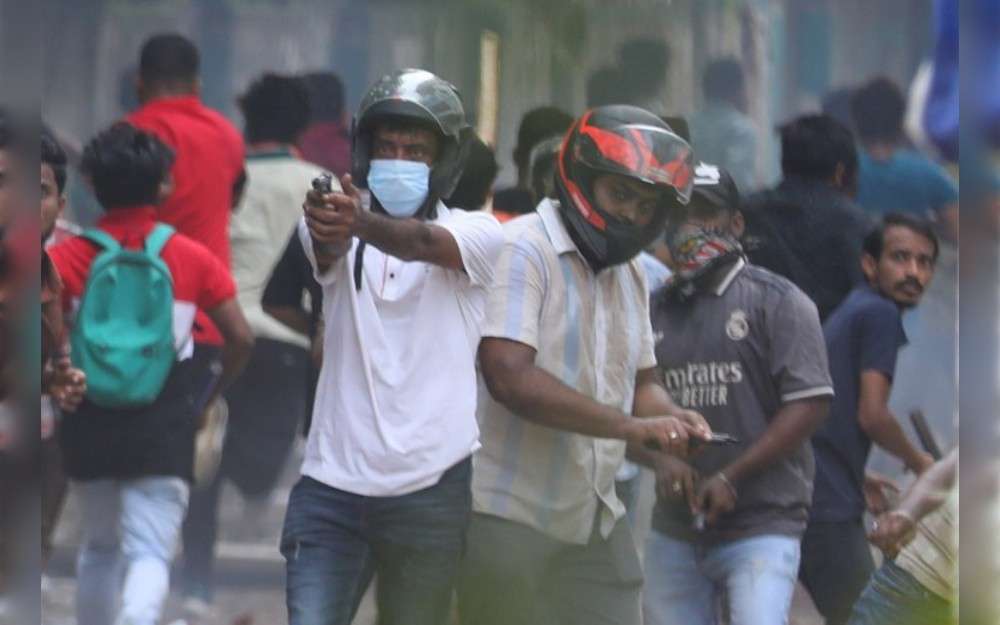
In addition to details about Hasina’s orders against protesters, the report outlined how shooting victims were barred from treatment; children were killed, detained and assaulted; and women were targeted for assault by enforcers. It also called for the Bangladesh police elite Rapid Action Battalion (RAB) to be disbanded.
“The magnitude and seriousness of the violations and their deep-seated root causes require urgent measures as well as profound reforms so that similar patterns of serious violations do not occur again,” the U.N. report said.
Hasina’s role
The report alleges that on July 18, 2024, the home affairs minister instructed the Border Guard Bangladesh (BGB) commander, “in front of the other senior security sector leaders, to order use of lethal force much more readily.”
Asaduzzaman Khan Kamal, who was not named in the report, was the home minister at the time.
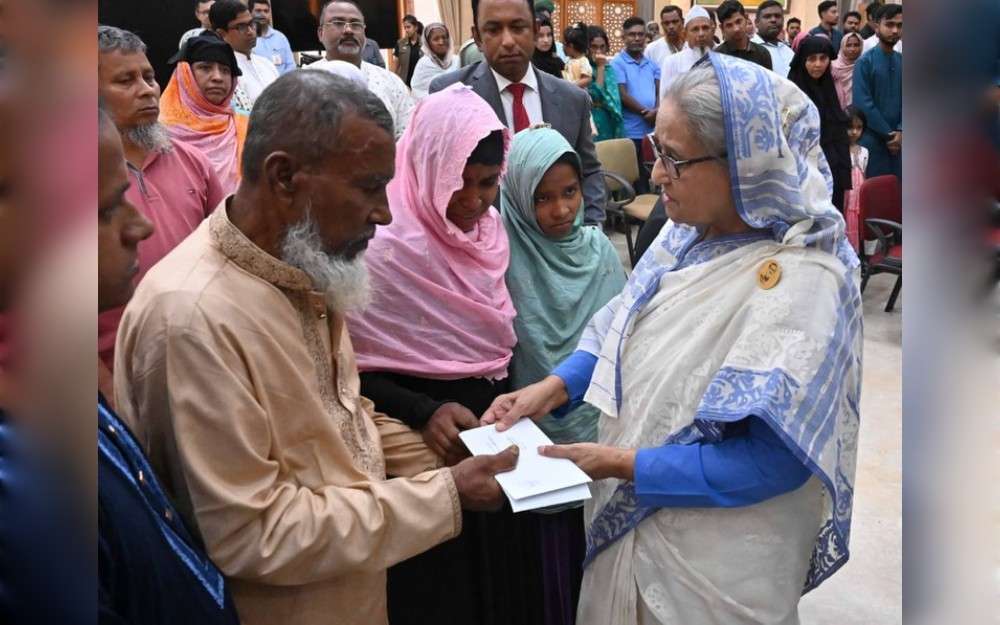
Relying on testimony from senior officials, the report alleges that the next day Hasina “herself told security force officials to kill protesters to quell the protests and specifically demanded to ‘arrest the ringleaders of the protests, the troublemakers, kill them and hide their bodies.’”
The report notes that within days – on July 21 – Hasina was warned about “security forces using excess force.”
Khalid Mahmud Chowdhury, organizing secretary of Hasina’s party, the Awami League, declined on Wednesday to comment on the report immediately, telling BenarNews he needed time to review it.
Treatment barred
According to the U.N. report, the border guard said it had ensured medical care “of its own accord” for 32 injured protesters.
“This would seem to be an exception to the overall pattern documented by OHCHR … which showed that police and other security forces regularly took no action to administer first aid, organize emergency transport or provide other assistance to injured protesters and bystanders, including to victims of their own unlawful shooting,” the report said.
“It was mostly left to other protesters and concerned local citizens, including many rickshaw drivers, to provide basic first aid and transport the injured to hospital.”
Children killed, tortured
The report alleges that indiscriminate shootings by security forces killed children, while other minors were tortured while in custody.
“In Mohammadpur, for instance, police shot indiscriminately at mixed crowds of peaceful protesters and violent rioters, killing, among others, a 17-year-old student with a shot to the head,” it said of a July 19 incident.
“Children were also subjected to arbitrary arrest and often detained in police stations, at Detective Branch headquarters and in prisons, together with adults. They were also They were also subjected to other violations there, including torture, ill-treatment and coercion to induce confessions.”
A 17-year-old boy was tortured for two days at Jatrabari Police Station to get him to confess to killing a police officer, before he was brought to Detective Branch headquarters and tortured again, the report alleges.
Women targeted
Bangladeshi women, too, suffered during the protests, the report found.
“While women’s formal participation in political decision-making processes has improved slowly, women participating in public life and political matters continue to be subjected to gender stereotyping and discrimination by some parts of society,” the report said. “This came to the fore during the suppression of the protests, when female students and other women participating were subjected to sexual and gender-based violence, including sexual harassment.”
In July, supporters of the Chhatra League – the student wing of the Awami League – “threatened to rape a female protester, her mother and all the women in her family, and physically assaulted her, including by groping her breasts and genitals while making sexually explicit remarks. After the incident, the victim received threatening calls with further threats of rape against her and other family members,” the report said.
The report noted that some perpetrators may have been emboldened by the fact that violence and harassment have not been fully criminalized under national law.
Law enforcement changes
Among the OHCHR recommendations are calls for changes in law enforcement including replacing the police oversight unit with an independent commission outside the police chain of command.
The report also recommended that the Rapid Action Battalion (RAB) – a security force notorious for alleged extrajudicial killings and enforced disappearances under Hasina’s 15-year rule – be broken up and that RAB personnel “not involved in serious violations to their home units.” It went on to recommend that the border guard be confined to border-control issues.
Days after Hasina fled to India on Aug. 5, Bangladesh appointed an interim government headed by Nobel laureate Muhammad Yunus. The government issued a statement on Wednesday thanking the OHCHR for its “independent investigation.”
It added that Yunus “notes these findings with deep regret and reiterates the interim government’s commitment to respect and protect the rights of all Bangladeshis and to prosecute all perpetrators of violence.”
The Yunus government has pledged to implement deep reforms to state institutions, but it has been under immense pressure to prepare the South Asian nation for the next general election.
Rory Mungoven, chief of OHCHR’s Asia-Pacific Region, raised concerns about the future in Bangladesh.
“The government has changed but the system has not necessarily changed. Many government officials who have served or [were] appointed under the previous regime continue to function,” he told BenarNews.
“This creates a potential conflict of interest and obstruction to reform and the accountability process moving forward. When you have police not reformed, yet investigating the violence committed by police, is a major challenge.”
Copyright ©2015-2024, BenarNews. Used with the permission of BenarNews.