



Under CC0 Public Domain
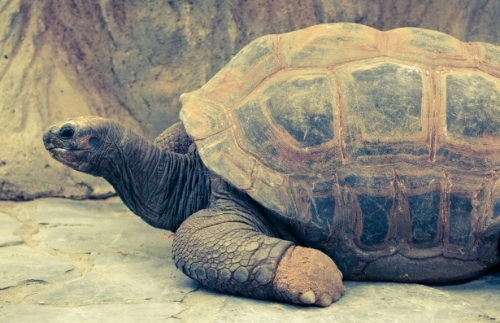
Rearing young tortoises in captivity to approximately 5 years of age prior to releasing them into the wild is a vital tool in rebuilding population numbers quickly. Tortoise mortality in the wild is highest over the first couple of years, often due to lack of food or water as well as tortoise hatchlings being easy prey for both endemic and invasive predators. Once a tortoise reaches five years old, it is more likely to survive to maturity. Captive rearing has been used in Galapagos since 1965 to help restore threatened tortoise populations of 9 of the 11 surviving species. Improvements in nesting areas and incubation and rearing techniques over the decades has made this one of the most successful conservation programs in Galapagos.
Milestones
- As of the end of 2017, more than 7,000 juvenile tortoises had been returned to their island of origin – including Española, Isabela, Pinzón, San Cristóbal, Santa Cruz, and Santiago.
- The first of nearly 2,000 juvenile tortoises returned to Española Island reached sexual maturity and have been reproducing naturally on the island since the early 1990s.
- In May 2010, 39 hybrid adult tortoises were sterilized and then released onto Pinta Island to act as ecosystem engineers during the vegetation recovery period following goat eradication.
Tortoise Centers
There are three Tortoise Centers in Galapagos, all managed by the Galapagos National Park Directorate. The Tortoise Center on Santa Cruz was originally established by the Charles Darwin Research Station (CDRS) in 1965, then run jointly with the GNPD, which assumed all management responsibilities in 1998. Since 2014, with the launch of the Giant Tortoise Restoration Initiative, Galapagos Conservancy scientists have served as advisors to ensure continued long-term success of all tortoise centers.
Santa Cruz Tortoise Center
The Fausto Llerena Tortoise Center on Santa Cruz was started in 1965 to save the tortoise population on Pinzón Island. At the time, the Pinzón tortoise population consisted of fewer than 200 old adults and no juveniles. Throughout the 20th century, all hatchlings had apparently been killed by black rats, which were accidentally introduced to the island in the late 1800s. Without help, this population would eventually disappear.
On Española Island, only 14 tortoises remained (2 males and 12 females). These were brought into captivity and a tortoise breeding program began. A third Española male was returned to Galapagos in 1976 from the San Diego Zoo.

Under CC0 Public Domain
In addition to Pinzón and Española, juvenile tortoises reared in captivity for eventual release back into the wild come from Santa Cruz and Santiago Islands. Tortoise eggs and/or hatchlings are collected from natural nests of these Critically Endangered species and brought to the Center.
Since 2015, the juvenile Española tortoises born in captivity have been released onto Santa Fe to contribute to the island’s ecological restoration.
A breeding program to restore tortoises to Floreana Island, where the native tortoise species went extinct in the 1800s, began in 2017.’
Isabela Tortoise Center
- The Arnaldo Tupiza Tortoise Center on Isabela Island was inaugurated in 1995, in response to a major fire on southern Isabela that was threatening tortoise habitat and to help rebuild the various subpopulations more rapidly.
- The Center includes breeding groups of tortoises from Cerro Azul (Endangered) and Sierra Negra (Critically Endangered), which produce young for eventual return to the wild.
- The Center houses 69 breeding adults and produces approximately 250 young per year.
San Cristóbal Tortoise Center
- The Tortoise Center on San Cristóbal was established in 2004 to help rebuild the population in the wild. However, the all-island tortoise census in 2016 showed a healthy, growing population and the breeding program was discontinued.
Reprinted with the permission of Galapagos Conservancy