



Sirwan Kajjo
Deaths caused by terrorism have fallen in the past three years worldwide, a new global study found.
The sixth annual Global Terrorism Index, published by the Sydney-based Institute for Economics and Peace (IEP), said terrorism deaths decreased globally by 27 percent in 2017, which is the third consecutive year of declining death tolls.
Terrorism, however, remains a major threat to global peace, the report said.
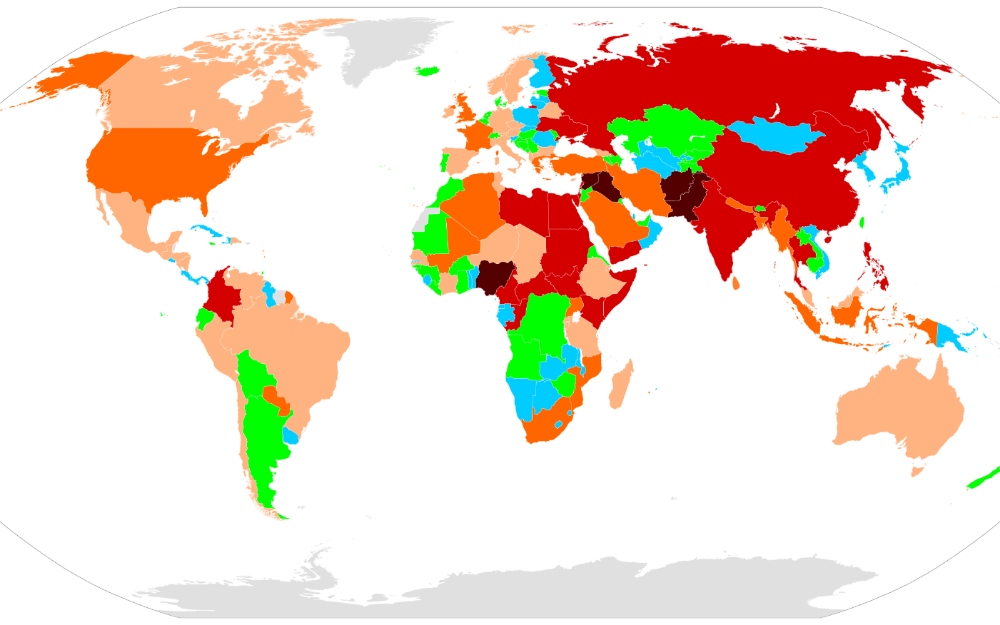
The report also showed that most terrorist attacks affect countries where political violence is rampant.
The 10 nations most affected by terrorism were Afghanistan, Iraq, Nigeria, Somalia, Syria, Pakistan, Egypt, Democratic Republic of the Congo, Central African Republic and India.
“Conflict and state terror are the principal causes of terrorism,” wrote Steve Killelea, executive chairman of IEP.
The terrorism hot spots “all were involved in at least one violent conflict, and eight were involved in a major war with at least 1,000 battle deaths. These 10 countries accounted for 84 percent of all deaths from terrorism in 2017,” the report said.
Islamic State
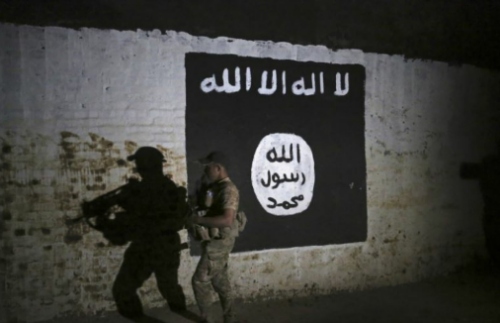
The report said terrorist attacks by the Islamic State (IS) terror group fell by 23 percent, and deaths caused by the group fell by 53 percent compared with 2016.
With help from the U.S.-led coalition, local Iraqi and Syrian forces have pushed IS out of most areas it once held, including its two major strongholds of Mosul, Iraq, and Raqqa, Syria.
“The reduction of the [IS] caliphate has a great deal to do with this,” said Karen Greenberg, director of Center on National Security at Fordham Law. The setbacks for IS hurt the group’s image and recruiting of foreign fighters, she said.
Other analysts, like Daveed Gartenstein-Ross, believe that other militant groups continue to pose threats in different parts of the world.
“In Syria, it’s not just IS,” said Gartenstein-Ross, a terrorism expert at the Foundation for Defense of Democracies (FDD), a Washington think tank.
“You also have another part of the insurgency driven by other organizations like Hayat Tahrir al-Sham, who are legitimately jihadists,” he told VOA.
Iraq
Much of the 2017 global decline in terror attacks followed declining terrorism in Iraq, where U.S.-backed government forces took control of territory once held by IS.
But despite this decline, a recent report from the Center for Strategic and International Studies (CSIS), a Washington research center, said that Islamic State might still have 20,000 to 30,000 militants in Iraq and Syria.
According to the CSIS report, compared with 2017, IS attacks against Iraqi government targets increased in 2018. The terror group has been carrying out an average of 78 attacks per month.
Maxwell Markusen, the author of the report, said that political differences between the central Iraqi government and the Kurdistan Regional Government in areas like Kirkuk and parts of Nineveh, Saladin and Diyala provinces in Iraq have hampered their operations against IS.
“If you look at what’s going on right now, there are very limited operations and the ability of the government to target IS has been significantly reduced,” he told VOA.
Afghanistan
Afghanistan had the highest number of terrorism deaths in 2017, while Iraq saw 5,000 fewer deaths, and Syria’s death toll fell by 1,000, according to the IEP report.
In Afghanistan, battle-related deaths soared 151 percent. while deaths that resulted from terrorism rose just less than 70 percent.
“The Taliban has been gaining a significant amount of ground in Afghanistan,” said Gartenstein-Ross of FDD.
“Usually, when a militant group is on the decline, you see it losing territory amidst intensified attacks. But that’s not the case in Afghanistan, because when you have an offensive undertaken by a militant group, you will also see a jump in the numbers [of deaths],” he told VOA.
For this decline in deaths from terrorism to continue globally, leading nations should work to reduce the conditions that lead to radicalization and terrorism, experts said.
“There is a need to be vigilant as jihadists move away from the territorial model of [IS] and reinvent themselves as more diffused cell structures in Africa and Asia,” said Aykan Erdemir, a Washington-based Middle East analyst.
“Building competent and inclusive institutions and ensuring efficient delivery of services in territories liberated from [IS] and implementing deradicalization programs would be key to eradicating [IS] and its ideology of hate,” Erdemir told VOA.
VOA’s Rikar Hussein and Mehdi Jedinia contributed to this report. VOA