Iran "does not trust America," according to Iranian President Masoud Pezeshkian, who states that the United States must remove all economic pressure, threats, and sanctions before engaging in any negotiations.
After a report of an incident involving a tanker and unidentified military forces off the coast of Oman, the United Kingdom Maritime Trade Operations (UKMTO) Center issued an advisory on Tuesday.
In response to growing attacks in Yemen by Houthi rebels backed by Iran, the British Defense Ministry announced on Tuesday that it will "provide additional defensive military support" to Saudi Arabia.
Benjamin Netanyahu, the prime minister of Israel, claims to be "committed to completing the elimination of the Iranian regime" and to have "discussed this with Trump numerous times, including the day before yesterday."
In a post to X on Tuesday morning, Saudi military spokesperson Col. Turki Al-Maliki stated that Saudi forces had intercepted a ballistic missile fired by the Houthis toward Riyadh, the country's capital.
Nigeria's first known case of Ebola during the current outbreak was confirmed by the country's Health Ministry on Tuesday.
More than 150 people have been killed by a drone hit in a crowded market in the disputed province of Abyei.
More Details
Home » Editor's Choice » Study: Many Teens – and Parents – Feel Tethered to Phones
Study: Many Teens – and Parents – Feel Tethered to Phones
From Our Archive
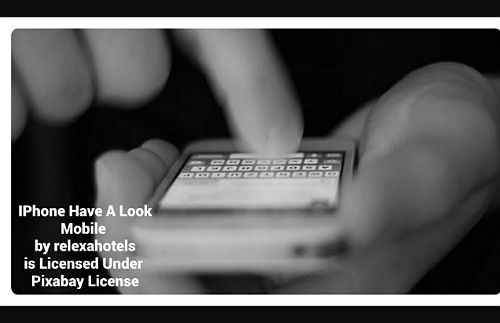
Parents lament their teenagers’ noses constantly in their phones, but they might want to take stock of their own screen time habits.
Chatbot by Mohamed Mohamed Mahmoud Hassan is licensed under CC0 Public Domain
A study out Wednesday from the Pew Research Center found that two-thirds of parents are concerned about the amount of time their teenage children spend in front of screens, while more than a third expressed concern about their own screen time.
Meanwhile, more than half of teens said they often or sometimes find their parents or caregivers to be distracted when the teens are trying to have a conversation with them. The study calls teens’ relationship with their phones at times “hyperconnected” and notes that nearly three-fourths check messages or notifications as soon as they wake up. Parents do the same, but at a lower if still substantial rate – 57 percent.
Big tech companies face a growing backlash against the addictive nature of their gadgets and apps, the endless notifications and other features created to keep people tethered to their screens.
Many teens are trying to do something about it: 52 percent said they have cut back on the time they spend on their phones and 57 percent did the same with social media.
Experts say parents have a big role in their kids’ screen habits and setting a good example is a big part of it.
“Kids don’t always do what we say but they do as we do,” said Donald Shifrin, a professor of pediatrics at the University of Washington School of Medicine, who was not involved in the Pew study. “Parents are the door that kids will walk through on their way to the world.”
The study surveyed 743 U.S. teens and 1,058 U.S. parents of teens from March 7 to April 10. The margin of error is 4.5 percentage points. (VOA)