



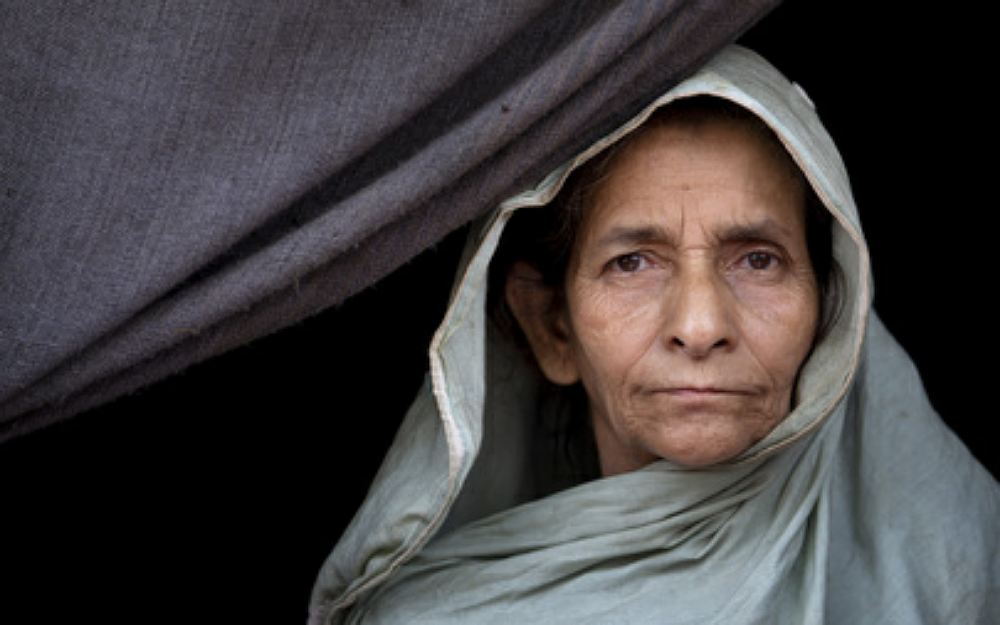
Some of the hundreds of thousands of Rohingya refugees who fled a brutal military-led crackdown in Myanmar’s Rakhine state in 2017 and sought refuge in neighboring Bangladesh say they have not been able to go back to their original villages after returning to Rakhine of their own volition.
Thousands of members of the Muslim minority group were killed during the violence, and more than 740,000 others escaped across the border, where they now live in sprawling displacement camps in southeastern Bangladesh.
About 6,000 of the refugees took up shelter in a so-called “no-man’s land” near a border crossing point along Bangladesh’s frontier with Myanmar.
They, along with others in camps in Bangladesh proper, have demanded that the Myanmar government grant them citizenship, ensure their safety, and rebuild their destroyed houses before they agree to return home.
But about 300 refugees who returned to Rakhine state of their own volition say they still face unfavorable conditions that persecute them and prevent them from being able to live in their original villages, which were burned down during the crackdown.
One returnee who gave his name as Einu and left Balukhali refugee camp No. 2 in Bangladesh on Oct. 10, 2018, said he finds it difficult to support his five family members by taking on various odd jobs to earn a living.
The Myanmar government denies the Rohingya citizenship, viewing them as migrants from Bangladesh, and restricts them from free movement, jobs, and education.
Though Myanmar and Bangladesh have attempted to repatriate the Rohingya refugees three times under a bilateral agreement, none of them have returned, out of fear for their safety and a lack of rights and full citizenship status.
Officials on both sides have said that they made the refugees aware of the option, but Einu said Bangladesh authorities never informed him about the bilateral agreement and that he and his family could return to Rakhine.
“Nobody asked if we want to return to Myanmar or not,” he told RFA’s Myanmar Service. “Nobody talked about the repatriation.”
The former refugee said he later returned on his own after contacting the administrator of Kyeinchaung village in northern Rakhine’s Maungdaw township, where he previously lived.
“After I discussed it with him, we returned through the repatriation camp,” Einu said. “At that time, the bilateral agreement for refugee repatriation between Myanmar and Bangladesh had been signed, but no one informed us about it. Nobody asked for the list of people who wanted to return. I returned on my own arrangement.”
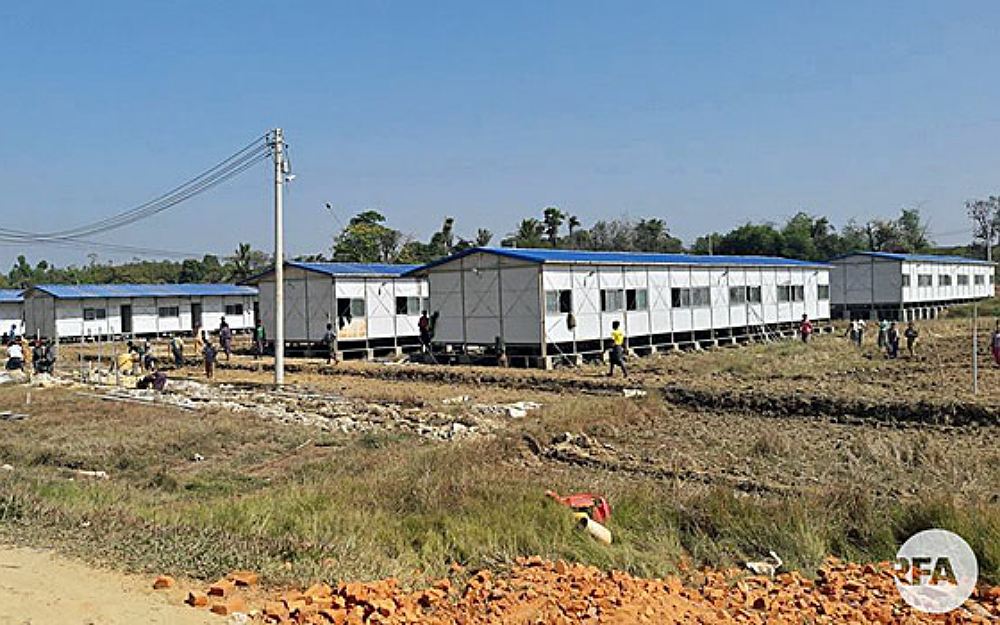
Einu and his family did not have to stay in temporary camps after they arrived at the Taungbyo repatriation center in the morning, and Myanmar authorities transported them directly to Maungdaw the same day, he said.
He wants to live in Kyeinchaung village again, but it’s not likely because no Rohingya Muslims now live there. In the meantime, he must pay 80,000 kyats (U.S. $50) a month to rent a house in Maungdaw town.
Though the authorities provide food rations, Einu said he has had to take odd jobs to support his family’s basic needs.
Kept in the dark
Mahmud Shari, another Rohingya who returned to Myanmar with his family last year, said he knows of many refugees in Bangladesh who want to go back to Rakhine state but were kept in the dark about the repatriation option.
“In Bangladesh, only refugees from camp Nos. 26, 27, and 28 know about the bilateral agreement for repatriation,” he said. “The list of people who wanted to return was prepared only for those camps. Some people in those camps wanted to return, but others did not.”
Those who refused to go back cited concerns that they would not be able to return to their villages and be forced to resettle somewhere else.
“I think that’s the main thing that prevented them from returning,” he said.
Mahmud Shari returned with his family on his own after contacting Myanmar authorities.
He used to live in a village in Maungdaw township, but now he must rent a home in another area because his community was wiped out during the 2017 crackdown.
Anwar, the administrator of Maungdaw’s Pantawpyin village, said about 10 Rohingya refugees from his village returned to Rakhine state and now must rent homes.
“In the last two months, some people who have returned via reception centers live in Pantawpyin,” he said, adding that the government provides food assistance to the 11 returnees.
Some are from Alae Thankyaw village, and others are from other villages,” he said. “They came here because they don’t have any relatives who live in Alae Thankyaw, but they have some relatives in Pantawpyin, so they decided to settle here. The government has said they will built separate housing for these people.”
Some Rohingya refugees who have returned to Rakhine say the government’s denial of full citizenship rights is their main challenge.
Myanmar authorities in reception camps have issued returning Rohingya National Verification Cards (NVCs) as a precursor to applying for citizenship if they qualify.
But those who have applied for citizenship with a newly issued NVC report that no progress has been made on their applications, even after a year.
The Myanmar government has not explained such delays in the citizenship applications process for NVC holders.
‘Government is not doing it right’
Khin Maung, a Muslim community leader from Maungdaw, said many more refugees would return from Bangladesh if the Myanmar government guaranteed them citizenship and other basic rights.
“If these people were allowed to return to their homeland and given citizenship and free movement, even within Rakhine state, it would draw in many more to return,” he said. “People who live across the border asked me, ‘Why should we return? Even those who remained there have no rights,’” he said.
A man named Khin Maung who lived in Thinkhali refugee camp No. 13 in Bangladesh said the Myanmar government should first create an environment that guarantees the safety of the returnees.
“We Rohingya refugees made it clear about the conditions that we need for repatriation,” he said. “We need to be recognized as citizens unconditionally. We want them to cancel the plan for issuing the NVC cards. We want to be able to return to our homes. We also want international protection.”
“We will not return until these demands are fulfilled,” he said. “The Myanmar government needs to create conditions that guarantee our safe return.”
Nickey Diamond, a Myanmar human rights specialist with Fortify Rights, said Myanmar and Bangladesh need to do more than just agree to a plan to repatriate the Rohingya refugees.
“The authorities should consider whether it is their fault that the refugees have not returned because they are not doing it the right way,” he said.
“This issue cannot be resolved through a bilateral agreement between Myanmar and Bangladesh alone,” he said, adding that the governments of the two countries did not include any refugees in their discussions about the repatriation pact.
“They never invited the Rohingya refugees and tried to learn what they really want,” he said. “It’s not surprising that it has been three years but no one has returned. I think it is because the government is not doing it right.”
Ethnic cleansing fears
The Rohingya who have been living in Rakhine following displacement from their homes by communal violence with ethnic Rakhines in five townships in 2012 have also raised concerns about their safety.
Displaced Rohingya who were forced into camps following attacks and riots in Kyaukphyu, Sittwe, Kyauktaw, Pauktaw, and Myebon townships seven years ago say they face an uncertain future.
They expressed alarm following a report issued in mid-September by the Independent International Fact-finding Mission (FFM) set up by the U.N. Human Rights, warning that the roughly 600,000 Rohingya who remain in Myanmar face a “serious risk of genocide.” The FFM also called for Myanmar to be held responsible for the violence against the Rohingya.
Some members of Rohingya communities in Sittwe, Buthidaung, and Maungdaw townships told RFA that they are worried about possible ethnic cleansing, while others believe it is impossible for Myanmar to try to eliminate their ethnic group completely.
“It is not necessary to kill us to commit ethnic cleansing,” said Kyaw Hla, a former resident of Thae Chaung refugee camp in Sittwe. “They pushed us onto the path that we will become lifeless without killing us. We are now adrift on this path.”
Local Muslim leaders who asked to remain anonymous out of fear of arrest and prosecution said government policies that restrict their movements and marginalize the minority group by denying them access to health care, education, jobs, and citizenship, have been put in place to eliminate the ethnic group.
Others bemoan day-to-day hardships and a lack of rights under the systematic discrimination they face.
“We continue to face all sorts of troubles,” said Kyaw Hla, who lives in the Thae Chaung camp in Sittwe. “We don’t have any rights.”
“We were citizens for many generations,” Kyaw Hla said. “We hold three-folded national ID cards. Now they require us to get National Verification Cards and to apply for citizenship again. It is apparent persecution.”
National Registration Cards (NRCs), also called three-folded cards, are a form of citizenship documentation that are green in color for men and pink for women. The cards were collected by the government in the late 1980s and in most cases replaced by cards indicating full citizenship, though the holders had to periodically renew them. The government continues to issue NRCs in certain circumstances, according to a March report on the Rohingya by the U.K.’s Home Office.
The Myanmar government says it is in the process of issuing NVCs to Rohingya who qualify for them as the first step to attaining Myanmar citizenship, though many Rohingya oppose the documents, saying that they stigmatize them.
Thae Chaung camp resident Ba Sein likened his living place to a concentration camp, given the restrictions on movement and little or no access to basic rights and services to which the Rohingya are subjected.
“It has been seven years since we have lived in this camp,” he told RFA. “It is like we live in a concentration camp. We had lost everything — our livelihoods, businesses, access to health care and education, and our social lives. We are now struggling hard for our very survival.”
Reported by Min Thein Aung for RFA’s Myanmar Service. Translated by Ye Kaung Myint Maung and Nandar Chann. Written in English by Roseanne Gerin
Copyright © 1998-2016, RFA. Used with the permission of Radio Free Asia, 2025 M St. NW, Suite 300, Washington DC 20036. https://www.rfa.org

Quiz:Origins of Dog Cat Breeds

Algorithmic Trading Fraud
China-Laos Air Base Could be Another Southeast Asian Forward Outpost for Beijing
UN Security Council Discusses Developments in Kosovo
Quebec Animal Rescue Rescued Three dogs That Were Stuck on Cliff for Five Days
Pyrenean Mastiff Dog Breed

Autonomous AI Agents
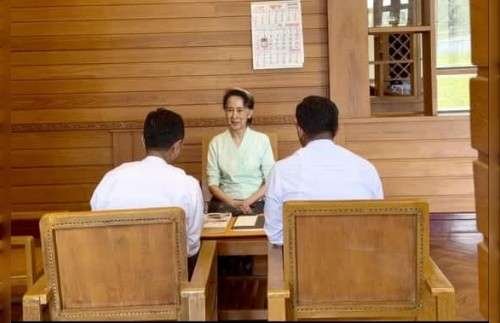
Rare Photos of Aung San Suu Kyi Spark Renewed Calls for Her Release
If You Want to Contact Us
Subscribe for our latest updates