Historic models were not designed to evaluate the political nature of state-sponsored forced labor, expert says
By Adile Ablet for RFA Uyghur
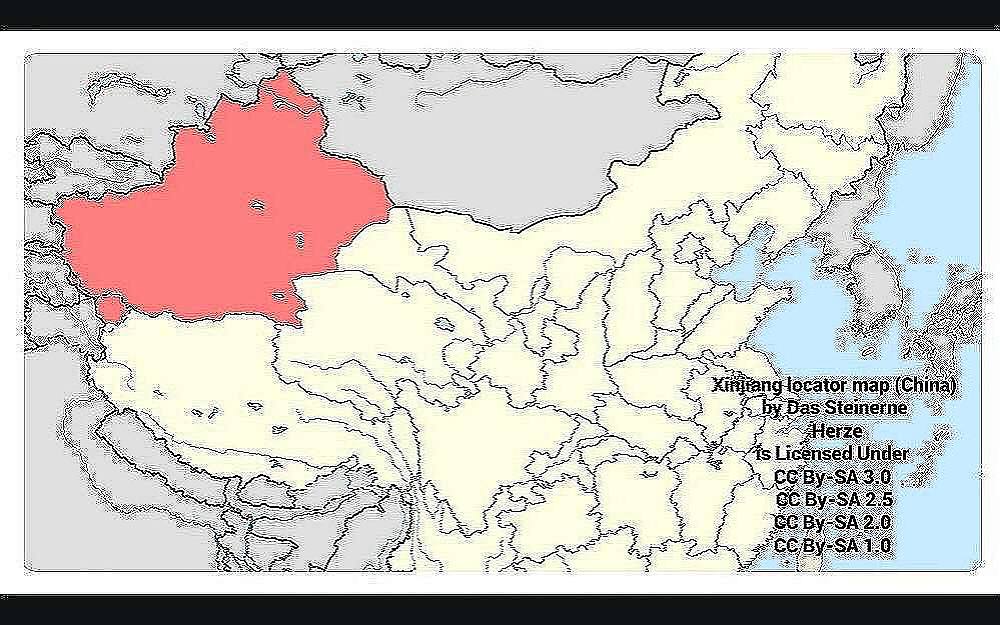
Lazy persons, drunkards, and “other persons with insufficient inner motivation” must be subjected to “repeated … thought education” to ensure they take part in state-sponsored “poverty alleviation” campaigns to pick cotton in China’s Xinjiang region, a previously unpublished internal government document ordered local cadres.
If such efforts fail to produce “obvious results,” coercive measures should be taken, the July 2019 document, issued by the Poverty Alleviation Work Group in Kashgar (in Chinese, Kashi) prefecture’s Yarkand (Shache) county, advises authorities.
By late 2019, authorities in Yarkand were compiling lists of the “unmotivated,” including individuals as old as 77 years, and proposing solutions for their “laziness,” which included sending them to other counties to labor in cotton fields.
The documents were released in a report Tuesday by Adrian Zenz, senior fellow and director in China studies at the Washington-based Victims of Communism Memorial Foundation.
They show that state efforts to compel Uyghurs into “poverty alleviation” measures – including labor transfers and seasonal labor – intensified in Xinjiang after 2018. In some cases, the documents mandated an increase of the “political status” of poverty alleviation work, and warned cadres of “severe” repercussions for not achieving outcomes.
They also demonstrate that historical models, such as that used by the International Labor Organization, often fall short when used to evaluate state-sponsored coerced labor in areas including Xinjiang because they only account for commercial and not political exploitation, the report said.
“If a government like a Western government wants to effectively combat Uyghur forced labor, these are the elements that they need to take into account and look at,” Zenz told RFA Uyghur in an interview.
“State-sponsored forced labor is a whole-of-government, whole-of-society approach affecting an entire region, and not just … isolated pockets of forced labor that are detected here and there. It creates a whole regional systemic risk, a societal risk.”
Linking forced labor to fighting terrorism
By elevating poverty alleviation to a political task, rather than a purely economic one, Beijing has been able to tie forced labor to the eradication of terrorism, Zenz said.
“You take them off the land where they might be free to do their own thing and they might have an idle season, so they may choose to work or to not work,” he said.
“But this perceived Uyghur idleness is seen as a national security risk and that’s why the drive in 2018 and 2019 to push Uyghurs into all kinds of work is seen as a matter of national security … and of course, this urgency creates a very strong level of coercion,” Zenz said.
In Xinjiang, Beijing has leveraged a centralized authoritarian system to penalize noncompliance with its poverty alleviation campaign, said the report, entitled “Coercive Labor in the Cotton Harvest in the Xinjiang Uyghur Autonomous Region and Uzbekistan.”
Those penalties included the threat of internment and the detection of deviance through automated systems of preventative policing.
“The resulting environments of ‘structurally forced consent’ are not necessarily immediately observable to outsiders, and may be challenging to assess through conventional means such as the ILO’s forced labor indicator framework, which was not designed to evaluate state-sponsored forced labor,” the report said.
Legislative teeth
Zenz called on the European Union to develop “effective legislation” that targets state-sponsored forced labor affecting an entire region and for the United States to continue to enforce the December 2021 Uyghur Forced Labor Prevention Act, which requires American. companies that import goods from Xinjiang to prove that they have not been manufactured with Uyghur forced labor at any stage of production.
Without the proper tools necessary for the international community to hold China accountable for such practices, “Beijing’s economic and long-term political aims in [Xinjiang] could mean that coercive labor transfers into cotton picking and related industries might persist for a long time to come,” the report warned.
Andrew Bremberg, the president of the Victims of Communism Memorial Foundation and former U.S. representative to the U.N., told RFA that steps taken by the United States and the international community to address forced labor in Xinjiang are “woefully insufficient” and have done little to change Beijing’s policies in the region.
“The United States needs to help lead in this effort both on a bilateral basis, in terms of strengthening the enforcement of our own laws … [and] work[ing] with other countries to hold China accountable in multilateral settings like the International Labor Organization,” he said.
“At the same time, we need to strengthen those organizations and entities with other countries to ensure that they better protect against state-sponsored forced labor.”
The EU is currently reviewing proposed legislation that would allow for an import ban on products related to severe human rights violations such as forced labor.
Bremberg welcomed the proposed legislation, but warned that such a rule must be constructed correctly if the EU wants it to have the desired effect.
“If they try to only use forced labor indicators that the ILO has used in the past, it likely will not affect importations of products made by forced labor from Xinjiang, given the unique nature that state-sponsored forced labor poses,” he said.
Bremberg said a strong response by the international community that includes boycotts of imports is needed to “make clear to China that their behavior, their actions violating individual rights, human rights … will not be allowed without consequence.”
‘Hidden from plain sight’
The Washington-based Campaign for Uyghurs issued a statement on Tuesday condemning the state-sponsored coercive labor practices outlined in Zenz’s report, which it said reveals the “sociocultural contexts and authoritarian systems that have created coercive labor environments in [Xinjiang], which are not easily captured through standard measures such as the ILO forced labor indicators.”
The report “reveals the deeply embedded and systemic dynamics of coercion that have perpetuated environments of ‘structurally forced consent’ in [Xinjiang], leaving innocent Uyghurs powerless and at the mercy of China’s repressive state apparatus,” said CFU Executive Director Rushan Abbas.
“These atrocities are hidden from plain sight, making them extremely difficult to detect and assess through conventional means,” he said. “The international community must take swift and decisive action to put an end to these heinous practices and hold the perpetrators accountable.”
In addition to calling on nations to level sanctions on China for its coercive labor practices in Xinjiang, CFU called on companies to thoroughly examine their supply chains and take immediate action to ensure they are not contributing to such abuses.
Edited by Joshua Lipes and Malcolm Foster.
Copyright © 1998-2020, RFA. Used with the permission of Radio Free Asia, 2025 M St. NW, Suite 300, Washington DC 20036. https://www.rfa.org.