



Qedriye Ghopur discusses her use of fashion designs using Uyghur fabrics as a form of activism.
By Gulchehra Hoja
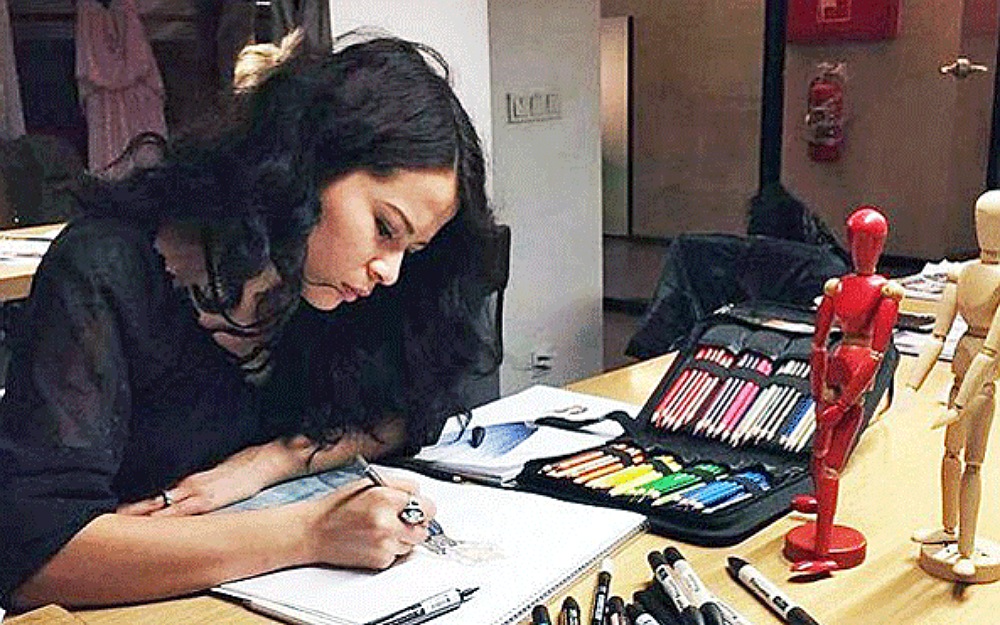
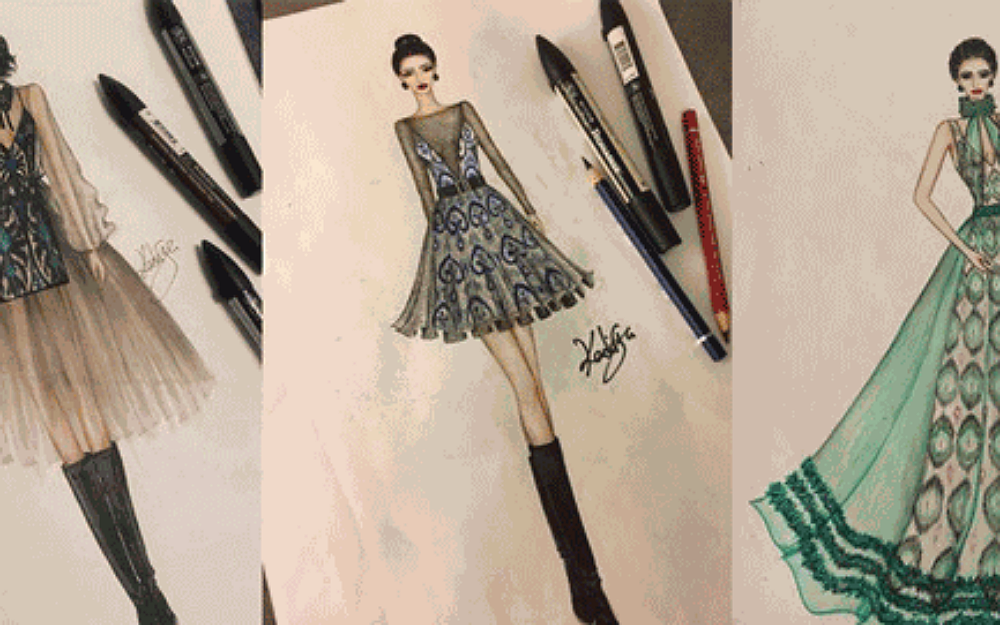
Qedriye Ghopur, a young Uyghur fashion designer who lives in Norway, is trying to spread Uyghur culture through a fashion brand called Føniks (Phoenix) that features etles-style clothing and jewelry. Etles, a Central Asian fabric and design that is known in English as ikat, became popular globally about a decade ago, but not without criticism of cultural appropriation. Traditionally made by Uyghurs, Uzbeks and Tajiks, the silk fabric is used in both women’s and men’s clothing. More recently, its various patterns have been applied to soft furnishings and accessories.
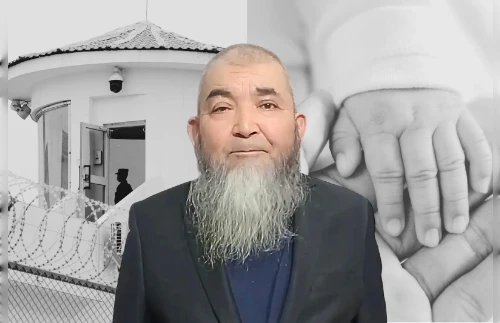
RFA previously interviewed Ghopur in her capacity as an activist sharing the story of her mother, who was sentenced to 10 years in prison after spending nearly two years in an internment camp in northwestern’s China’s Xinjiang region. This time, she spoke with reporter Gulchehra Hoja from RFA’s Uyghur Service in her role as a designer who is introducing Uyghur patterns to the world of fashion. The interview has been edited for length.
RFA: When did you first become interested in fashion design?
Ghopur: I first began thinking about going abroad to study fashion design when I was 15 or 16 years old. I was born in Toksu [in Chinese, Xinhe] county, Aksu [Akesu] prefecture. I graduated from high school when I was 19 and began studies in oil painting at the Xinjiang Arts Institute. When I was studying at the Arts Institute, though, I never quite felt complete. Although oils were a part of my life, and part of my studies, they weren’t everything to me. But fabrics brought me a whole other kind of thrill.
RFA: Do you sense that your educational background has provided you with a different kind of inspiration in your field than other people might have?
Ghopur: I do sense that. For example, people in Europe use a lot of pale and muted colors. They don’t really like color, or particularly bright colors. But if you look at Uyghur etles, for example, there are a minimum of seven or eight colors in etles designs, and the colors are matched to one another very well. I’ve sensed that Uyghurs have a relatively high-level color sensibility compared to that of people from other cultural backgrounds.
RFA: What do you feel when you look at etles?
Ghopur: Etles gives me hope. When I look at it, when I wear it or dress other people in it, I remember the homeland [where] I would go to the fabric markets whenever I was sad. I would get so much enjoyment from just holding and touching the fabrics, and looking at the styles, colors and designs.
RFA: Tell us about your fashion label.
Ghopur: I’ve already done all the formal paperwork to apply for a patent in Norway. The label is called Føniks, or Phoenix. In the Uyghur language it refers to the enqa, the mythical bird. The enqa is a bird of legend. It has a long life. When it is time to die, the enqa flies close to the sun and sets itself on fire, after which it is reborn. The bird represents hope and rising from the ashes, which is the kind of spirit I want to have in my own life and work. I’ve gone through difficulties, and I’ve fallen down, but I’ve gotten myself back up and am continuing to walk forward. This is also my mother’s dream for me. My mother gave her life for me, so I want to make her dreams a reality. My dreams are my mother’s.
RFA: Are your designs using etles an expression of longing for the Uyghur homeland?
Ghopur: We can say that, yes. When I first began studying in this field, I primarily learned about European and Turkish culture and fashion. I was exposed to many European ideas about color. I began my studies in fashion design at a school in Turkey, a rather well-known school. In the process of my studies, I learned fashion design as well as collection preparation, which is separate from design. In collection preparation, I learned things like how to put clothing on models, how to create the environment for an entire collection, and so forth. In addition to this, I also studied color theory and styling. In three or four years I finished my studies at the school, having earned a number of certificates, and I later came to Norway.
RFA: As a Uyghur artist, have the difficulties and suffering you have faced inspired your designs?
Ghopur: It’s only natural that they have influenced me. Initially, I had no plans to work with etles. I had no plans to design, make or sell any such clothing. I started to become political after I began advocating for my mother’s cause. I went on different programs and gave interviews to media outlets. I did everything I could to advocate for my mother, but it wasn’t enough, so I asked myself what else I could do. I’d already made something of a name for myself in fashion design, so I decided that I could do activism through my work in this field. The real reason behind my use of etles has to do with the Uyghur cause. I’m currently planning to put together a collection with a minimum of 50 designs using etles, which I want to show in Norway. In the event that I’m ultimately unable to do this, I might do a photography exhibit instead. I want to use our fabrics and sense of color to show people that Uyghurs are not just people who escaped from China — instead, we’re a people with a developed and beautiful culture. I would be delighted to make even a small impact in this way.
RFA: Etles has become more popular in recent years. The Chinese government is now using etles in clothing design, not a representation of Uyghur fashion and culture, but instead promoting it as a component of Chinese culture. Some famous American and European brands have paid for the rights to use etles designs of some Uzbek brands. Are you feeling any competition as a result?
Ghopur: Naturally, I do feel some competition, because I only recently began this work. Uzbek designers and brands have a much longer history working with etles than I do. But when they use etles, they call it “Uzbek etles.” I call mine “Uyghur etles.” They use Uzbek etles. Etles was born in our homeland, specifically in Hotan [Hetian], and later spread along the Silk Road. Etles gives me great spiritual nourishment, encouragement, and strength.
Not many people know much about fashion design. It’s now 2022. What’s going to be popular in 2023? What colors should we put on the market? What styles are going to sell? We have to think about politics, economics, current lifestyles, global development. Fashion design is at once art, economics, politics, and life. It’s not just about popular brands and styles. I want to make my brand known first in Norway, then in Europe, and eventually around the globe. God willing, that’s my plan.
Translated by RFA’s Uyghur Service. Written in English by Roseanne Gerin.
Copyright © 1998-2020, RFA. Used with the permission of Radio Free Asia, 2025 M St. NW, Suite 300, Washington DC 20036. https://www.rfa.org.