



Nazarudin Latif and Pizaro Gozali Idrus/Jakarta
Indonesia’s parliament passed a broad new criminal code on Tuesday that punishes sex outside marriage and cohabitation between unwed partners, in what critics called a threat to civil liberties in Southeast Asia’s most populous country.
A spokesman for the Ministry of Law and Human Rights said the new code aimed “to protect the institution of marriage and Indonesian values.” But the U.S. ambassador to Indonesia warned that the morality articles in the new criminal code could be a disincentive for foreign investment in the country.
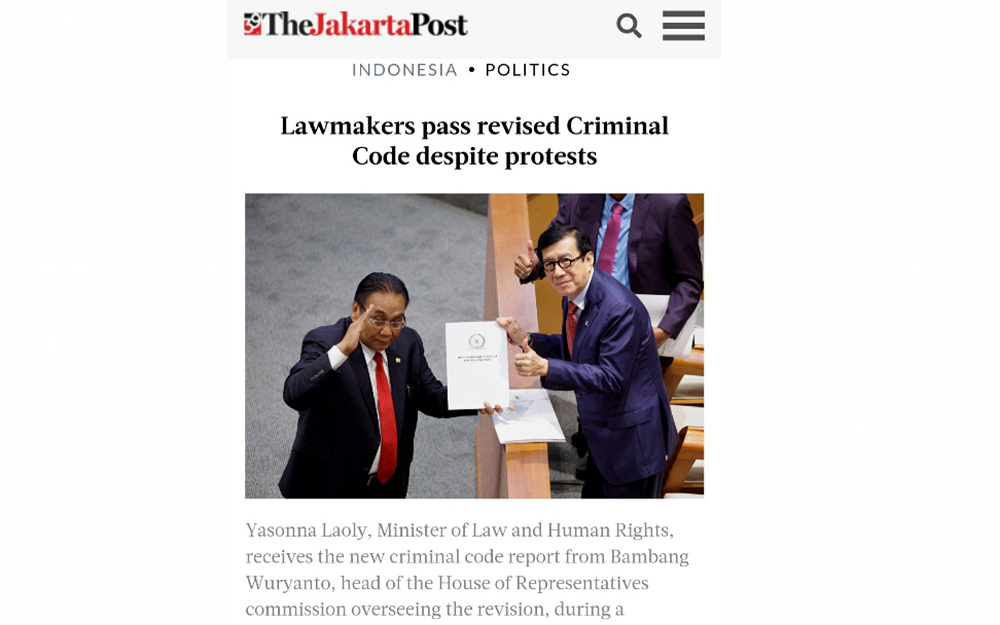
Legislator Bambang Wuryanto said the current 76-year-old criminal code, inherited from Dutch colonial rule, was outdated.
“The Criminal Code Bill is an effort to re-codify all criminal laws in Indonesia and respond to new developments in society,” Bambang said at a plenary meeting at the House of Representatives.
“It carries the mission of decolonization, democratization, harmonization and consolidation of criminal laws,” he added.
All of Indonesia’s nine parties endorsed the new code, by voice vote, although the opposition Prosperous Justice Party did so with some reservations.
Under the new code, sex outside of marriage is punishable by up to one year in prison, while a couple who live together out of wedlock could face a maximum six months.
However, police can investigate such acts only if a family member lodges a complaint. The qualification is seen as a compromise to appease both conservatives and liberals who have been at loggerheads on the issue.
Albert Aries, spokesman for the law and human rights ministry, said that provisions banning sex outside marriage were balanced.
“The aim is to protect the institution of marriage and Indonesian values, while at the same time being able to protect the privacy of the community and also negate the rights of the public or other third parties to report this matter or ‘playing judge’ on behalf of morality,” he said.
The new criminal code does not mention same-gender sex, but the ban on sex outside marriage would proscribe it at a time when anti-LGBT sentiment has been growing in the country.
Just last week, the U.S. government canceled a trip to Indonesia by its special envoy for LGBTQ rights, after Indonesia’s top clerical body strongly denounced the scheduled visit.
The Indonesian Council of Ulema (MUI) said the American envoy’s trip was intended “to undermine our nation’s cultural and religious rights.”
The MUI “cannot welcome a guest whose purpose in coming here is to damage and undermine the noble religious and cultural values of our nation,” MUI Deputy Chairman Anwar Abbas said at the time, calling homosexual behavior “dangerous.”
Same-gender sex is currently outlawed only in Aceh province, where Islamic sharia law is in force, and those found guilty could receive up to 100 lashes of the cane.
The newly amended criminal code also calls for a maximum jail term of three years for those who “attack the honor and dignity” of the president or the vice president.
Insulting the government and its institutions is punishable by up to 18 months in jail, or three years if the act resulted in public unrest, while people who hold a rally without notifying the police could end up being imprisoned for six months.
Yasonna Laoly, the minister of Law and Human Rights, said the bill had been in the making since 2012 and would be in force three years after its passage.
“During this three-year period, we will engage in a public information campaign targeting law enforcement, communities, campuses,” Yasonna said.
On Monday, the eve of the law’s passage, thousands of people had rallied across Indonesia on Monday to protest against it. Activists threatened more demonstrations if the lawmakers went ahead with the plan.
Thousands took to the streets of several Indonesian cities in 2019 as well, to oppose an earlier version of the bill, forcing the government to postpone the deliberations. Two students were killed in Kendari, in Southeast Sulawesi province, after police fired shots at protesters.
‘Climate of fear’
Amnesty International said the new criminal code dealt “a significant blow” to progress in protecting fundamental freedoms more than two decades after the ouster of President Suharto, Indonesia’s longtime dictator.
It was also a “dramatic setback” for human rights in Indonesia, Amnesty said.
“Outlawing sex outside marriage is a violation to the right to privacy protected under international law,” said Usman Hamid, Amnesty’s executive director in Indonesia.
“The new Criminal Code practically gives those in power authority to suppress opinions that they don’t like through selective enforcement. This can cement a climate of fear that stifles peaceful criticism and freedom of assembly,” he said in a statement.
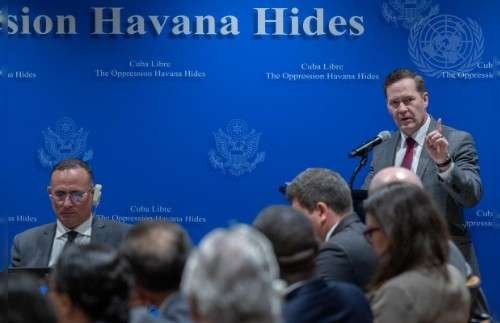
On Tuesday, U.S. Ambassador Sung Kim warned that the morality articles in the new criminal code could turn off foreign investors.
“Criminalizing the personal decisions of individuals would loom large within the decision matrix of many companies determining whether to invest in Indonesia,” he said in a speech at an investment summit in Jakarta.
Other provisions in the code include a ban on spreading communism or other ideologies that are contrary to Pancasila, with a maximum prison sentence of four years. Pancasila comprises the five foundational principles of the country.
The bill proposes a three-year jail sentence for anyone who shows hostility towards a religion, or a group of people based on their religion.
Publicly inciting people to leave any of Indonesia’s six recognized religions, is punishable by up to two years in prison, and a four-year jail sentence if they do so using violence or threats.
Indonesia recognizes Islam, Protestantism, Catholicism, Buddhism, Hinduism, and Confucianism.
People who promote birth control devices to children can face a fine of 1 million rupiah ($64), unless their purpose is to prevent sexually transmitted diseases and encourage family planning.
Meanwhile, promoting abortion tools carries a 6-month prison sentence.
In addition, judges can impose death sentences with a probationary period of 10 years, after which the sentence can be reduced to life imprisonment.
Iskan Qolba Lubis, a legislator with the opposition Prosperous Justice Party, said his group would lodge a legal challenge to some articles in the code with the Constitutional Court. He urged members of the public to join.
“This is a setback to the goals of reform,” Iskan told BenarNews.
Dandy Koswaraputra in Jakarta contributed to this article.
Copyright ©2015-2022, BenarNews. Used with the permission of BenarNews.