Ahammad Foyez/Dhaka
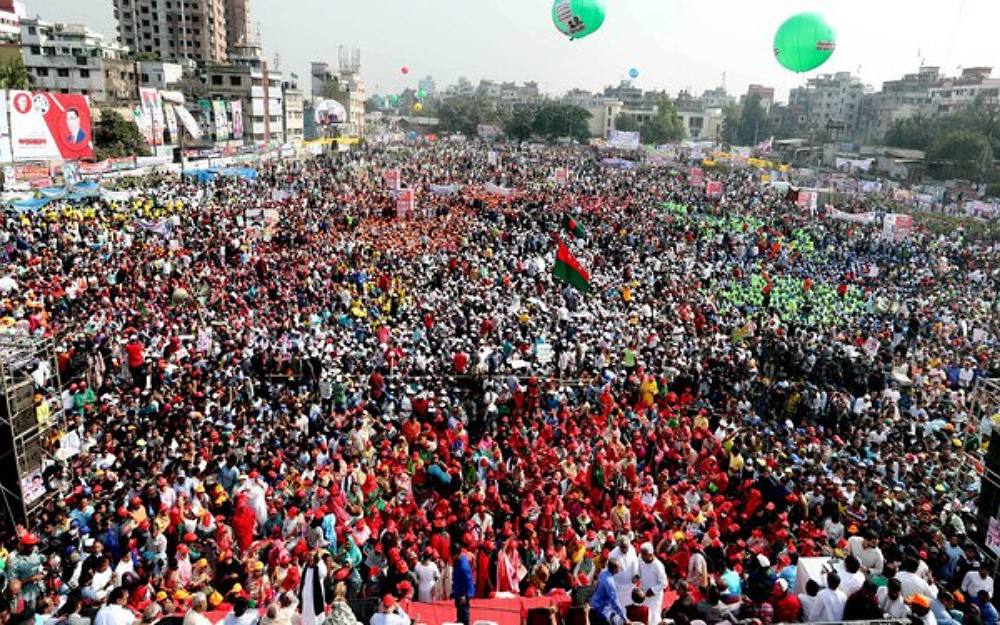
The Bangladesh Nationalist Party, the country’s principal opposition organ, this past weekend held what was arguably the nation’s biggest anti-government rally in years, marking a solid end to the party’s long hiatus.
Despite arrests targeting its leaders and activists, and restrictions on movement and internet communication, an estimated 100,000 party supporters gathered at a sports field in Dhaka to hear BNP demands and about the resignation of its seven parliament members.
“Defying best attempts by the ruling party and law enforcement agencies to thwart the Dec. 10 rally, BNP was able to pull it off. Whatever the ruling party claims, this deals a blow to the Awami League,” said Badiul Alam, a well-known civil society figure and NGO leader.
The rally in Dhaka capped off a series of weekly BNP demonstrations in cities across the South Asian country, where people have been struggling to make ends meet lately amid rising inflation and higher prices for food and fuel.
“It is clear that Bangladesh’s economic woes are lifting the opposition. Inflation, rising fuel prices and electricity cuts are affecting Bangladeshis of all classes, which is feeding frustration with the government,” Geoffrey Macdonald, a senior adviser at the International Republican Institute in Washington, told BenarNews.
Return to rallies
A 10-point list of demands read out at Saturday’s rally include a return to caretaker governments during elections, a past practice seen as having resulted in relatively more free and credible balloting. The Awami League government, headed by Prime Minister Sheikh Hasina, repealed the provision about caretaker governments from the constitution in 2011.
Bangladesh has been governed since 2009 by Hasina and the Awami League, which secured three consecutive elections, including one boycotted by the BNP and its allies in 2014 and one widely criticized as rigged in 2018.
In recent years, the courts convicted BNP’s top leader, former Prime Minister Khaleda Zia, and her son and heir apparent, Tarique Rahman.
She is under virtual house arrest, barred from leaving the country for medical care; he lives in exile in London. The BNP won just seven of 350 parliament seats in 2018 and has not held a major rally in at least five years.
Hasina’s government has been credited with making significant economic progress, but human rights groups and independent observers have accused it of drifting toward an authoritarian rule fostered by the country’s security apparatus.
On Dec. 10, 2021, international Human Rights Day, the U.S. government imposed economic and other sanctions on several former and current security czars tied to the Rapid Action Battalion (RAB), a paramilitary unit of the police, holding them responsible for more than 1,000 instances of extrajudicial executions and disappearances since 2009.
Bangladesh human rights groups said the number of extrajudicial killings and enforced disappearances dropped significantly in the last year. They also provided opposition parties with some breathing space, suggested Badiul Alam, who heads a good governance NGO.
“Opposition parties have not been able to carry out any protest or rallies for a long time because of the government’s anti-democratic behavior and the police’s assaults,” he said.
“However, since the imposition of sanctions on RAB and amid a flurry of diplomatic activities, the government has been under pressure. That boosted the morale of its critics, allowing them to participate in rallies.”
Who won?
The Awami League tolerated nine BNP rallies in different parts of the country over nine weeks. But tensions soared ahead of the 10th and final rally, held on Human Rights Day.
The government objected to the BNP’s choice of venue, outside party headquarters in Naya Paltan, a commercial area at the heart of the capital city, citing traffic disruptions. For its part, BNP was adamant about the location.
A stalemate ensued, which ended only after police violently cleared a gathering in front of BNP’s headquarters, killing at least one person and injuring scores more. Police said 45 officers were among those injured. The clashes drew international concern that the government angrily shrugged off.
Two days later, on Dec. 9, both sides agreed on Gopalbagh field, located almost on the outskirts of Dhaka. But by then, BNP’s secretary general, several other senior leaders, and hundreds of its activists had been arrested on charges of inciting violence.
On Monday, a Dhaka court denied their bail.
For days, a heavy police presence aided by ruling party cadres, who searched the mobile phones of passersby, made any entry to Naya Paltan and adjacent areas nearly impossible.
The restrictions were so severe that almost the entire city came to a halt, achieving the disruptions the government had originally cited in objecting to the venue.
In a recent meeting, Asaduzzaman Khan Kamal, the home minister in charge of law enforcement, offered a frank rationale for the police action in sealing off the BNP headquarters for four days, implying that it had intended to stage a lengthy sit-in and foment a popular uprising.
“They had 200,000 bottles of water and 280 sacks of rice stored [in the BNP headquarters], so they could cook food, stay for days and change the country. They wanted to take over power through conspiracy, again,” Prothom Alo quoted him as saying.
The fact that BNP could not hold the planned rally in Naya Paltan led the Awami League to declare victory.
“We won in the Dec. 10 match,” Obaidul Quader, the ruling Awami League’s general secretary and top minister, told party activists on Monday, comparing the ongoing political fights with sports matches.
“The final match will be in the election, and the pro-liberation forces will again form the government,” he said, referring to voting expected in January 2024.
BNP leaders disagreed.
“The fact that masses of people participated in BNP’s grand rally has the government scared,” said Iqbal Hasan Mahmud, a senior BNP leader. “That’s why the government resorted to crackdown and suppression.”
The future
The BNP has pledged to hold fresh rallies and marches this month to press its demands and to protest the arrests of its secretary general, Mirza Fakhrul Islam Alamgir, and standing committee member, Mirza Abbas, last week.
According to BNP leader Iqbal, the party will now hold future programs and discuss with other opposition parties how to coordinate a broader protest movement.
“Our primary target is engaging mass people in our future programs and ensuring an end of Awami League regime through a mass uprising,” he said.
He was referring to a Bangladesh political tradition of using mass street protests as a weapon to force the government in power to step down or reverse course on an issue.
“Maybe we will [do this] through programs like a long march or road-march,” Iqbal said.
Meanwhile, a coalition of seven political organizations, Ganatantra Mancha (Platform for Democracy), on Monday announced its support for BNP’s calls and added their own 14-point reform demands. A separate, left-leaning bloc, the Leftist Democratic Coalition, distanced itself from BNP’s demands but vowed a similar anti-government movement.
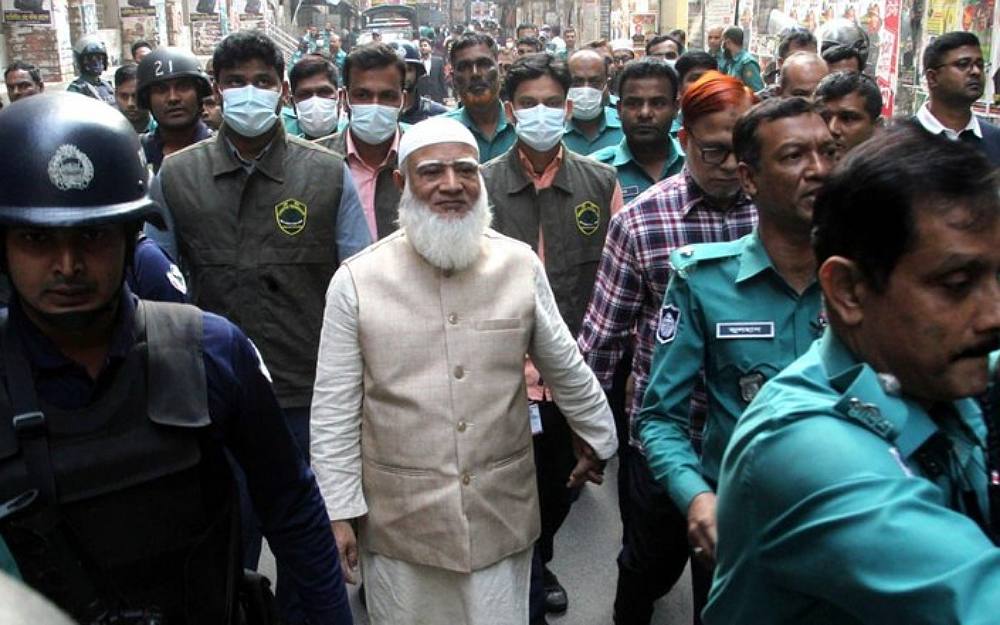
On Tuesday, however, Bangladesh authorities announced the arrest of Shafiqur Rahman, the leader of the faith-based Bangladesh Jamaat-e-Islami party, which supports BNP, on suspicion of fomenting unrest and terrorism.
“Recently, he issued many provocative statements. Through the provocative statements, he tried to incite violence,” Khan, the home minister, told BenarNews.
“Jamaat’s link with militancy and terrorism is an established fact,” he said.
A lawyer representing the Jamaat leader rejected the allegations as baseless.
The increasingly tense political climate has experts worried, given Bangladesh’s history of political violence.
Ali Imam Mazumder, a former top bureaucrat and the secretary general of Transparency International’s Bangladesh chapter (TIB), called for restraint.
“Political parties should keep open the avenue for dialogues,” he said. “Such confrontational posture doesn’t do anyone any good.”
The Awami League appears unwilling to budge.
“BNP still wants the caretaker government – something that has died and is now only a ghost,” Quader said. “The provision was repealed by amending the constitution.”
“And such a provision does not exist in any other country except Pakistan,” he said.
Nazmul Ahasan in Oakland, Calif., contributed to this report.
Copyright ©2015-2022, BenarNews. Used with the permission of BenarNews.