



Could a law passed in China actually reach you, even if you live thousands of miles away? Beijing’s new law says yes.
By Tenzin Dickyi and Nordhey Dolma for RFA Tibetan
It’s called the Law on Promoting Ethnic Unity and Progress—China’s newest law under President Xi Jinping, passed on March 12, 2026, and in effect since July 1, 2026.
The law contains 65 articles, many of which have raised concerns among Tibetans and rights groups. In this explainer, we focus on four key areas of the law that have drawn the most attention: identity, language, religion, and its reach beyond China’s borders.
First, it seeks to reshape how ethnic identity is understood in China. The law calls on Tibetans, Uyghurs, Mongolians, and other ethnic groups to build what it describes as “a strong sense of community for the Chinese nation,” placing a shared national identity at the center of ethnic policy.
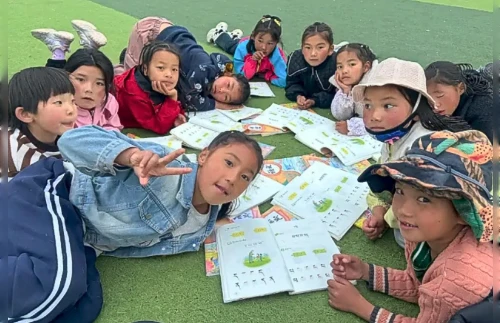
Second, it changes the legal framework around language. Under Article 15, Mandarin is given priority in education and government affairs. While the law says minority languages are “respected and protected,” it also states that when Mandarin and minority languages are used together, Mandarin should take priority in position and order.
Third, it expands state oversight of religion. Article 46 requires religious groups, religious schools, and places of worship to promote a sense of community for the Chinese nation, follow the policy of “Sinicization of religion,” and guide religious activities to adapt to socialist society. Critics say this could further increase state control over religious practices, including Tibetan Buddhism.
Fourth, and one of the most internationally scrutinized provisions, is Article 63, which extends the law’s reach beyond China’s borders. It states that anyone living outside China could face legal consequences if Beijing determines their actions undermine “ethnic unity” or create “ethnic division.”
Beijing frames all of this as protection and development, equal rights for all ethnic groups, and continued investment in poorer regions. Officials point to new schools, infrastructure, and job programs in places like Tibet and Xinjiang as evidence of that commitment.
But the law’s reach goes well beyond schools and language. It also links ethnic affairs directly to national security, calling for action against what it defines as separatism, extremism, and terrorism, both inside China and abroad.
Critics say the law gives legal backing to policies that were already being implemented in minority regions. They argue that putting these policies into law could allow authorities to enforce them more broadly and with fewer limits.
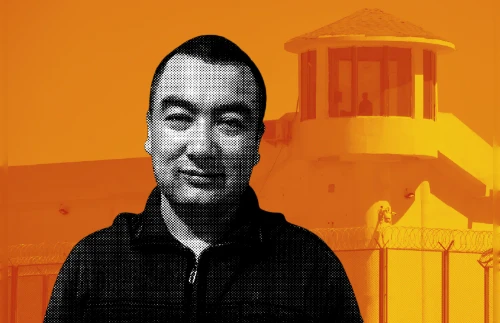
In Xinjiang, this builds on years of mass detention documented in Uyghur communities.
In Inner Mongolia, a preview came in 2020, when new Mandarin-language mandates in schools triggered mass protests and a purge of local officials.
In Tibet, it builds on existing restrictions around religious teaching and Mandarin-medium education.
The concern isn’t limited to human rights groups. In June, the United Nations human rights chief, Volker Türk, called on China to repeal the law, warning it risks violating multiple international treaties China has ratified, and could deepen restrictions on language, religion, culture, and expression for ethnic minorities.
Whatever this law is ultimately called—unity or assimilation—it’s now in effect. And its impact is likely to be felt for years to come, in Tibet, Xinjiang, Inner Mongolia, and beyond.
RFA Tibetan spoke with regional experts, rights advocates, and a Chinese government spokesperson for their comments on the new law:
Frank Lehberger, sinologist
“This is however not a recent reversal of policies, but a concretization of legal, ideological and brutally repressive ethnic policy.”
Brahma Chellaney, geostrategist
“Tibet may see its demographic balance shift in such a way as to make the region indistinguishable from provinces in the Chinese heartland.”
“The 2026 law provides the legal framework for breaking up minority-heavy areas by moving Han Chinese into them while relocating minorities into the Chinese interior for ‘labor programs.’”
“The likely long-term impact will be the erosion of distinct ethnic identities in favor of a singular Chinese national identity, with Mandarin the sole language of education.”
James Leibold, La Trobe University
“The deeper impact may be slower and more bureaucratic: minority identity becomes something to be managed, curated and disciplined by the party-state. That is how assimilation often works, not with one grand announcement, but through schools, textbooks, cadres, museums, slogans and forms.”
“Truly, the paperwork is where empires go to pretend they are being reasonable. Difference is tolerated rhetorically, but the political direction is toward sameness.”
Bhuchung Tsering, International Campaign for Tibet
“The most important indication of this law would be the codification of the change in the bilingual education system in the Tibetan areas … Tibetan schools have at various times been implementing Model One, which means Tibetan language is the medium of instruction. Now, through the imposition of Chinese on the Tibetan people, and with Mandarin becoming the medium of instruction, China is changing the bilingual education system in the Tibetan area, and that will have an impact on the Tibetan people.”
Tsemoling Penpa, former political prisoner
“The intention behind China’s new Ethnic Unity Law… is the complete erasure of Tibet and Tibetan identity. It’s not only about religion or culture—it is about erasing Tibet as a whole.”
Liu Chang, spokesperson, Chinese Embassy in Washington
“China is a multi-ethnic country where various ethnic groups are all equal and united in a harmonious relationship of mutual assistance. Strengthening the rule of law is conducive to better protecting the legitimate rights and interests of all ethnic groups and enhancing ethnic unity. The Chinese government attaches high importance to preserving ethnic minority cultures, and lawfully safeguards the right of all ethnic groups to use and develop their own spoken and written languages. Our practices and achievements in this area have been widely recognized by the international community.”
“Article 15 of the Law on Promoting Ethnic Unity and Progress stipulates that the state respects and safeguards the right of ethnic minorities to learn and use their spoken and written languages, promotes the standardization, normalization, and informatization of minority languages, and supports the preservation, compilation, research, and utilization of ancient texts of ethnic minorities. Article 29 provides that the state encourages mutual learning of languages among all ethnic groups. These provisions fully demonstrate the commitment to protecting and promoting the learning and use of minority languages.”
“Article 63 is grounded in China’s national conditions, consistent with legal principles, and in line with international practice. It is a legitimate, lawful, and necessary provision. Safeguarding national unity, territorial integrity, and social stability is a matter of sovereignty for all countries and a fundamental principle established under international law. All countries have the right to adopt domestic legislation to prevent separatist activities, maintain social cohesion, and uphold normal public order—this is common international practice.”
“Article 63 targets unlawful acts that undermine ethnic unity and incite separatism, with the fundamental aim of safeguarding ethnic harmony, social stability, and national security. It is consistent with the spirit of international law and the governance practices of other countries, and does not affect normal people-to-people exchanges, academic discussions, or economic and trade cooperation between China and other countries.”
“We urge relevant parties to respect the basic facts, stop making unwarranted criticisms and irresponsible remarks on China’s ethnic policies and rule of law, and cease using so-called ethnic issues as a pretext to interfere in China’s internal affairs.”
Edited for Tibetan by Tawang and for RFA English by Charlie Dharapak.
“Copyright © 1998-2023, RFA.
Used with the permission of Radio Free Asia,
2025 M St. NW, Suite 300, Washington, D.C. 20036.
https://www.rfa.org.”