




By Saron Obia
Youths are increasing attracted to cybercrimes for quest wealth, luxurious goods and adventurers with the idea that western world is a utopic society. Crimes include but are not limited to; hacking (black hat), skimming (using the Simbox for theft), Vishing (voice dialing), Smishing (SMS messaging) and cyber bullying. The evolution of white collar crimes is linked to availability of gadgets, software (online security software to protect identity), and inadequate expertise at the level of judiciary (inadequate knowledge of cybercriminal patterns). In some Sub Saharan countries, the criminal justice system encounters several challenges in relation to cyber criminality cases, as tracking and apprehending criminals is challenging due to technological innovation (identity theft, fraud and software) and judgment is delayed or cases acquitted due to lack of evidence and non appearance of victims in courts.
The modus operandi of cybercriminals
Information and communication technology has brought a variety of non-conventional crimes. Cyber criminality is a major challenge for security officials in Sub Saharan Africa. Each seconds cyber criminals discover software and security terminal devices to operate. The language used by cybercriminals is also a barrier to the law enforcement officers and the criminal justice system. We listen to new words each day, like machine man, Ngues man (to describe scammers) and pick-up, but also mail with attach bills for ‘clients’ of cybercriminals.
Stage one on the cyberspace
Cybercriminal sends a mail, containing a pay voucher (usually call the first bill within the criminal milieu) which constitutes description of the pet, feeding, toys and how it would be transported to the ‘client’ (victim, Jk, Mugu, Maga).
The first bill is usually paid via local banks, due to the low request by the criminal. Meanwhile, the second bill is always via international banks to avoid suspension of the client. For example; the case of sale of pets the second bill would come in with a complaint of transportation fees and caging (huge amounts are always requested from ‘clients’).
In the third bill, the cybercriminal request for insurance and medical assistance (vaccination) for the pet for sale. At this juncture, criminals block the mails from their victims, as they discover it’s a scam. All email and phone number are disconnected and gadgets sold to the dark market or damage.
Stage two on the cyber space
To security experts, the globalization period change the dynamics of international and national policing of non-conventional crimes, as transactions are made each minute, security measures should ensured in relation to internet protocol (IP) spoofing, phishing, account breach and use of cloned phone numbers (also the use of Magic Jack and textnow) to perpetrate cybercrimes. Staff dishonesty and inadequate training in cyber security are prerequisite for the emergence of non-conventional crimes. As criminal develop new patterns each day, due to the slow pace of biometric identification is a security measure but not a tool to completely curb cyber criminality. Below are some of the methods of cybercriminals;
The use of a fake ID cards (cybercriminals produce ID cards with information of individuals gotten from social networking sites) and attestation of lost to withdraw money and create accounts in banks as well as mobile money to perpetrate crimes. The ID card number and information is not usually registered in the security database of the delegation of national security as well as the name might incriminate an innocent individual, not aware of stolen identity. It is often easy to obtain ID cards or attestation of lost, with just a complaint of lost ID or with the help of dishonest security staff a receipt that acts as an ID card will be provided.
A pick-up is a person found in a different state, who acts as sale agent or manager in order to receive financial payment before transacting it back to the scammer. For instance if X scams Y, X will tell Y to do the transfer to Texas, which his pick-up (G) would receive, while collaborating with a person of the bank in Texas to delete the information (a percentage usually given to the person in the bank). G uses a different name to secure his/ her identity, and send the money to X, whose is now secure (X will be operating with a different identity not registered in the country of origin nor in any other state, due to fake ID card use for withdrawal). Law enforcement officers during investigations encounter several challenges, due staff dishonesty and inadequate with information from mobile operation companies. Certain agents usually identify Sim Cards of suspect with their ID cards without being aware of cybercriminal patterns. As such, Digital forensics remains a survival for victims to recover their identity, be healed from psychological torture due to cyberbullying and financial recovery, when a criminal is apprehended. However, the process of forensics is based on uncovering, interpreting electronic data and providing grounded evidence after structural investigation through the validation of information reconstituted from past events.
Conclusion
In globalization period validated the theory of biometric, a technological system that controls data of persons for security and administrative reasons. The theory is increasing challenged in Sub Saharan Africa, as the number of cybercriminals continues to double in geometric stance and some criminals wondering because of inadequate evidence provided by law enforcement officers to the criminal justice system in relation to white collar crimes. Relevant references of individuals are easy to access on social networking sites, which are use can be use for fraudulent purposes. In some cases, it is often extremely difficult for a victim to refute allegations from the police for the fraudulent usage and re-establish their credentials used by a cybercriminal.
Biometric identification is a process not an end to crime waves. The slow pace in biometric identification in some Sub Saharan African countries facilitates crimes. Fraudsters continue to produce ID cards receipts in order to perpetrate crimes. Redefining the government-based biometric identification system will help identify and verify individuals interacting with government agencies for the purposes of card issuance, voting, immigration, social services, or employment background checks. The judiciary should ensure that biometric identification cards are issued on time, in order to effectively control the collection of social security benefits, minimize identify theft, and manage immigration on a very large scale.
( The Author is a Security Expert, Consultant, Specialist in Cyber Security, Counter Terrorism and Jehadist Tendencies)

Pyrenean Mastiff Dog Breed

Autonomous AI Agents

Rare Photos of Aung San Suu Kyi Spark Renewed Calls for Her Release
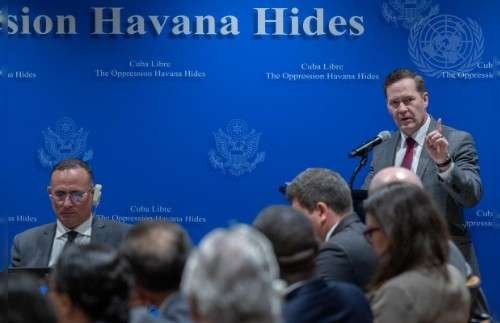
Cuba Libre: The Oppression Havana Hides

Red Bull Skateboarder Breaks Record for Fastest Downhill Skateboard Speed Ever

Akbash Dog Breed
Multi-Layered Verification Strategy

Tibetan Rights Group: South Africa Arson Attack is Transnational Repression by CCP
Subscribe Our You Tube Channel

Fighting Fake News
Fighting Lies