



The Covid-19 declared pandemic on March 11 by the World Health Organization (WHO), has spread throughout the world where it has been used as an excuse by many governments to put aside constitutional guarantees . At a time when a relative lull seems possible, a new emergency is imperative: these exceptional measures must be lifted.
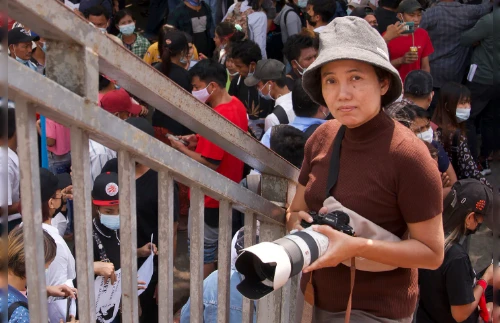
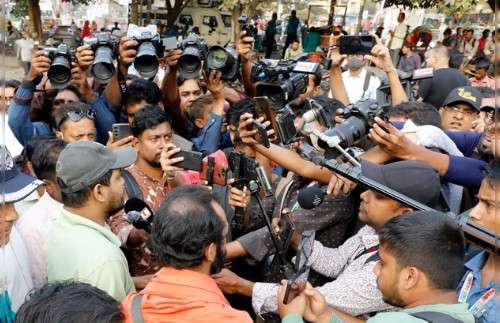
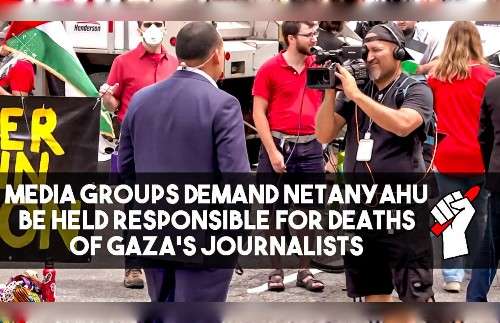
Faced with the threat of an exceptional epidemic, many states have massively attacked those whose job is to inform. Spurred on by the urgency, the liberticide contamination resulted in the adoption of an impressive arsenal of laws, regulations and exceptional provisions. Attacks on press freedom and exceptional regulations have multiplied on five continents. They range from simple shackles to prison terms, to all kinds of restrictive procedures.
“The coronavirus health crisis amplifies all crises and particularly affects journalism and the right to information , notes Christophe Deloire, secretary general of Reporters Without Borders (RSF). To push the repression even further, the worst regimes used the whole panoply of means at their disposal and, when they proved insufficient, pretending to be a state of emergency or exception, gave themselves new ones. Today it is urgent to put an end to these exceptional measures and to deconfine the information! ”
Several countries have had almost immediate recourse to exceptional measures relating to freedom of expression, as in Honduras , or limiting access to information – this was the case in Brazil , or even its dissemination. . Some have since been suspended, or are about to be suspended, as in Hungary , where Prime Minister Viktor Orbán, passed an emergency law called “coronavirus” – which is supposed to be repealed around June 20 – which allowed him to legislate by ordinances for an indefinite period and punished with five years of imprisonment the diffusion of false information.
In El Salvador , Thailand or Armenia , restrictions on the freedom of movement of journalists by the proclamation of a state of emergency, the establishment of curfews or tracing devices have raised serious concerns, before finally be lifted. At the same time, some states have taken the opportunity to introduce numerus clausus limiting access to press conferences, such as in Namibia . Elsewhere, it was access to sources of information that was strictly controlled. In Bangladesh, Bangabandhu Sheikh Mujib University of Medicine, the only one in the country, published a circular on May 2 prohibiting teachers, doctors, civil servants and employees from speaking in the media on any question related to health care without prior authorization. The circular specifies that they must not tarnish the image of government and academics. In Greece , in accordance with a decision of the Ministry of Health published on April 13, hospital staff were prohibited from making any statement to the media: reports by Greek journalists in hospitals were also subject to prior government authorization.
Public service media have often come under intense state pressure. In Japan , a law passed urgently (and lifted on May 25) has included NHK, the public service of radio and television, on a list of institutions to which the government is empowered to give “instructions”. In Ukraine , this pressure on public service information took a more sly turn with a tightening of the budget screw, depriving the public television channel PBC of a quarter of its budget.
But most of the time it is, in the name of the state of emergency, a legislative device allowing outright censorship of disturbing or alarming information that has been put in place. In Cambodia , the government has given itself the legal means to prohibit the publication of “any information that could generate agitation, fear or unrest”. In Vanuatu , all information relating to Covid-19 must obtain prior validation from the administration before dissemination.
The most generally shared governmental temptation was, to varying degrees and by virtue of repressive means which varied according to the democratic culture and the rule of law of each country, to impose official information as the only source. credible or even authorized information. In India , Egypt, Botswana , or Somalia for example, only the publication of government press releases on the subject is authorized. In Eswatini , “the use of printed or electronic media” to obtain information on the Covid-19 is prohibited “without the prior authorization of the Minister of Health”.
In parallel with these liberticidal measures, the range of sanctions has been greatly enriched: the repressive arsenal has very often been spectacularly reinforced both against individual journalists and against their news organizations. Broadcasting ban and seizure ( Kyrgyzstan ), heavy fines (up to € 25,000 in Russia ) and dissuasive prison terms (up to 6 months in South Africa , a year and a half in Indonesia , five years in Botswana or in Algeria and up to 20 years old in Zimbabwe ). In Liberia , the justice system threatens to close down and seize any press organ that disseminates what it considers to be false information. InIn Romania , the government crisis unit has taken action, shutting down 12 news sites by authority. Ditto in Burma with 221 closings, in particular of sites aimed at the country’s ethnic minorities.
Beyond this avalanche of obstacles and sanctions, one of the most worrying phenomena of the Covid-19 crisis is undoubtedly the pernicious use that repressive states make of the notion of “fake news” and of disinformation.
In Ethiopia , the definition of disinformation is so broad that it gives authorities the discretion to declare any information “false”. Ditto in Bolivia , 37 “political actors” have just been sentenced in emergency proceedings for “disinformation” and “destabilization”
In Russia “disinformation” and the “damage” it causes are concepts that depend solely on the interpretation of judges. On April 21, the Supreme Court extended the application of this article to social networks and even simple conversations. In Egypt , the Supreme Council for Media Regulation goes so far as to invite ordinary citizens to report by telephone “false news” published on the Covid-19. The implementation of these exceptional laws often reveals a very extensive understanding of the concept of false information. They serve just as well to dissuade criticism and to muzzle any opposition.
Copyright ©2016, Reporters Without Borders. Used with the permission of Reporters Without Borders(RSF), CS 90247 75083 Paris Cedex 02 https://rsf.org

Tibetan Mastiffs
LLM Phishing
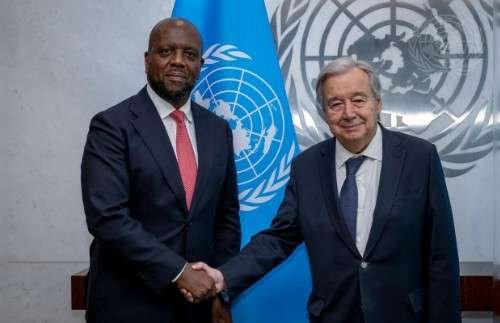
UN Secretary-General Meets with Assistant Secretary-General for Africa in Departments of Political and Peacebuilding

North Carolina Police Encountered Two Men Travelling Down Couch Mounted on E-Scooter

Scottish Deerhound Dog Breed

AI-Powered Mortgage Fraud

Exclusive: North Korean Army Video Says K-Drama Watchers Deserve to be Executed
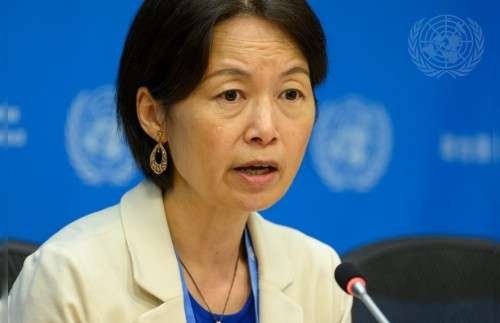
Press Briefing by Special Rapporteur on Sale and Sexual Exploitation of Children
Subscribe Our You Tube Channel

Fighting Fake News
Fighting Lies