



The move is seen as ‘completely politically driven, to legitimize the occupation and rule of Tibet,’ say experts.
By Yitong Wu and Chingman for RFA Cantonese
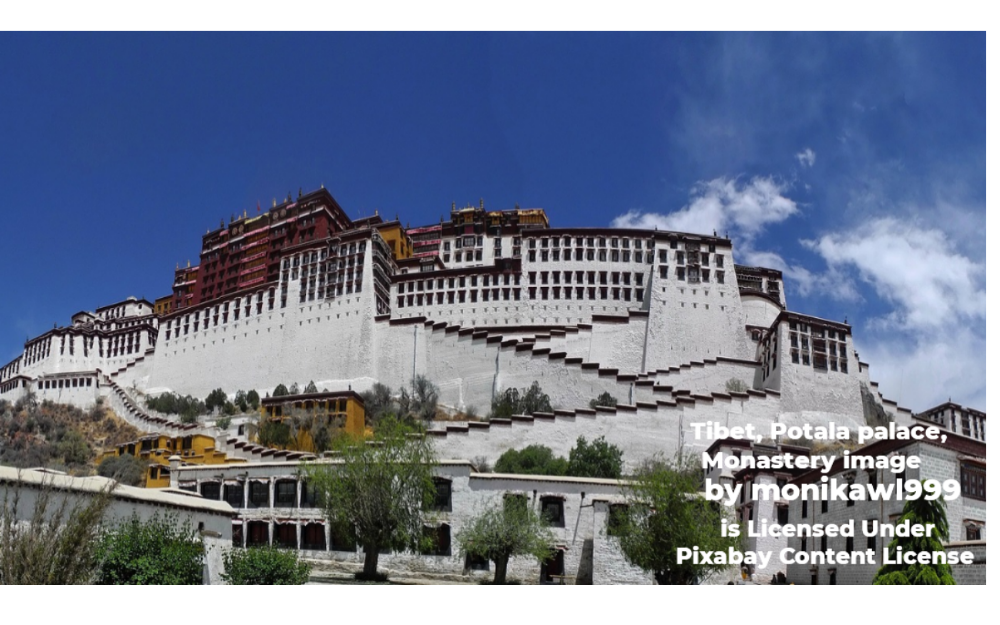
China has replaced the use of the term “Tibet” with “Xizang” as the romanized Chinese name on official diplomatic documents, a recent speech by the Foreign Minister Wang Yi shows.
The change comes as Chinese Communist Party scholars advocate an amendment to the translated name which they claim will prevent the Dalai Lama from reestablishing the right to speak about Tibet. They pointed out that the Party needed to promote its legitimate occupation and rule of the autonomous region.
On Tuesday, the Chinese media and the official account of the United Front Work Department of the Communist Party of China, “United Front News,” touted that “there is no more Tibet in the official documents of the Chinese Ministry of Foreign Affairs.”
In the English transcript of Wang’s speech at the opening ceremony of the Third Trans-Himalaya Forum for International Cooperation on Oct. 5, Xizang was used throughout the copy.
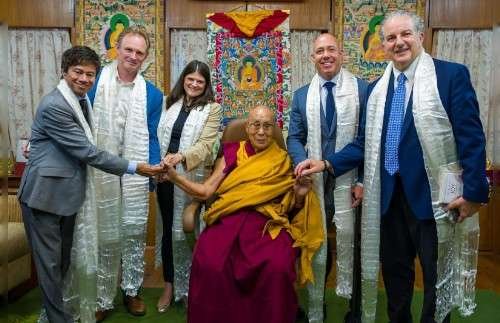
The commonly used name of Tibet by the international community encompassed not just Tibet alone, but also Tibetan-related areas of Qinghai, Sichuan, Gansu, and Yunnan provinces, according to Chinese media reports. This geographical scope is consistent with the “Greater Tibet” defined by the 14th Dalai Lama.
Chinese media outlets quoted Chinese official experts as saying that the name “Tibet” has been geographically misleading to the international community, and rectifying it “will help enhance China’s international voice on Tibet.”
Dawa Tsering, director of the Tibet Policy Institute, told Radio Free Asia that scholars of Tibetan history and culture are aware that the geographical concept includes all Tibetan areas, and the CCP’s move was completely politically-driven, to legitimize the occupation and rule of Tibet.
“It’s a terribly bad political maneuver by the CCP. Concepts that have existed in history express historical facts. That ‘Tibet’ refers to the entire Greater Tibet or the entire area where Tibetans live,” Tsering said. “By imposing its Chinese concept on the English one, it wants to secretly change the concept. It wants to tell others that Tibet is just the ‘Tibet autonomous region.’ Apart from expressing its sovereignty it is adopting a divide-and-rule policy for Tibet.”
Tsering called on the international community not to compromise with the CCP’s efforts to reshape history and to stick to the established term “Tibet.”
“This is also a litmus test to see whether the international community will succumb to the CCP’s tyranny. If you give in, you will call ‘Xizang’ like the Chinese parrot; if you don’t give in, just continue to use ‘Tibet’ because this is a true fact. The most important thing is not what China does. It’s about whether the international community will buy it,” he added.
Yang Haiying, a professor of Mongolian origin at Shizuoka University in Japan, believes that the CCP is trying to cover up its serious repression in ethnic minority areas through the “rhetoric” of “de-ethnicization.”
“These are political actions of ‘de-ethnicization.’ ‘De-ethnicization’ is equivalent to the idea of resolving ethnic issues. It is an approach to deny ethnicity by emphasizing ‘de-ethnicization’ of regions,” said Yang. “One way is to shrink the scale of Tibet’s expansive cultural area, and more so, the other is that [the CCP] will soon say ‘there are no Toubou [or Tubo] people in China, but only Tibetans.’”
Yang also pointed out that the CCP is violating its own laws, saying that “Inner Mongolia” was replaced by “Nei Menggu” on the passports of Inner Mongolians a few years ago.
“It always uses Chinese language to express the terms inherent to each ethnic group. In fact, this approach conflicts with the regulations of the State Ethnic Affairs Commission, which stipulates that ‘the name follows the owner.’ In the past, it used to change the name secretly, but now it is changing things openly without abiding by laws,” Yang added.
At China’s 2014 National People’s Congress, Zheng Gang, a local official in southern Hainan province and a member of the Chinese People’s Political Consultative Conference, proposed changing the translation of the name of Tibet, claiming that “Tibet” would serve the Dalai Lama’s interests. China’s United Front Work Department repeated Zheng’s views in this week’s post on its WeChat account.
In fact, since 2019, Chinese official media outlets such as Global Times, People’s Daily, Xinhua News Agency and CGTN have all used the term “Xizang” instead of “Tibet.” In August this year, the CCP convened the 7th International Symposium on Tibetan Studies in Beijing to rebuild the media’s image of Tibet as a region different from that of the West.
Translated by RFA staff. Edited by Taejun Kang and Elaine Chan.
“Copyright © 1998-2023, RFA.
Used with the permission of Radio Free Asia,
2025 M St. NW, Suite 300, Washington, D.C. 20036.
https://www.rfa.org.”