



Sharif Khiam and Pimuk Rakkanam/ Dhaka and Bangkok
Bangladesh has prohibited humanitarian aid groups from teaching Rohingya children a formal curriculum and barred school-age refugees from accessing education outside their camps to block them from integrating with local communities, Human Rights Watch said in a report Tuesday.
The nation’s refugee commissioner, Mahbub Alam Talukder, rejected the watchdog’s 81-page report as “all-out false,” as he dismissed HRW’s calls for the government to lift its restrictions on schooling for Rohingya boys and girls. According to the New York-based rights group, the restrictions are depriving almost 400,000 children of their right to an education.
“The government of Bangladesh saved countless lives by opening its borders and providing refuge to the Rohingya, but it needs to end its misguided policy of blocking education for Rohingya children,” Bill Van Esveld, HRW’s associate children’s rights director, said Tuesday.
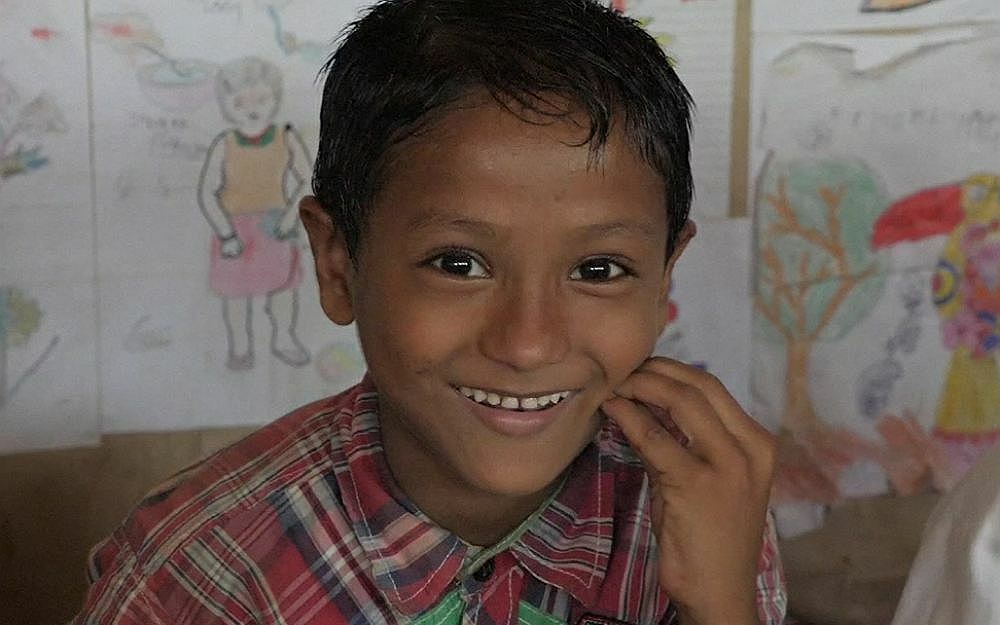
The group officially released its report on the state of education of Rohingya refugees at a news conference in Bangkok.
“Bangladesh has made it clear that it doesn’t want the Rohingya to remain indefinitely, but depriving children of education just compounds the harm to the children and won’t resolve the refugees’ plight any faster,” Esveld said.
More than 1 million displaced people have been living at sprawling refugee camps in Bangladesh’s southeastern Cox’s Bazar district, including about 740,000 stateless Rohingya who fled their homes in neighboring Rakhine state in late August 2017. The exodus was precipitated by a brutal counter-offensive launched by Myanmar’s security forces in the wake of deadly attacks by a Rohingya rebel group on government security posts.
In its report titled “Are we not human?,” HRW said it had interviewed 163 Rohingya children, parents, and teachers, as well as government officials and staff at humanitarian groups and U.N. agencies.
HRW staff also analyzed government policy documents and aid plans, and researched how aid groups had tried to deliver education programs for children in the camps while working within the government’s restrictions.
Barred from opening schools, NGOs have since 2017 constructed about 3,000 “learning centers” – small, temporary bamboo structures – that can accommodate up to 40 children at a time at the refugee camps, the HRW report said.
The learning centers operate three daily “shifts” or about two hours each to accommodate more children, it said. As of August 2019, only 1,600 of those makeshift schools had restrooms or potable water nearby, the report said.
“Bangladesh has provided refuge to generations of ethnic Rohingya who fled previous waves of persecution in Myanmar but has never allowed Rohingya children to access to formal, accredited education,” it said, adding that Dhaka “bars Rohingya children from enrolling in schools in local communities outside the camps or taking national school examinations.”
HRW claimed that Bangladesh’s move to deny education to the refugees had nothing to do with a “lack of resources,” but was a “policy of deliberate deprivation of education in pursuit of its efforts to prevent the refugees from integrating” with local communities.
Bangladesh: ‘Not depriving anyone of their rights’
Talukder, the refugee commissioner, appeared to mock the report as he fended off HRW’s allegations.
“Why only 81 pages?” he told BenarNews. “HRW can’t prove that Bangladesh is doing something illegal even with an 81,000-page report.”
Enamur Rahman, Bangladesh’s state minister for disaster management and relief, said the nation’s laws precluded Rohingya refugees from receiving a formal education in Bangladeshi schools because they had entered the country illegally.
“Bangladesh is not depriving anyone of their rights,” Rahman told BenarNews. “But after their illegal entry into Bangladesh, there is no opportunity for anyone to study in our schools or curriculum.”
Rahman underscored that the Rohingya refugees “are citizens of Myanmar.”
“International aid groups can use the Myanmar curriculum, if they wish,” he said. “In this case, we should not object. This can be a good solution for Rohingya camps.”
Described by the United Nations in 2013 as “one of the most persecuted minorities in the world,” the Rohingya Muslims were denied citizenship under Myanmar’s 1982 nationality law. For decades, Myanmar has also subjected the minorities to widespread discrimination, including restrictions on freedom of movement and state education.
Not conducive for safe return of refugees
A fresh attempt to return thousands of the refugees to Myanmar collapsed last August, with the United Nations refugee agency (UNHCR) and Bangladeshi officials saying that none of those interviewed among the 3,450 people cleared for repatriation were willing to go back. The first attempt failed in November last year.
UNHCR and other U.N. agencies have repeatedly stated that conditions in Myanmar are currently not conducive for the safe, voluntary and dignified return of refugees.
Myanmar, according to the HRW report, also refused to approve the use of its curriculum in the camps, so UNICEF, the U.N. children’s agency, developed an informal education program from scratch.
The program, submitted for government approval in April 2018, was designed to avoid the Bangladesh government’s ban on formal education, but Dhaka took a year to approve the first two “levels,” equivalent to preschool and the beginning of primary school, HRW said.
“The government has still not approved the informal program’s upper three levels,” it said, as it noted that refugee children who receive an education are “less likely” to fall under the influence of criminals or armed groups.
Mohammed Noor, a Rohingya leader at the Kutupalong camp in Ukhia, a sub-district of Cox’s Bazar, urged the Bangladeshi government Tuesday to consider building schools inside the refugee camps “for at least up to a tenth grade.”
Maung Maung, another community leader at the camp, appealed to both the Bangladeshi government and international NGOs to improve educational opportunities for Rohingya children.
“We have as many as 400,000 children here. I am very concerned that they will have no future if they don’t have access to education,” he told the Myanmar Service of Radio Free Asia (RFA), a BenarNews affiliate.
Khin Maung, who directs the Rohingya Youth Organization at one of the refugee camps in Bangladesh, echoed that concern.
“As human beings, they should have access to education,” he told RFA. “If they are denied access to education, it will destroy their future.”
Sunil Barua in Cox’s Bazar, Bangladesh, contributed to this report.
Copyright ©2015,BenarNews. Used with the permission of BenarNews https://www.benarnews.org/english/
Trapped moose in Idaho Rescued from Roll of Wire Fencing

Quiz:Origins of Dog Cat Breeds

Algorithmic Trading Fraud
China-Laos Air Base Could be Another Southeast Asian Forward Outpost for Beijing
UN Security Council Discusses Developments in Kosovo

Quebec Animal Rescue Rescued Three dogs That Were Stuck on Cliff for Five Days
Pyrenean Mastiff Dog Breed

Autonomous AI Agents
Our You Tube Channel Promo
For Latest Updates
From Our Archive
We Do Believe that Digital Publication is the Best Way for Communication and Spreading Awareness