



Yelena Sycheva and Tony Wesolowsky
RFE/RL
Andrei was on his way to a job interview in the Russian city of Novosibirsk when panic set in. The minibus he was hoping would take him there wasn’t moving, and Andrei, who spent much of his childhood in an orphanage, didn’t know why.
Luckily, he had someone to turn to.
He called Anna Dymshets, a volunteer at a local nongovernmental organization that helps young adults like 19-year-old Andrei to adjust to “real” life after they leave orphanages or other state institutions for juveniles.
“Anya is always telling me that when I’m afraid or when something weird happens, I should call her,” Andrei told the Siberia Desk of RFE/RL’s Russian Service. “So I called her.”
“Andrei was very worried,” Dymshets added. “After all he needed to get there all by himself. I thought I had considered everything, but something so simple as the minibus waiting for passengers at the last stop just threw him off. It’s at those moments that you realize that a person who has lived 19 years hasn’t really lived at all.”
“His life experience is limited to the routine of the orphanage,” she added. “And now these kids are living among us. How? The best they can.”
Waiting Lists
Andrei is far from the only one in this Siberian city struggling to cope in this way. According to official data, 40 young people are released every year from the city’s orphanages and other institutions. Usually without relatives or any support network, one of the biggest challenges these youths face initially is simply finding a place to live.
City authorities says there’s currently a waiting list of more than 2,000 orphans or other kids without parental care who are entitled by law to housing. With state help either insufficient or altogether lacking, it has fallen to the volunteers at Dymshets’ NGO Be Human to help these people not only find homes, but to navigate Russia’s notorious bureaucracies and cope with other everyday issues.
The odds are ominously stacked against Russia’s orphans, many of whom have learning or other disabilities and were abandoned by their families. According to the NGO Arifmetika Dobra, there are more than 47,000 orphans now in Russian institutions, more than half of them over the age of 12.
Only 10 percent of the country’s orphans will live to the age of 40, Arifmetika Dobra reports.
Dymshets says Andrei’s struggles and determination inspire her and have changed her perspective.
“He’s lived through so much, but can still smile,” she said. “I look at him and begin to think that things aren’t so bad after all. Being close to someone who somehow learned to take pleasure from the fact that he’s alive today and healthy, that he visited a café and had a burger…. Suddenly everything seems wonderful to you. I’ve learned that from Andrei.”
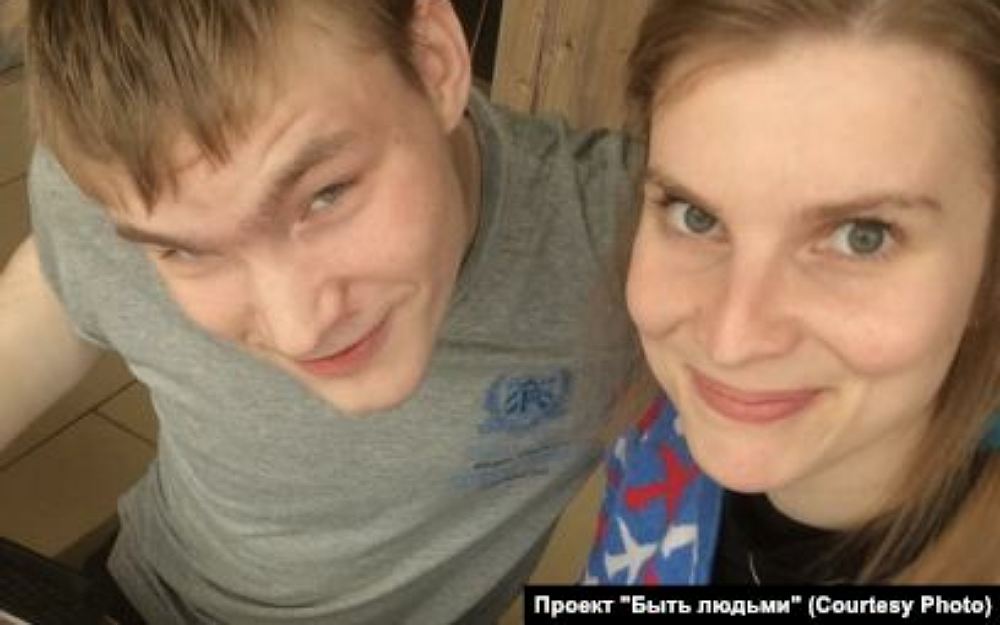
Andrei left the orphanage literally with nothing. He had no documents. He had no job and nowhere to live. He didn’t know how to use public transportation. Dymshets and Be Human have been his lifelines.
“He’s still a child,” Dymshets said. “My daughter is six years old, and it seems to me that Andrei is at a similar level of emotional development. But he has been released into adulthood.”
“I imagine what it would be like if my six-year-old daughter went to work or received some kind of card with 14,000 [rubles] ($210) on it,” she said. “Of course, she would go and spend it on toys. The government is spending more money on the maintenance of orphanages and there are laws protecting them once they get out. But none of that is effective. What these kids need is not money but simply for someone to be there for them.”
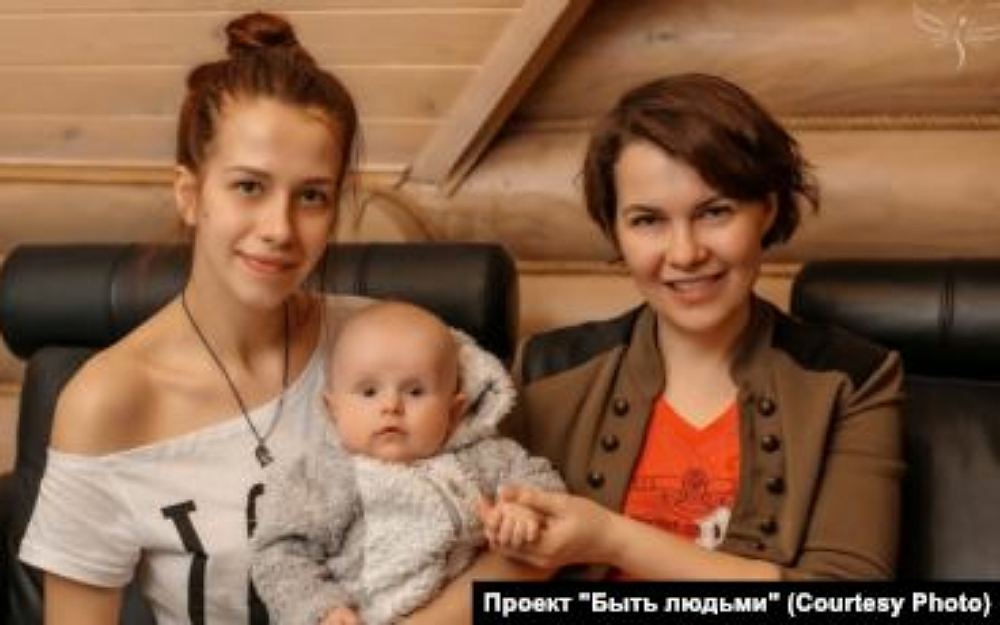
There are now nine volunteers at Be Human serving as informal guardians to hundreds of orphans in Novosibirsk, a city of some 1.6 million on the Ob River. Many say they were drawn to the project after reading an Internet post by a volunteer named Yelena Vasilkova about an orphan named Lera.
“I first met Lera at the orphanage,” Vasilkova told RFE/RL. “I spoke with a social worker who opened up to me the world of those emerging from orphanages — a world that I knew nothing about. The children in these institutions are not so bad off materially. They are fed, have a roof over their heads, clothes. They are always doing something. They are waiting for when they get out, thinking about when they will finally start a real life.”
But she added that reality rarely meets their expectations.
“They quickly realize that no one needs them ‘on the outside,'” Vasilkova said. “These kids find it hard to adapt. They aren’t capable of doing anything. They want a lot of money but are afraid to call about a job. They are completely alone. On top of that, often they don’t have anywhere to sleep. They are supposed to be provided with housing, but the waiting time for that on average is 11 years.”
Lera is now 20. She was taken from her family as a child and put into an orphanage, although she wasn’t an orphan: her mother was an alcoholic. Lera, like most of her contemporaries, is on a waiting list for housing, but has no idea when she’ll have her own roof over her head. She is also raising a son, receiving a monthly childcare allowance of 15,000 rubles ($227), 8,000 of which goes to pay her rent.
“We’ve been communicating for three years now,” Vasilkova explained. “After she left [the orphanage], we worked on a plan to figure out what she could do for a job. Her school grades were not great, but she didn’t want to work as a painter or a plasterer like many people from orphanages do. She’s a beautiful girl, and she wants a beautiful life. She tried to work as a model, but that didn’t work out. Then we got her trained to be a manicurist, but she didn’t start that job because she had a baby.”
Everyday Struggles
The extra burden of another mouth to feed complicated Lera’s already trying circumstances, Vasilkova added.
According to Vasilkova, Lera’s story is typical of kids raised in orphanages and other institutions for juveniles without parental care. At the age of 18, they have never made an independent decision such as what to eat for breakfast, what to wear, or what films to watch. They struggle with the simple things of everyday life.
Ksenia Nikolayeva heard about Be Human through social media.
“I read about a 19-year-old who left an orphanage and who lived through the winter in a dacha in [the nearby village of] Yeltsovka and who was always scared the owner would return and kill him,” Nikolayeva said. “That shocked me. I wanted to help him, but he disappeared and nothing more was heard about him.”
“At first, I thought helping these kids wouldn’t be so hard,” she added. “I’m a lawyer and could consult them on various issues. It turned out I had a free summer, and I decided that I would quickly help everyone, and they would live happily ever after. But that didn’t happen.”
Nikolayeva met a girl at one orphanage named Lilya, who at the time already had three kids of her own and no husband. She helped Lilya find an apartment.
“Her mother gave up her girls in the courts when Lilya was nine years old,” Nikolayeva explained. “She remembers how she lived with her mother, and perfectly understands what happened. She was then moved around through foster families who also returned the girl to orphanages. Lilya was devastated by her mother and doesn’t trust anyone. She won’t allow herself to get close to anyone. In the beginning she would accept my help, but wouldn’t allow me to get close.”
Russia’s orphan population grows annually by some 6,000, according to a 2014 article in the Russian daily Kommersant. Many kids with mental or physical disabilities end up in such institutions, abandoned by their parents, sometimes at the subtle suggestion of doctors, the daily noted.
According to official data from Novosibirsk, as of July 1 there were 2,028 orphans or children without parental care on a waiting list for housing. Of those, 1,285 who are over 18 and have the right to state-funded housing remain without a dwelling. The reason? Not enough apartments.
This year Novosibirsk has earmarked 43.53 million rubles ($659,000) for social housing, an amount activists say is woefully inadequate.
In addition, those emerging from orphanages face the tasks of getting their passports, residency permits, and other documents necessary for life in Russia.
Sergei’s story is not atypical. He has struggled to find a place to live in Novosibirsk, largely due to a lack of records from his orphanage and other evidence that he has actually lived in the city.
Be Human volunteer Tatyana Zaitseva has helped Sergei navigate the city’s bureaucracy to get the paperwork done, including a key form at his local health clinic.
“I insisted on meeting with the director,” Zaitseva recalled. “We waited in a long line, filled out a mound of paperwork, and only then were we assigned a time when we could pick up the certificate. For a person with learning disabilities — and for the court it was not a secret that he was disabled — all this red tape is overwhelming,” Zaitseva said.
Vasilkova is convinced if it weren’t for volunteers like her and others at Be Human, many of Novosibirsk’s orphans would simply be forgotten.
“When our client, 22-year-old Tanya and her four children, fell ill with tuberculosis, no one wanted to help them,” Vasilkova said. “We managed to get her admitted to a TB ward only after making a big fuss. And during this time, not a single government agency helped her or her family.”
“If Tanya hadn’t had one of our helpers, she and her four children would have died quietly,” Vasilkova said, “and no one would have cared.”
Copyright (c) 2019. RFE/RL, Inc. Reprinted with the permission of Radio Free Europe/Radio Liberty, 1201 Connecticut Ave NW, Ste 400, Washington DC 20036
You know Independent Journalism needs fund to run the not for profit venture Please contribute if you like our effort Donate through  PayPal Or paytm +919903783187 phone pe +919875416249 Google Pay +919875416249 Amazon Pay +919875416249 BHIM +919875416249 or write to us editor@humanitynewsworld.com
You can get story updates or contact us on Whats App Messenger +919073399779