



Abduqadir Jalalidin’s children continue to advocate on his behalf and demand his release from overseas.

The situation and well-being of a renowned Uyghur intellectual who was detained by authorities in northwest China’s Xinjiang Uyghur Autonomous Region remains unknown more than three years after he was taken into custody, according to the man’s U.S.-based son.
In late April 2018, RFA’s Uyghur Service learned that Abduqadir Jalalidin, a Uyghur professor at Xinjiang Normal University as well as a well-known writer and poet, had been detained three months earlier by State Security forces in the regional capital Urumqi.
Jalalidin’s writings have been popular among the Uyghur people, as have his literary translations into Uyghur, including George Orwell’s iconic novel Animal Farm. He had advised a number of graduate students, training a new generation of community researchers.
His son Babur told RFA that he and his Japan-based older sister Bulbulnaz have continued to advocate for their father’s release but have obtained little information about his situation since learning of his detention.
“They took him from our home on the evening of Jan. 29, 2018, around 7:00 or 8:00 p.m.,” he said.
“Up to now I have been unable to obtain any information about his health or what he is doing. We also don’t know why they took him away or how long he’s been sentenced to.”
According to Babur, police raided their family home one day before arresting Jalalidin, confiscating Uyghur-language materials, as well as computers, tablets and phones.
“And then the next day … they took my father away and never brought him back.”
“My father never broke the law. All of his works were published by government publishing houses, and prior to being published they were edited by government editors. Our father always raised us not to break the law, to be good people … I demand my father’s release.”
While RFA has been unable to confirm the reason for Jalalidin’s detention, earlier this month, Chinese state media channel CGTN published a documentary video titled “The War in the Shadows: Challenges of Fighting Terrorism in Xinjiang,” which featured the cases of intellectuals such as Yalqun Rozi, who guided the compilation of a textbook of Uyghur literature back in 2003.
Though the film did not mention it, Jalalidin was involved in the compilation of this textbook, as well as other textbooks in language and literature for Uyghur intermediate school students.
Authorities in the XUAR are believed to have held up to 1.8 million Uyghurs and other Muslim minorities in a vast network of internment camps since early 2017. While Beijing initially denied the existence of the camps, China in 2019 changed tack and began describing the facilities as “boarding schools” that provide vocational training for Uyghurs, discourage radicalization, and help protect the country from terrorism.
But reporting by RFA and other media outlets indicate that those in the camps are detained against their will and subjected to political indoctrination, routinely face rough treatment at the hands of their overseers and endure poor diets and unhygienic conditions in the often-overcrowded facilities. Former detainees have also described being subjected to torture, rape, sterilization, and other abuses while in custody.
Poetry cannot be detained
Babur’s demand for Jalalidin’s release comes a month after his sister was interviewed by Japan’s NHK news channel after giving testimony about her father at a joint event by the Japan Uyghur Association and Human Rights Now. In her remarks, she noted that images of her father as a scholar and intellectual are at the forefront of her mind.
“When I think of my father, I see an image of him sitting and reading books,” she told NHK.
“This innocent man, who wanted nothing other than to read books and do academic work, has been deprived of his freedom in a place for criminals.”
Bulbulnaz told NHK that her father was careful not to discuss politically sensitive issues.
“He’s never been a religious man or a political man. He [was] always encouraging people to try new things. I remember people respecting him, and they loved to spend time and [have] conversations with him,” she said.
In November, The New York Times published an essay titled “China Disappeared My Professor. It Can’t Silence His Poetry” by Joshua L. Freeman, a former master’s student of Jalalidin’s and a current postdoctoral fellow at Princeton University, who discussed his relationship with his former teacher.
In the essay, Freeman noted that even in detention Jalalidin had continued writing poetry. He said other inmates had committed his new poems to memory and had managed to transmit one of them beyond the camp gates, suggesting that while a poet can be detained, poetry cannot, and that poetry serves as a tool of resistance for many Uyghurs.
Intellectuals targeted
According to the 2020 Freedom to Write Index published by PEN America, China is among the countries with the highest number of imprisoned writers, intellectuals, and researchers, including at least 40 imprisoned Uyghur intellectuals. Washington-based Uyghur Human Rights Project (UHRP) has documented hundreds of disappeared Uyghur scholars.
Last month, the Newlines Institute for Strategy and Policy published a report which said that China has demonstrated “intent to destroy” the Uyghur ethnic minority, and therefore bears state responsibility for committing genocide, in the first independent report to investigate claims of abuses in the XUAR.
The report counted the mass internment campaign, as well as other state policies such as government-mandated homestays, a mass birth-prevention strategy, the forcible transfer of Uyghur children to state-run facilities, the eradication of Uyghur identity, and the selectively targeting of intellectuals and other leader as evidence of intent to destroy the ethnic group.
The U.S. government determined in January that rights violations in the region amount to genocide—a label that has since been similarly applied by the parliaments of Canada, The Netherlands, and the U.K.
Reported by Nuriman Abdurashid for RFA’s Uyghur Service. Translated by the Uyghur Service. Written in English by Joshua Lipes.
Copyright © 1998-2020, RFA. Used with the permission of Radio Free Asia, 2025 M St. NW, Suite 300, Washington DC 20036. https://www.rfa.org

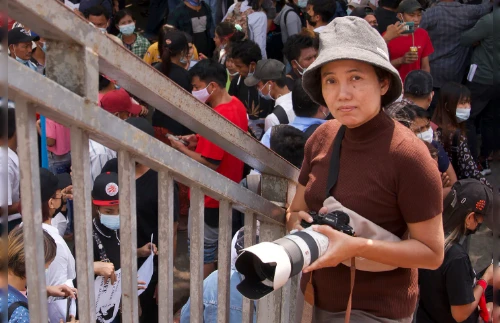
Award-Winning Burmese Journalist Shin Daewe Released from Prison
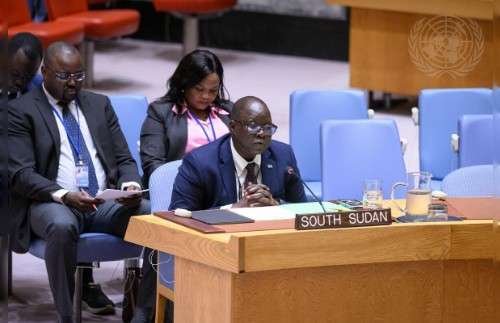
UN Security Council Meets on Situation in Sudan and South Sudan
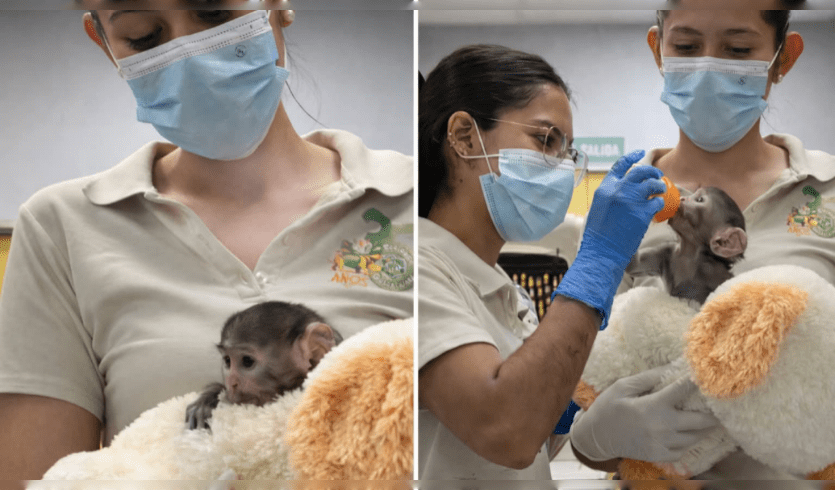
Mexican’s Zoo’s Star attraction Yuji, Abandoned Newborn Monkey
Sinhala Hound
UN Permanent Representative of Israel Briefs Press

Web Cache Poisoning