



Premier Li Keqiang makes a bid to kickstart economic recovery and offset the impact of pandemic restrictions.
By Qi Desai for RFA Mandarin and by Cheryl Tung for RFA Cantonese
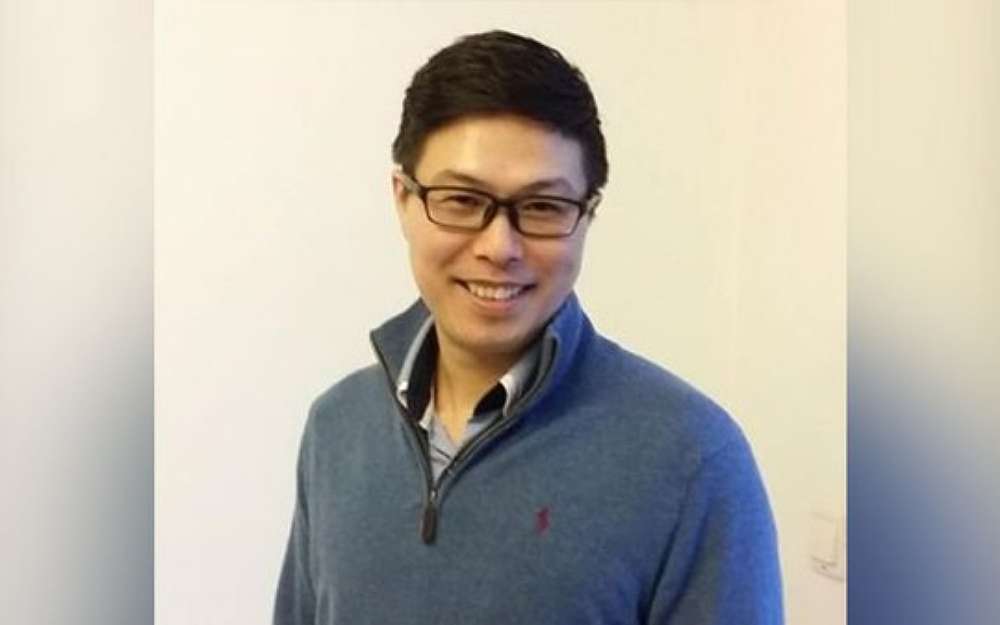
Shanghai police have detained a prominent rights activist who called on a local official to resign over the citywide COVID-19 lockdown in April.
Ji Xiaolong has been incommunicado, believed detained by the Shanghai state security police, for 24 hours, sources told RFA on Friday.
Ji, 46, lives in an expatriate district of Pudong district, and has around 33,000 followers on Twitter, which is banned in China.
His detention came after he began writing petitions to Shanghai ruling Chinese Communist Party (CCP) secretary Li Qiang, calling on him to resign for “blindly following orders from the central government [in Beijing]” when implementing weeks of grueling lockdown in the city earlier this year.
In the petition, Ji wrote that he was fine with being jailed for opposing government policies in an era of widespread internet censorship and surveillance of ordinary people.
He was already under residential surveillance at his home, and police had prevented him from going back to his hometown in Jiangsu’s Shazhou county to visit his elderly parents, he wrote.
An activist surnamed Liu from the central province of Hubei said the fact that critics of the government get arrested in China was unsurprising.
“This has become in the norm, in this abnormal country,” said Liu, who served a five-year jail term for “incitement to subvert state power” for supporting vulnerable groups.
Liu said he is himself currently under residential surveillance in the run-up to the CCP’s 20th National Congress on Oct. 16.
A commentator from the southern Chinese city of Guangzhou, who gave only the surname Guo, said he admired Ji, although feared he wouldn’t have the courage to act similarly.
“Too many Chinese people have been brainwashed, and the democratic needs more people to wake up,” Guo said. “Then some people have to take the lead if we are eventually to achieve freedom and democracy.”
In 2019, he was handed a three-and-a-half year jail term after he scrawled “Down with the Communist Party” in a public toilet in Shanghai, and wrote his own satirical graffiti about indefinite rule by CCP leader Xi Jinping.
He had earlier called on rights activists and democracy campaigners to respond to Xi’s call for a “toilet revolution” by penning political slogans on the walls of toilets in universities and hospitals that could be seen by thousands.
Ji freely admitted at his trial to having scrawled the message, and other “sensitive phrases,” on the wall of a public toilet in the city.
Some of his graffiti also referred to constitutional changes nodded through in March 2018 by China’s rubber-stamp parliament, the National People’s Congress, enabling Xi to seek a third term in office at the forthcoming 20th party congress on Oct. 16.
Stimulus measures
Ji’s renewed detention came as premier Li Keqiang announced a slew of economic stimulus measures to kickstart China’s economy following several months of rolling lockdowns, restrictions on freedom of movement and mass, compulsory testing under Xi’s zero-COVID policy.
Li’s announcement came amid citywide lockdowns in Chengdu and Shenzhen, and ongoing COVID-19 outbreaks in the central province of Henan.
A Chengdu resident who gave only the surname Ren said the measures have had a big impact.
“To put it bluntly, not that many people have died from COVID-19; it’s the epidemic prevention and control measures that are killing people,” Ren said.
“I have to go out, so I have to do a PCR test every day … but the shops are basically all closed, so I can’t spend any money. There aren’t many people out on the street, and the buses seem to have stopped and there’s no plane travel.”
“Each family can only send one person out for a reason, like buying groceries or getting a test, and you need some kind of exit permit,” said Ren, who lives in Chengdu’s Qingyang district.
Current affairs commentator Si Ling said the authorities seem worried about achieving their economic targets for the year. But he said he doesn’t expect the measures to do much good.
“They are about to hold the 20th party congress, but winter is coming, and the number of cases in China keeps increasing, so the current policies being launched by the Chinese government are more than offset by its ongoing epidemic prevention and control measures under the zero-COVID policy,” Si told RFA.
“There is a systemic, downside risk in various places, with problems continuing at financial institutions, and declining foreign and domestic investment,” he said. “This slew of problems isn’t conducive to economic recovery.”
Translated and edited by Luisetta Mudie.
Copyright © 1998-2020, RFA. Used with the permission of Radio Free Asia, 2025 M St. NW, Suite 300, Washington DC 20036. https://www.rfa.org.