


Ron Synovitz & Ajla Obradovic
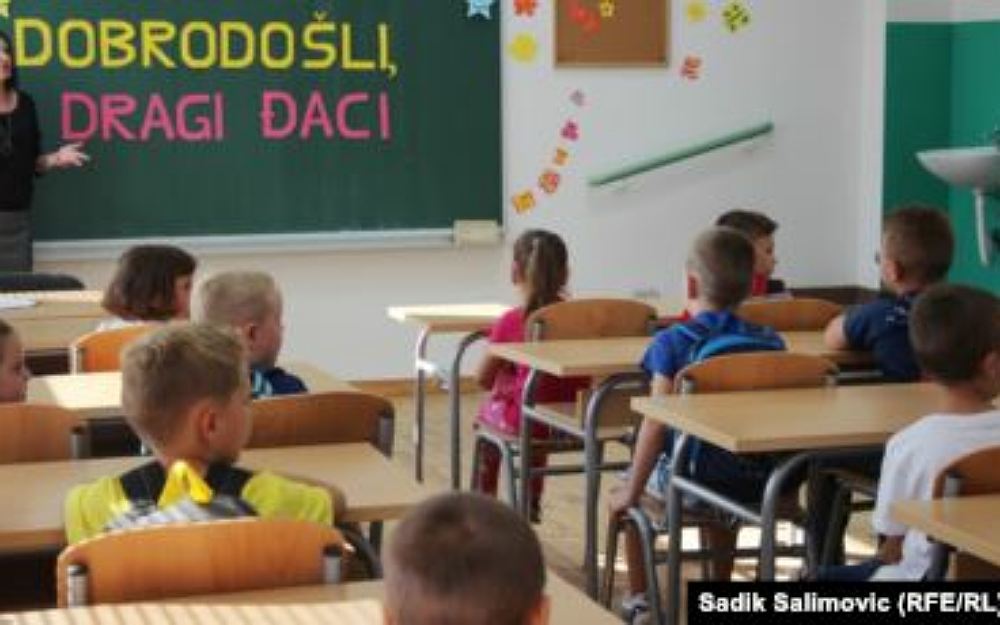
Konjevic Polje was ground zero of Europe’s worst atrocity since World War II — the killing by Bosnian Serb forces of nearly 8,000 Bosnian Muslim men and boys in July 1995, known as the Srebrenica massacre.
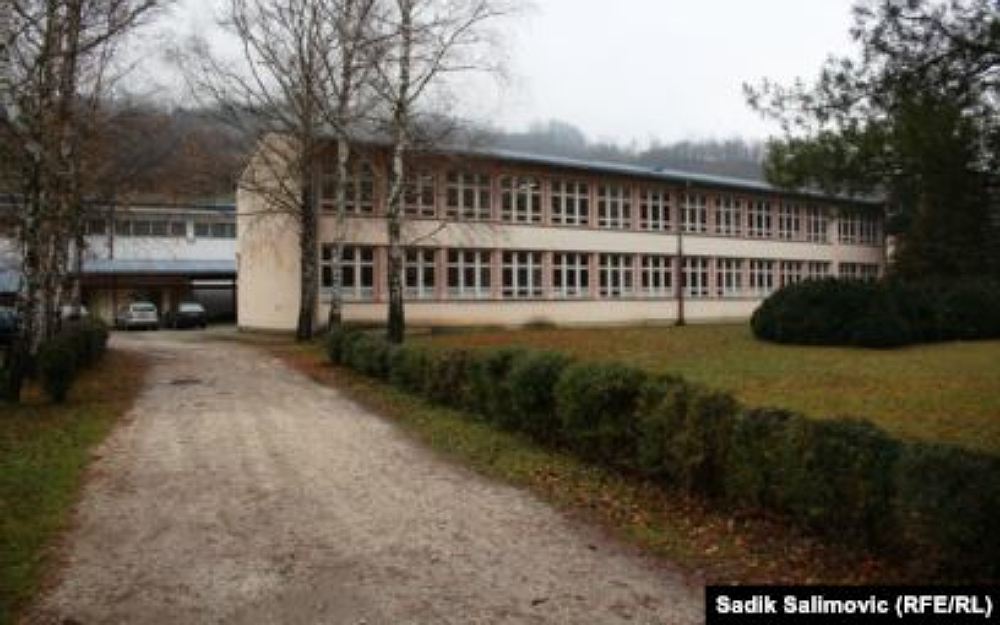
Nearly a quarter of a century later, the all-Bosniak village’s Bosnian-Serb administered school does not teach children about the atrocities that haunt the surrounding woods and road outside its windows.
In fact, the school — now named after the Bosnian Serb writer and politician Petar Kocic — was used as a military barracks by Bosnian Serb forces that carried out the massacre under the command of Ratko Mladic.
Like many other schools in the area, Petar Kocic Elementary School also reportedly was used as a temporary detention center for some Srebrenica massacre victims before they were transported to nearby execution sites.
Now, with the new school year beginning on September 2, most parents in Konjevic Polje are keeping their children out of the school to protest the language and history curriculum under its Bosnian Serb administrators.
The boycott is in its sixth year and now involves about 100 Bosniak children from the village.
First-Hand Witness, Escaping Death
The boycott is led by 45-year-old Srebrenica massacre survivor Muhizin Omerovic, who heads the Council Of Parents Of Children From Konjevic Polje.
The boycott is in its sixth year and now involves about 100 Bosniak children from the village.
First-Hand Witness, Escaping Death
The boycott is led by 45-year-old Srebrenica massacre survivor Muhizin Omerovic, who heads the Council Of Parents Of Children From Konjevic Polje.
Omerovic is one of hundreds of Bosniaks from families that returned to Konjevic Polje after the war, despite a decision by international diplomats that placed the village within Republika Srpska — the Bosnian Serb entity of Bosnia-Herzegovina created under the 1995 Dayton accords.
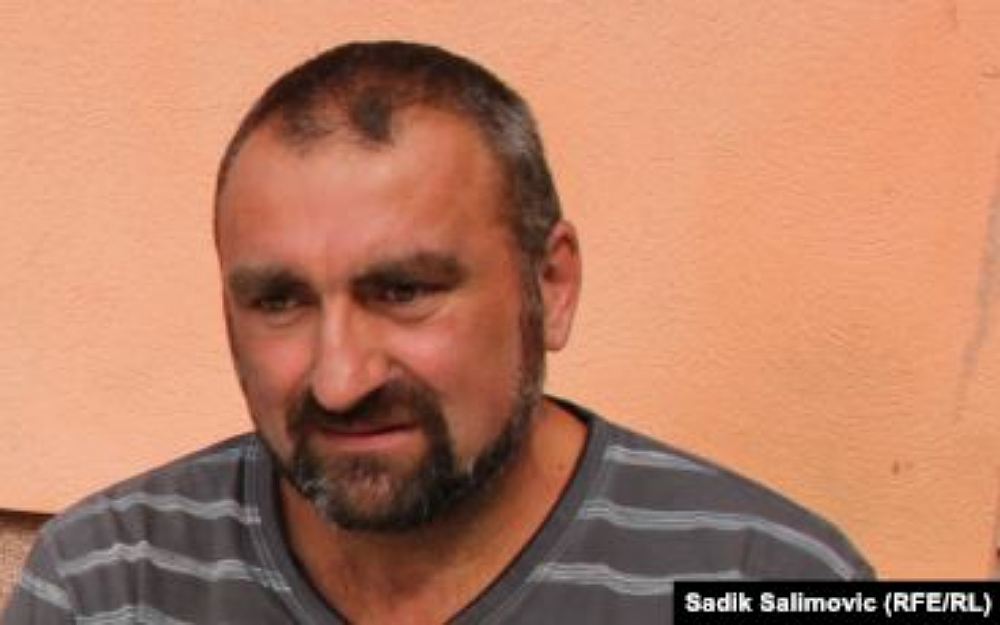
The village had been overrun by Bosnian Serb forces in January 1993 when Omerovic was 18 years old. Its school was called Baba Hamza Elementary at the time and was being used to shelter displaced Bosniaks from nearby Vlasenica, Milici, and Bratunac.
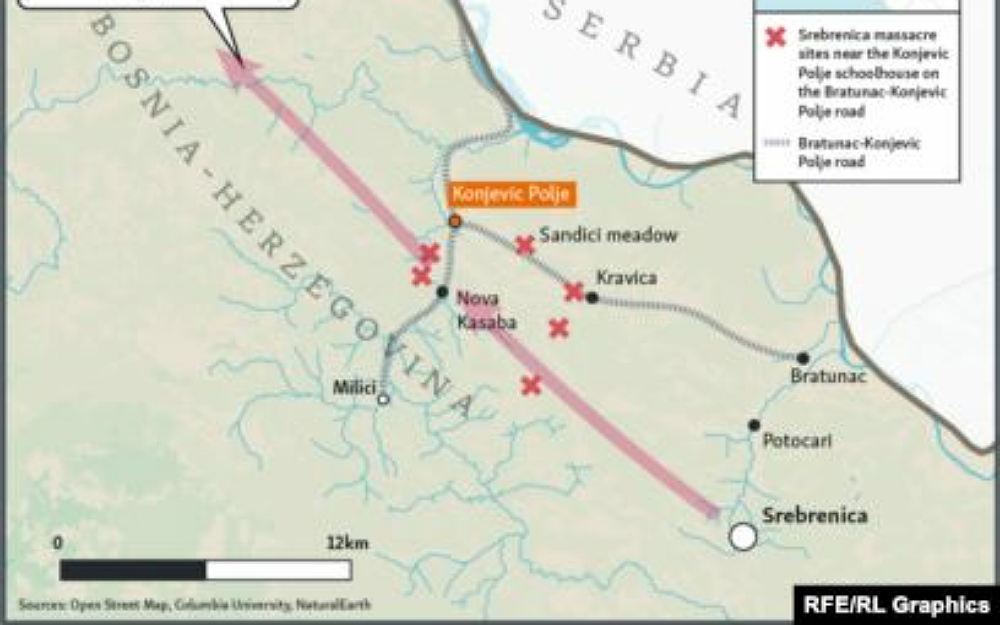
Omerovic and his neighbors fled to Srebrenica, about 20 kilometers to the southeast, arriving there a few months before the town was designated a humanitarian “safe area” by the UN Security Council.
Like many Konjevic Polje residents who retain emotional scars as relatives and neighbors of Srebrenica massacre victims, Omerovic witnessed the genocide firsthand.
“As I am a survivor of the Srebrenica genocide, I have told my children what I have survived,” Omerovic told RFE/RL.
Omerovic was in the column of some 10,000 Bosniak men and boys who tried to flee from Srebrenica to Bosnian-government-controlled territory when Mladic’s forces overran the UN-declared “safe area.”
The column was attacked and broken near the Konjevic Polje crossroads by Bosnian Serb tank and artillery fire, and thousands of Bosniaks were captured or induced to surrender there by false promises of safety.
The infamous Sandici meadow lies just down the Bratunac-Konjevic Polje road from Konjevic Polje’s schoolhouse.
The field was used as a temporary holding site for hundreds of the Bosniak prisoners and was visited briefly by Mladic, who promised the prisoners they would come to no harm.
Shortly after Mladic made that promise and drove away past the schoolhouse, the prisoners were taken in the opposite direction on the same road to an agricultural warehouse at Kravica, a village about 5 kilometers from Konjevic Polje.
The UN war crimes tribunal at The Hague, which convicted Mladic and Bosnian Serb wartime leader Radovan Karadzic of genocide, determined that more than 1,000 Bosniak prisoners were executed at the Kravica warehouse — locked inside and killed by Bosnian Serb troops who used grenades and machine guns against them.
Bosnia-Herzegovina’s own war crimes tribunal came to the same conclusion.
Omerovic managed to escape capture and execution by hiding in the woods near his boyhood village and avoiding the patrols of Bosnian Serb soldiers.
“Of course I am familiar with the events at the Kravica warehouse and Sandici meadow,” Omerovic told RFE/RL. “Kravica is a neighboring village of Konjevic Polje with a Serb population. I know about all those events because I was in the column that was going to Tuzla.
“I came out on the free territory two months after the fall of Srebrenica, on September 11 [1995],” Omerovic said. “My wife and my children know what I went through. They know the entire story, and based on this story they have their own picture of the situation.”
But Omerovic said the truth about the Srebrenica genocide is not being taught to students under the curriculum imposed by Republika Srpska’s government in Banja Luka.
Bosniak students in other parts of Republika Srpska, including the town of Srebrenica, confirm that their teachers skip over the massacre in their lessons.
“In fact, there is just one viewpoint taught about all of that and it is a viewpoint that denies all of the events that happened in 1995,” Omerovic said, describing the Bosnian Serb history curriculum as revisionist. “It is a totally different context.
“I am teaching my children that they should feel sorry for those people who did this to us and that, no matter what, they shouldn’t hate anyone,” Omerovic said.
Republika Srpska, Land Of Denial
Under the 1995 Dayton accords that brought an end to the Bosnian War, Bosnia-Herzegovina was divided into two political entities: Republika Srpska, led by Bosnian Serb politicians in Banja Luka; and the Bosniak-Croat federation, administered from Sarajevo.
In the sphere of education, 10 cantons in the Bosniak-Croat federation each determine their own school curriculums rather than taking instructions from the federal ministry in Sarajevo.
Republika Srpska’s autonomy allows it to set its own education policies and curriculum across the entire territory through the Education Ministry in Banja Luka. That ministry reflects the views of the Bosnian Serb leadership.
Despite the genocide convictions delivered against Karadzic and Mladic by international and domestic courts, the government in Banja Luka denies that the Srebrenica massacre was genocide.
Students from the Croat or Bosniak minorities in Republika Srpska are supposed to be allowed to choose their language and “national studies” programs.
But the Education Ministry in Banja Luka has openly sought to prevent any lessons on why “Srebrenica” is now synonymous around the world with the word “genocide.”
“Here it is impossible to use schoolbooks from the federation in which it is written that Serbs committed genocide and held Sarajevo under siege,” Milorad Dodik, the Serb member of Bosnia’s tripartite presidency, told journalists in Banja Luka in 2017. “It’s not true and it will not be studied here.”
Dane Malesevic, then Banja Luka’s minister of education and culture, announced in 2017 that textbooks used in the Bosniak-Croat federation would be banned in Republika Srpska if they mentioned the wartime siege of Sarajevo or the mass killings of Bosniaks around Srebrenica.
“Bosniak children who study a national group of subjects in Republika Srpska will not use such textbooks,” Malesevic said, justifying the decision by saying that “children will not be burdened with the topic.”
“This is in their best interest and the interest of healthy coexistence in Bosnia and Herzegovina,” Malesevic said.
Meanwhile, so-called investigative commissions set up by Republika Srpska’s government in early 2019 to study Bosnian war crimes during the 1990s have been condemned by international experts who say they “fit into a pattern of deliberate revision of established truths.”
Republika Srpska Vice President Ramiz Salkic, who represents the entity’s Bosniak minority, told RFE/RL that the Education Ministry’s policies on language and “national studies” for Bosniaks are an administrative attempt at “completing ethnic cleansing” that began during the Bosnian war.
“Considering that the genocide against Bosniaks in this part of our country is confirmed by the courts, the final phase of this persecution and ethnic cleansing is being carried out in this way,” Salkic said.
For his part, Omerovic said that he is as angry at the international community for “allowing all of this” to happen.
“They gave the legitimacy to the genocide and ethnic cleansing with the creation of Republika Srpska” under the Dayton accords, Omerovic said. “They legalized it and that’s it.”
For now, Omerovic said, the students who are being pulled out of Konjevic Polje’s school are being taught in an alternative school with a teacher from Sarajevo who is instructing them according to the curriculum of the Sarajevo canton.
But with authorities in Sarajevo unwilling to pay all of the expenses for that teacher, Omerovic said, villagers now owe the teacher about 14,000 euros ($15,391) for the work she’s done since their boycott began.
Written and reported by Ron Synovitz with additional reporting by RFE/RL Balkan Service correspondent Ajla Obradovic
Copyright (c) 2019. RFE/RL, Inc. Reprinted with the permission of Radio Free Europe/Radio Liberty, 1201 Connecticut Ave NW, Ste 400, Washington DC 20036.
You know Independent Journalism needs fund to run the not for profit venture Please contribute if you like our effort Donate through  PayPal Or paytm +919903783187 phone pe +919875416249 Google Pay +919875416249 Amazon Pay +919875416249 BHIM +919875416249 or write to us editor@humanitynewsworld.com
You can get story updates or contact us on Whats App Messenger +919073399779