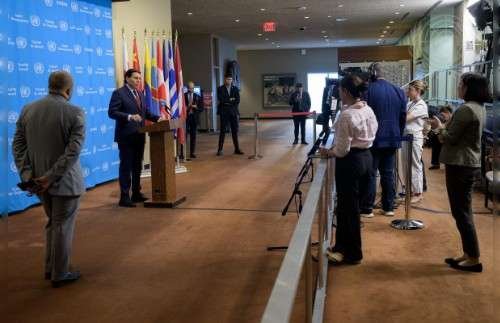
The military is unapologetic about using air power against National Unity Government clinics, schools and offices.
A commentary by Zachary Abuza
In the past six months, in addition to their increased targeting of civilians as part of its “four-cuts” strategy–denying the opposition access to food, finances, intelligence and recruits–the Myanmar military has made a concerted effort to target the shadow National Unity Government’s nascent civil administration and the provision of health and education.
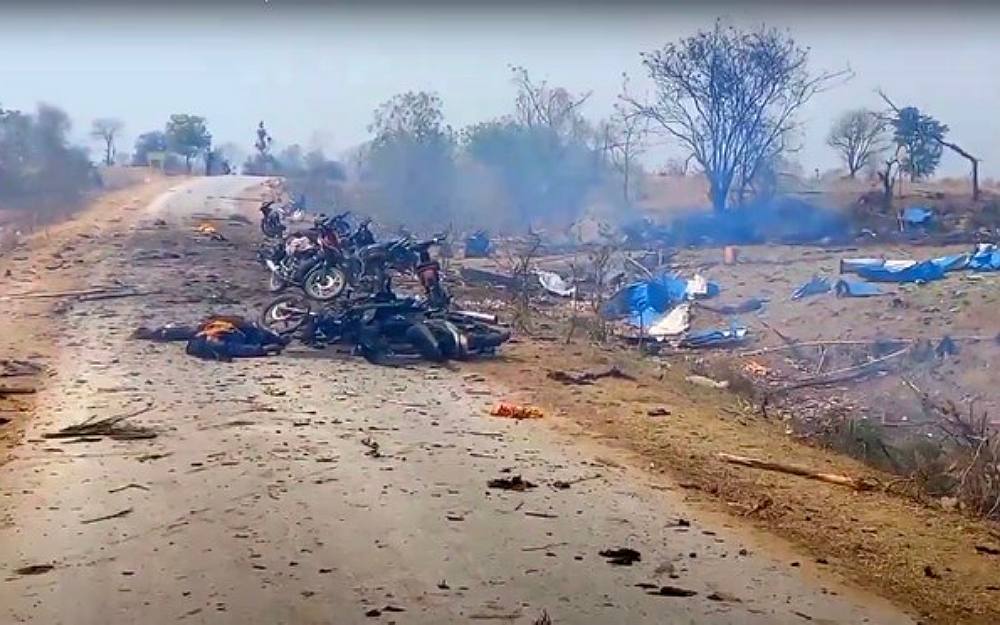
The April 11 air strike on a gathering for the opening of a NUG government office in Sagaing’s Pa Zi Gyi village, which coincided with the distribution of food for the Lunar New Year’s celebration, led to the death of at least 186 people.
A single plane dropped two 500-pound (227-kilogram). bombs, followed by attacks by helicopter gunships. Almost all the casualties were civilians or civil administrators, and included 40 children; the youngest was six months old.
While most of the shadow government’s limited fundraising is going towards its military efforts, it’s providing basic social services in some liberated zones. Of the 330 townships in the country, 23 have a NUG prosecutor’s office and 118 judges have been appointed to date.
The shadow government claims to have established 154 “Pakafwe” township governments and to be providing some degree of education in 95 townships, and limited health services in 198.
The National Unity Government has long had popular legitimacy, evidenced in the daily flash mobs, acts of civil disobedience, or nationwide stay at home strikes, as seen during the anniversary of the coup or the Lunar New Year. The NUG has bolstered its legitimacy through the battlefield courage and tenacity of their People’s Defense Forces (PDFs).
But increasingly, the NUG will have to base their legitimacy on performance and the provision of social services. This is all the more important as the military’s government’s effective control is diminishing.
And for that reason the military has stepped up their attacks on the NUG’s and the various Ethnic Resistance Organizations’ (EROs) civil administration. Since the bombing of the NUG office in Pa Zi Gyi, the military has destroyed two NUG offices in Magway. It had only targeted one other NUG office in the past six months. Of the four, two were destroyed by air attacks.
Targeting health care and public services
The NUG’s provision of health care seems to be a case in point.
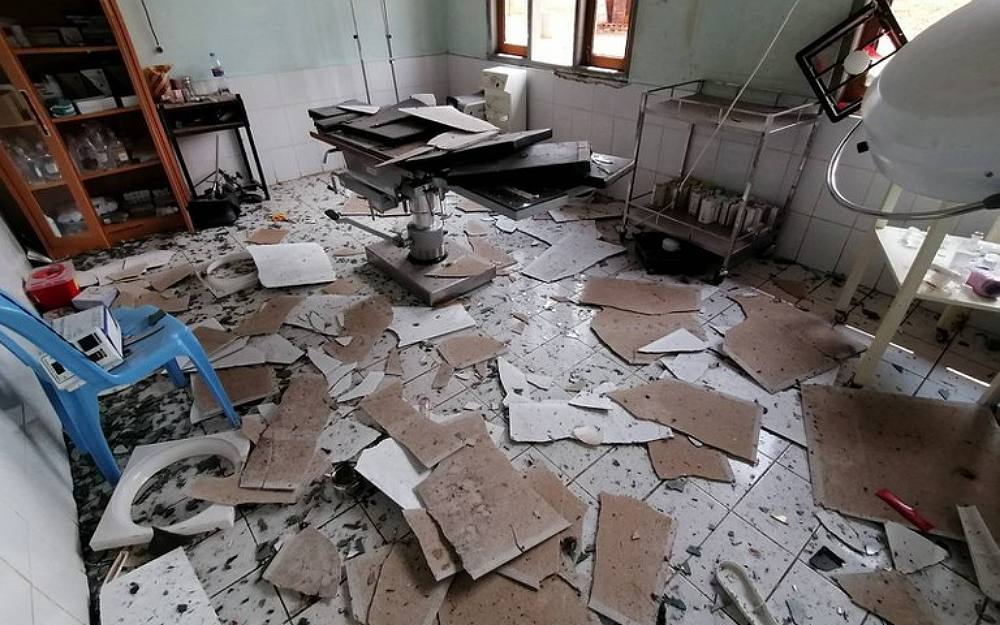
In the six-month period from November 2022 to April 2023, I have documented 35 separate attacks on health care facilities, either directly controlled by the NUG or EROs, or in areas under their influence. Health care providers were amongst the first and staunchest supporters of the civil disobedience movement.
These attacks have led to the death of four, with 13 people wounded. In 17 attacks, the health care facilities were completely destroyed, while eight suffered major damage; the remainder had minimal damage.
Fifteen of those attacks were from either air-dropped bombs, or rocket fire and machine gun attacks from helicopter gunships. Four health care facilities were damaged by artillery fire. The rest of the attacks on health care facilities were caused by ground forces or pro-regime militias.
Fourteen of the 35 attacks, or 40 percent, were in Sagaing, which has seen a disproportionate amount of violence, and four were in neighboring Magway. Four occurred in Kayin, while the remainder were spread in Shan, Kachin, Tanintharyi, Kachin, and Kayah.
In the latest attack, a helicopter dropped a 500-pound (227 kilogram) bomb on a health clinic in Shan State, though the bomb failed to detonate. Only three people were wounded.
The military has also routinely targeted both the NUG’s education system and rural schools that are technically part of the state system but which are actively supporting and staffed by members of the Civil Disobedience Movement.
Since November 2022, it has either bombed, struck by artillery or destroyed by ground forces some 20 schools. Six were destroyed in Kayin and Sagaing states, each, with two in Kachin and Kayah, and one each in Mandalay, Magway, Tanintharyi, and Chin.
Unapologetic military
The military has refused to concede that the targeting of health, educational and other social services represents a war crime. It often justifies the attacks by alleging that the PDFs were using the facilities for military purposes or that the militia members were receiving health care treatment. The military has been unapologetic in targeting those facilities.
The executive director of the the pro-military ThayNinGa Institute for Strategic Studies in Yangon, Thein Tun Oo, justified the attack on Pa Zi Gyi and others like it, calling it “ordinary … from an anti-terrorism standpoint” and said, “No government of a country can accept a declaration of autonomy within its sovereign territory.”
The attacks on the NUG’s civil administration also comes when the military has increased their own budget for the 2023-24 fiscal year by 51 percent, from $1.8 billion to $2.7 billion, to deal with the escalating war.
Although the economy is no longer in freefall, the two percent growth in 2022 and three percent growth predicted in 2023 has not made up for the 18 percent decline in 2021. Revenue collection remains down. Increased military spending is coming at the expense of public health and education, where enrollment and matriculation numbers are plummeting.
The NUG’s provision of health, education, and civil administration pose a threat as the regime acknowledges its own loss of control.
Senior Gen. Min Aung Hlaing, the head of the State Administrative Council, as the junta is formally known, conceded in an event marking the second anniversary of the coup that only 198 of the 330 townships are “100 percent stable,” while the remainder required “security attention”. Leaked minutes of December 2022 Ministry of Interior meeting warned of losing control and predicted escalating attacks.
The military has admitted losing control in 132 of the 330 townships, or 42 percent. As a sign of their tenuous control, the military declared martial law in 47 townships, 14 percent of the total. It’s their only form of government administration that appears to be functioning.
The military government has gutted their own civil administration to wage war on its own population and an opposition government that is committed to serving the people.
Zachary Abuza is a professor at the National War College in Washington and an adjunct at Georgetown University. The views expressed here are his own and do not reflect the position of the U.S. Department of Defense, the National War College, Georgetown University or RFA.
Copyright © 1998-2020, RFA. Used with the permission of Radio Free Asia, 2025 M St. NW, Suite 300, Washington DC 20036. https://www.rfa.org.