



Chinese officials promised a better life, but that’s proved untrue.
By Tenzin Dickyi, Lobsang, Dorjee Damdul and Pelbar for RFA Tibetan
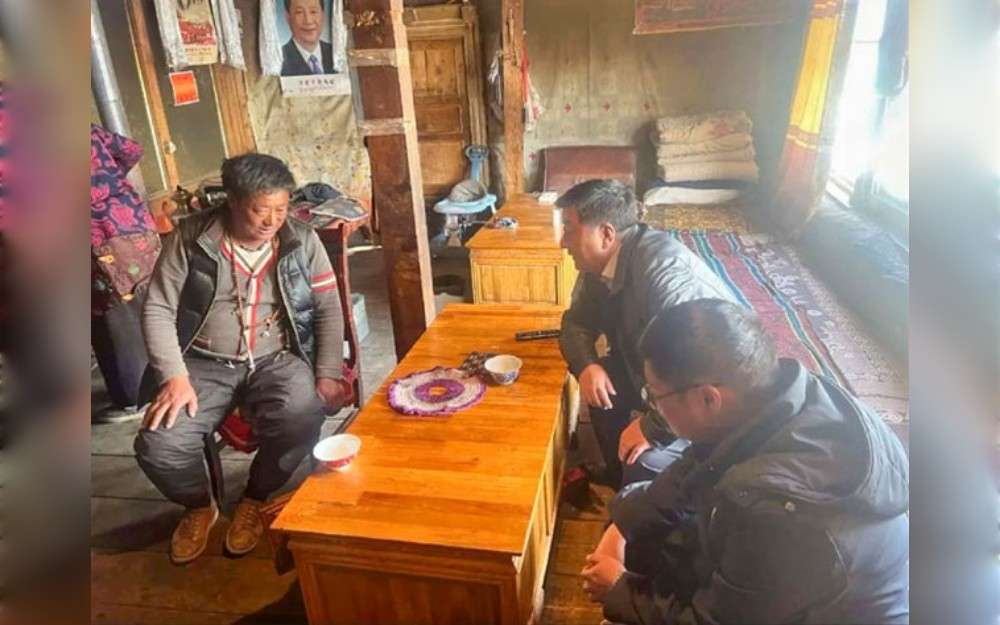
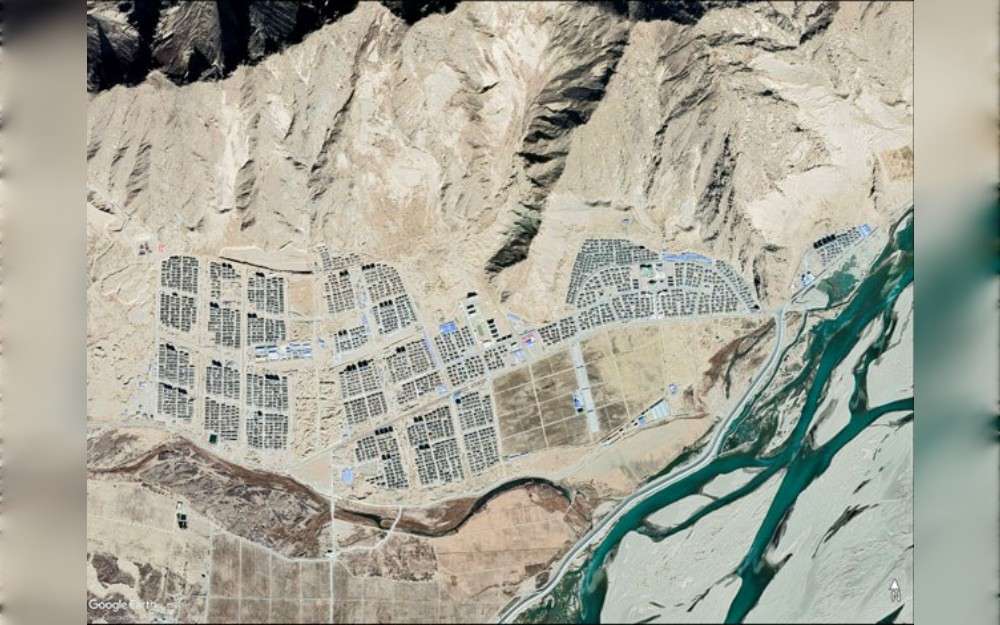
For the past seven years, Tashi and his once-nomadic family have been living in the outskirts of Tibet’s capital Lhasa after they were forcibly moved from their ancestral home in the grasslands of Tibet.
They had made a living raising yaks and other livestock and engaging in sustainable farming in Damxung county, located two hours away by road from Lhasa, until they and others were forced to move to Lhasa’s Kuro Bridge area, promised “improved living conditions” by Chinese authorities.
But in reality, they have faced joblessness, economic hardship and social exclusion ever since.
“All our farmlands in Damxung were confiscated by the government under the guise of development projects,” said Tashi, whose name has been changed for safety reasons. “Having grown up in the village without any education, it is extremely difficult for us to find jobs and make a living in the city.”
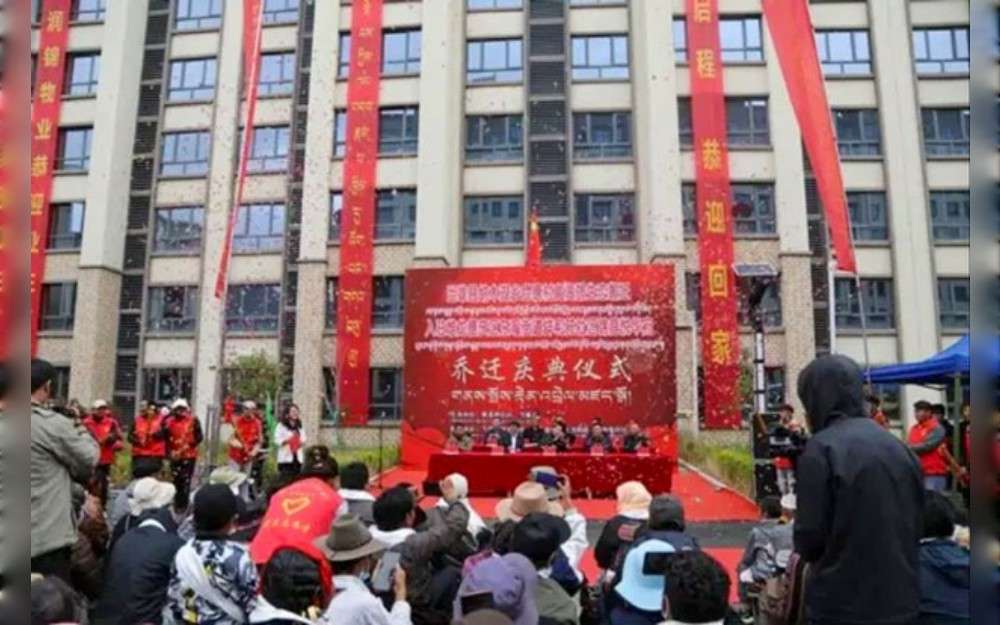
Their story exemplifies the forced relocation of more than 700,000 Tibetans since 2016 in the Tibetan Autonomous Region under supposed poverty-reduction measures, according to a 71-page report released Tuesday by Human Rights Watch.
Of that total number uprooted, 567,000 people lived scattered across the region and another 140,000 people lived in 500 villages.
The report,“‘Educate the Masses to Change their Minds’: China’s Coercive Relocation of Rural Tibetans,” is based on information from over 1,000 official Chinese media articles between 2016 and 2023, government publications and academic field studies.
Threats and harassment
According to official press reports, local officials used coercion and other extreme forms of persuasion to pressure villagers and nomads to agree to relocation. They claimed the moves were voluntary and would improve livelihoods and protect the environment.
Their tactics included repeated home visits, disparaging the villagers’ intellectual capacity to make decisions, implicit threats of punishment and the cutoff of essential services such as electricity and water.
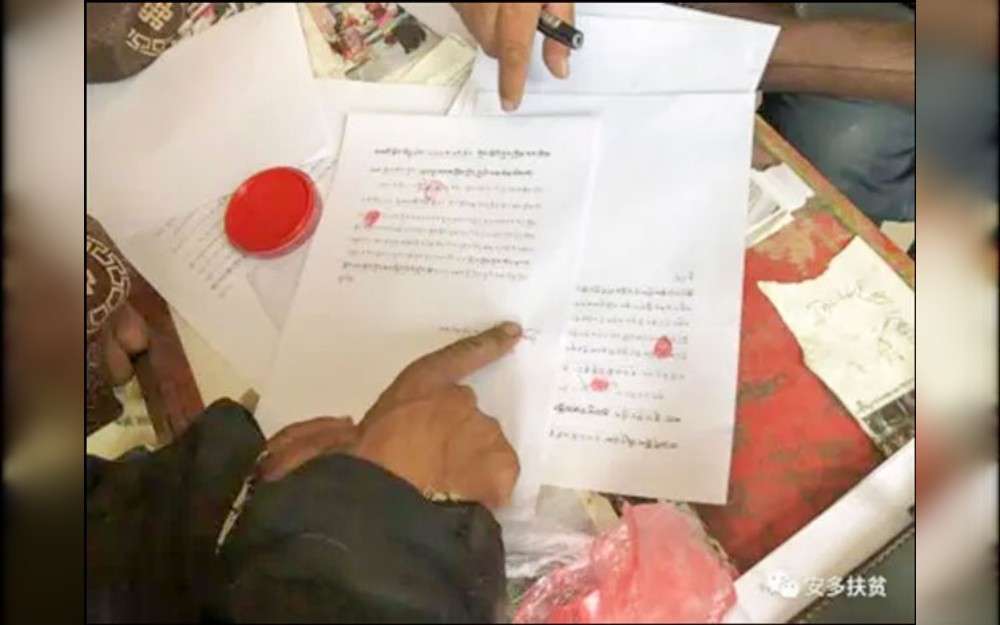
The officials also provided misleading information that said the moves would offer employment opportunities and higher incomes, the report said.
“The Chinese government says that the relocation of Tibetan villages is voluntary, but official media reports contradict this claim,” Maya Wang, HRW’s acting China director, said in a statement.
“Those reports make clear that when a whole village is targeted for relocation, it is practically impossible for the residents to refuse to move without facing serious repercussions.”
The human rights group urged Beijing to suspend relocations in Tibet and conform with Chinese laws and standards and international law concerning relocations and forced evictions.
Senior authorities put pressure on local officials to carry out the relocations as non-negotiable policies, threatening disciplinary action against local officials who failed to meet targets, the report said.
Labeled separatists
Tashi, who was forcibly moved to Lhasa, said he told Chinese officials they didn’t want to move. “But Chinese authorities accused us of disobeying national orders and labeled us as separatists,” he said.
Many like Tashi were forced to sell their herd in a hurry after the Chinese government ordered the relocations.
“The order to relocate came so suddenly and we couldn’t disobey, [so] we had to sell our herds in a rush, leaving us with nothing,” a Tibetan nomad told Radio Free Asia. “Ever since we moved to Lhasa, we have never been happy.”

He said that the houses provided by the Chinese government are very small and crowded, with large families of 10 or so members living in only two to three rooms, forcing some to sleep in tents on verandas, he said.
When the relocated Tibetans sought jobs in restaurants, they were told they were not hygienic enough, he said.
“Self-employment is out of reach, and we can’t even get cleaning jobs in restaurants,” he added.
Rooted to the land
Elaine Pearson, director of HRW’s Asia Division, told RFA that relocations have occurred both across the Tibetan Autonomous Region and in Tibetan-populated areas in Gansu, Sichuan and Yunnan provinces.
“It’s important to note that forced relocations do happen across China, and they aren’t unique to Tibet,” she said.
“Tibetans have a particular connection with the land and their livelihoods, and they lose that connection if they are forced to move,” she added.
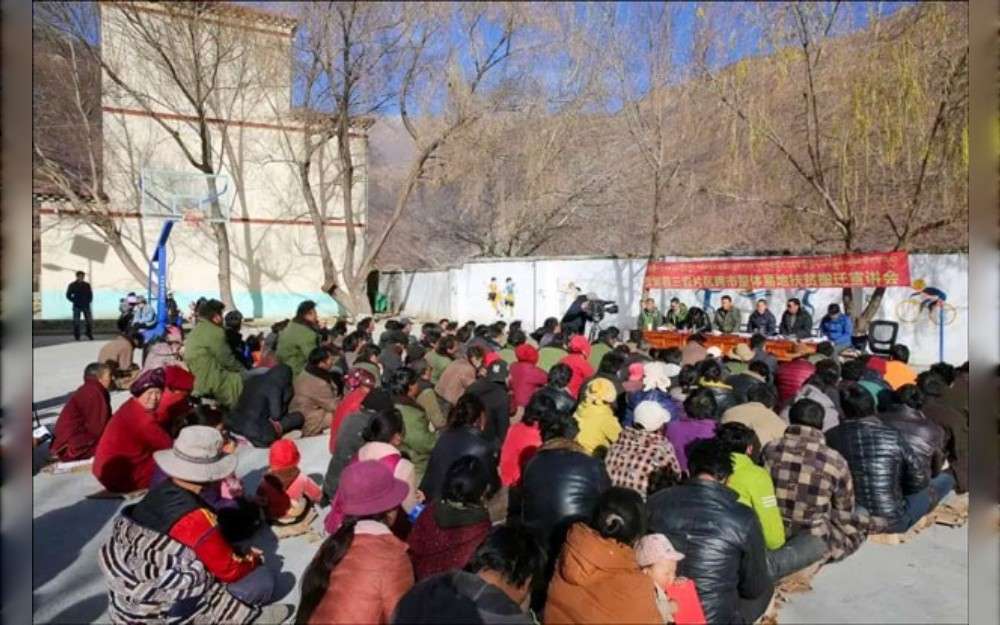
The Chinese government says relocations are poverty alleviation measures and that the new locations are ecologically sound, so that affected Tibetans can improve their livelihoods by relocating, Pearson said.
“But in reality, that hasn’t been the case because many of the people are pastoralists, and they live off the land, but when they move to more urban-like areas, the work options are different [and] they would need to speak Chinese rather than Tibetan,” she added.
Pearson also said the United Nations should be pushing for unfettered access to Tibetan regions, which has not occurred for many years.
The rights group wants the U.N. Human Rights Council to set up an independent investigation into human rights violations across China, including these violations in Tibet, she said.
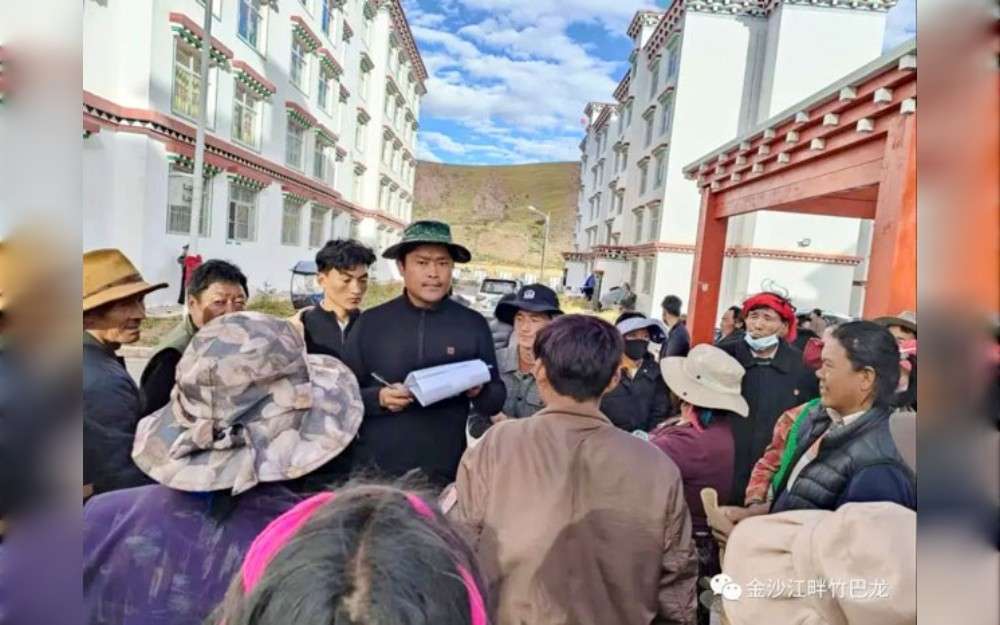
“China’s coercive mass displacement of Tibetans destroys the Tibetan way of life and culture under the misleading policy labels of ‘poverty alleviation’ and ‘ecology protection,’” said Tencho Gyatso, president of Washington-based International Campaign for Tibet.
Tibetans have lived on the Tibetan Plateau for thousands of years and have adapted genetically and socially to how best to live and protect the high-altitude environment.
“China’s reckless relocation policy and programs are pulling apart Tibetan society, its ancient culture and its environmental best practices,” Gyatso said.
Additional reporting by Tashi Wangchuk, Tenzin Pema and Dolma Lhamo for RFA Tibetan. Edited by Tenzin Pema of RFA Tibetan and by Roseanne Gerin and Malcolm Foster.
“Copyright © 1998-2023, RFA.
Used with the permission of Radio Free Asia,
2025 M St. NW, Suite 300, Washington, D.C. 20036.
https://www.rfa.org.”